
Liver biopsy
Learn what a spot on your liver is.
A targeted liver biopsy takes a few thin samples of a liver spot through a single needle, guided by ultrasound or CT. It takes about 30 minutes, and most people go home 2 to 4 hours later.
- Outpatient
- About 30 minutes
- Moderate sedation
- Home in 2–4 hours
 Fabio Komlos, MDInterventional radiologist
 Watch the video explanation12:30 video · How do you know if you have cancer or not?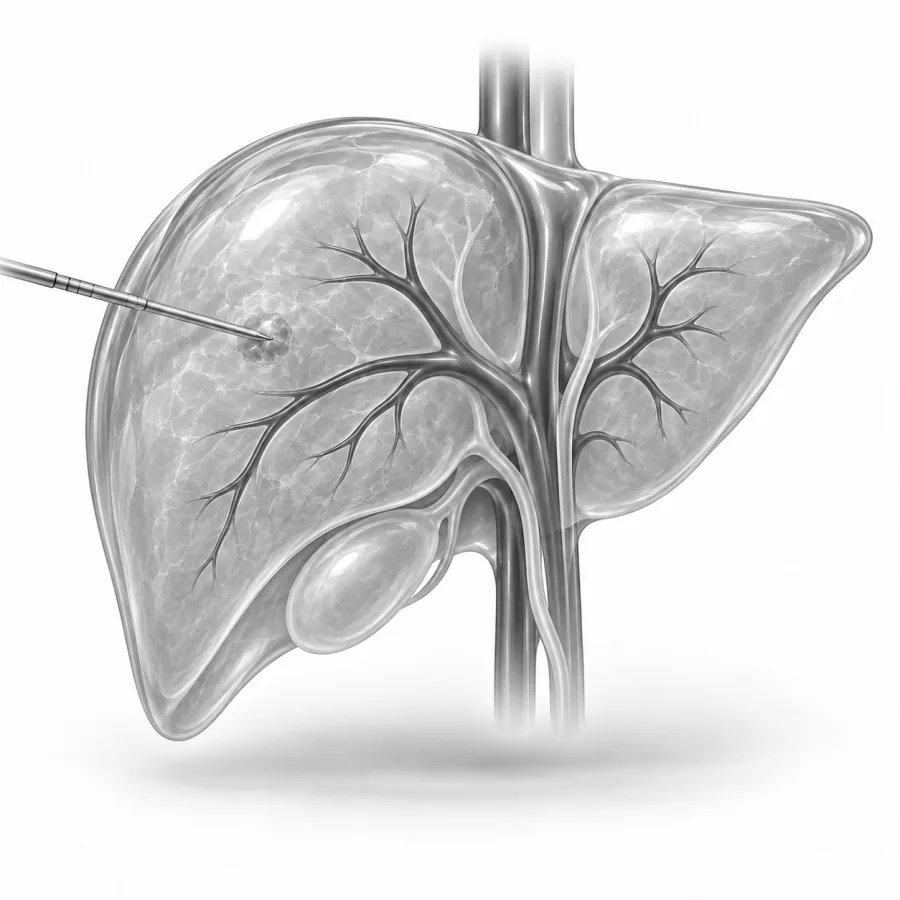
 On imaging
CT guidance: the needle is advanced in small steps and checked on each scan.
How do you know if you have cancer or not?
Dr. Fabio Komlos walks through liver biopsy the way he explains it in clinic, using the same images he uses to plan treatment.
Fabio Komlos, MDInterventional radiologist · 12:30How Interventional Radiologists Treat Liver Tumors Without Surgery — at is liver-directed therapy?
5:43
If you are having a procedure and you are on blood thinners you need to watch this
10:17
Quick answers
Under a minute eachWhat is a targeted liver biopsy?
A targeted liver biopsy takes small samples from one specific spot in the liver, called a lesion, that showed up on a CT, MRI or ultrasound. A pathologist then looks at the tissue under a microscope to find out what it is.
This page is about biopsy of a spot. If your doctor wants to look at the liver as a whole, for example to measure scarring from fatty liver or hepatitis, see medical liver biopsy.
Liver spots have many causes. Many are harmless, such as cysts, hemangiomas (a tangle of blood vessels) or focal nodular hyperplasia. Others are cancer that started in the liver, called hepatocellular carcinoma, or cancer that spread from elsewhere, such as the colon, breast, lung or pancreas. Sometimes a spot is an abscess, which is a pocket of infection.
Do you need a biopsy?
Not always. Many harmless liver spots can be identified on a good MRI or CT and need no biopsy. In people with cirrhosis, primary liver cancer can often be diagnosed from a specialized MRI or CT alone. A biopsy is recommended when the scans cannot give a firm answer, or when your cancer doctors need tissue to choose treatment.
A biopsy is often needed when
- A new spot appears and you have had cancer before
- Scans cannot tell a harmless spot from a cancer
- Several spots appear and the original cancer is unknown
- Your oncologist needs genetic testing of the tumor to choose a drug
A biopsy may not be needed or safe if
- The MRI already shows a clearly harmless spot
- Imaging is typical for liver cancer in a cirrhotic liver
- You have a bleeding disorder or very low platelets that cannot be corrected
- The lesion sits where no needle can reach safely
Other options include repeat imaging over a few months, a biopsy through an endoscope placed in the stomach (endoscopic ultrasound) for some spots in the left side of the liver, or surgery to remove the spot directly.
How to prepare
- 1Tell us about every blood thinner and supplement. Most, including aspirin, Plavix, Eliquis, Xarelto and warfarin, need a short pause. We plan this with your prescribing doctor. See blood thinners.
- 2Get any blood tests we ask for, usually a blood count and clotting test.
- 3Do not eat for 8 hours before. Take your usual medicines with a small sip of water.
- 4Bring an adult to drive you home after sedation.
- 5Bring a list of your medicines and allergies, especially any contrast dye allergy.
Our general checklist is in before your procedure.
What happens during the biopsy
- 1Getting ready
At El Camino Hospital, a nurse starts an IV and connects heart, blood pressure and oxygen monitors. You receive moderate (twilight) sedation. You usually lie on your back with your right arm above your head.
- 2Finding the spot
We scan the liver with ultrasound or CT to find the lesion and plan a path that avoids large blood vessels, the lung and the bowel. We numb the skin and the tissue down to the liver.
- 3Taking the samples
We guide a thin needle to the edge of the lesion and take 2 to 4 small cores. You will be asked to hold your breath briefly for each sample, because the liver moves as you breathe.
- 4Finishing up
We remove the needle, check the liver for bleeding with a final scan and close the puncture with skin glue.
What we seeWith a liver spot, I look for the part of the lesion most likely to give an answer, often the living edge rather than a dead center. I also try to pass through a little normal liver on the way in, which helps seal the track. If the spot is small or hard to see, I tell you up front that it may take a bit longer.Fabio Komlos, MD, interventional radiologist · About Dr. Fabio Komlos
Recovery
- First 2–4 hoursRest in recovery while nurses check your blood pressure and the puncture site. You can eat and drink, and family can sit with you.
- Rest of the dayGo home and take it easy. No driving, alcohol or important decisions after sedation. You can shower tonight.
- Next 2–3 daysMild soreness under the right ribs or in the right shoulder is common. This shoulder pain is referred pain from the liver lining.
- First weekNo heavy lifting, hard exercise, baths or swimming. Most people return to work and driving the next day.
Acetaminophen (Tylenol) is usually enough for pain. Ask us before taking ibuprofen or naproxen, as they can raise bleeding risk. Pain should ease each day, not get worse.
Results
Results usually take about 2 business days and go to the doctor who referred you. If the tissue needs special stains, genetic testing or review by an outside expert, it can take a week or more.
Most targeted liver biopsies, around 9 in 10, give a clear diagnosis. If the sample is not enough, your team will discuss repeating the biopsy, trying another approach or surgery.
Risks
Bleeding is the main risk. Some bleeding around the liver happens in about 1 in 100 people, and it usually stops on its own. Rarely, a blood transfusion or a procedure to seal the bleeding artery (embolization) is needed. Signs include pain that grows, lightheadedness or a racing heart.
Other risks are uncommon: a sample that is not diagnostic, infection, injury to the gallbladder, lung or bowel, and, very rarely, cancer cells spreading along the needle track. We reduce these risks by planning the path carefully on the scan.
Common questions
Does a liver biopsy hurt?
Why does my shoulder hurt after a liver biopsy?
Can a biopsy spread cancer?
How is this different from a medical liver biopsy?
When can I go back to work?
What if the result is cancer?
Medical liver biopsy
Measure liver inflammation, fat and scarring with a needle sample, through the side or the neck.
Liver tumors
Primary liver cancer and liver metastases: what they are and every way to treat them.
Image-guided biopsies
Get a tissue diagnosis through a needle, guided by ultrasound or CT, usually without an incision.
Microwave ablation
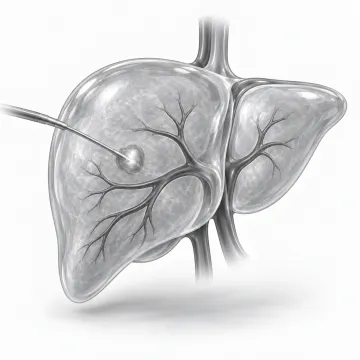
Heat small liver, lung or kidney tumors through a needle, often with a same-day or overnight stay.
Y-90 radioembolization
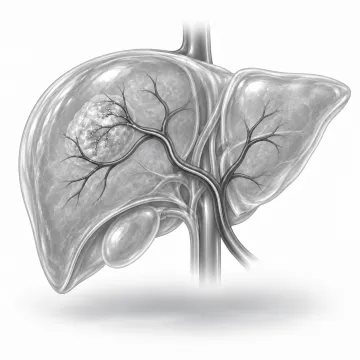
Tiny radioactive beads treat liver tumors from inside, with two short outpatient visits.
Written for patients by the Palo Alto Interventional team. General information only; your own plan depends on your health and imaging.
Talk to us about your options
Request a consultation online, or call 650-404-8445, Monday to Friday, 8 am to 5 pm. You can also ask your doctor to send a referral. We will review your imaging and help you decide whether a procedure makes sense.