
Chemoembolization (TACE)
Chemotherapy delivered straight into a liver tumor.
Chemoembolization puts a concentrated dose of chemotherapy directly into the artery feeding a liver tumor, then blocks that artery to starve the tumor. It is done through a pinhole at the groin, usually in 1–2 hours.
- Hospital procedure
- 1–2 hours
- Moderate sedation
- Home same day or next
 Fabio Komlos, MDInterventional radiologist
 Watch the video explanation5:43 video · How Interventional Radiologists Treat Liver Tumors Without Surgery — at is liver-directed therapy?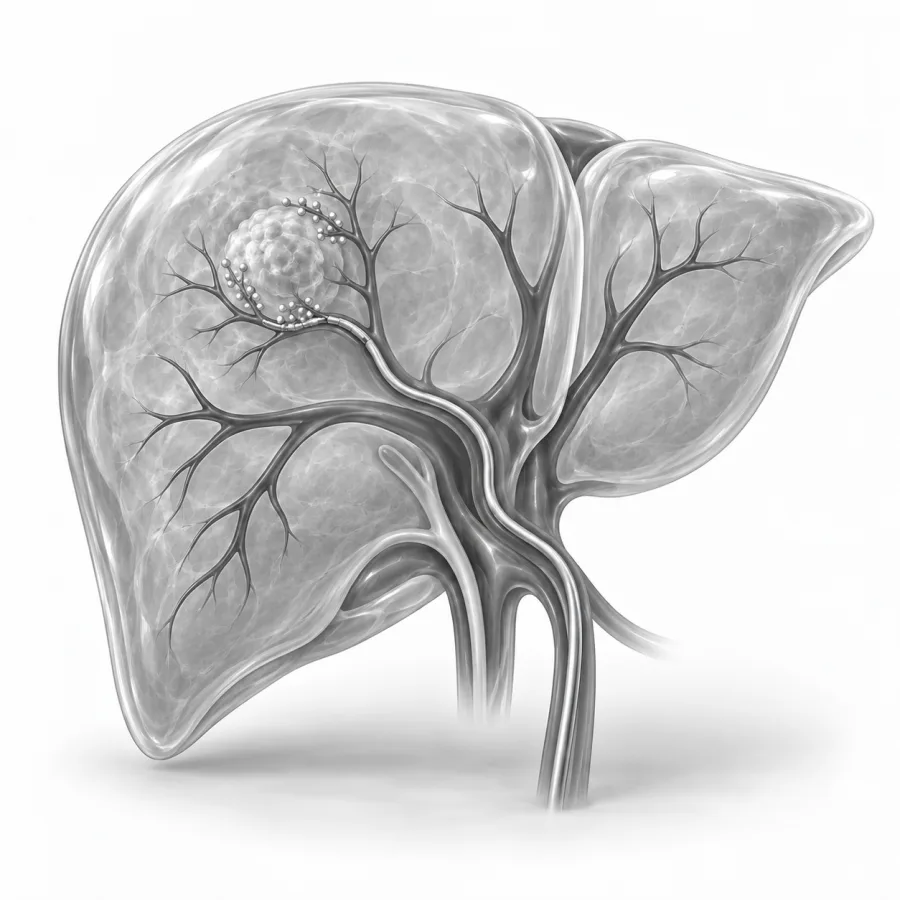
 On imaging
Selective angiogram: the catheter is placed in one artery so only the target area is treated.
How Interventional Radiologists Treat Liver Tumors Without Surgery — at is liver-directed therapy?
Dr. Fabio Komlos walks through chemoembolization (tace) the way he explains it in clinic, using the same images he uses to plan treatment.
Fabio Komlos, MDInterventional radiologist · 5:43Understanding Y90 Radioembolization
16:11
Quick answers
Under a minute eachWhat is chemoembolization?
Transarterial chemoembolization (TACE) treats tumors in the liver in two ways at once. "Chemo" means we deliver chemotherapy medicine right into the tumor. "Embolization" means we then block the tumor's blood supply with tiny particles, cutting off its oxygen and food.
This works because of how the liver is built. Healthy liver gets about three quarters of its blood from the portal vein. Liver tumors, however, feed mainly from the hepatic artery. By working inside that artery, we can hit the tumor hard while the healthy liver keeps its main blood supply.
There are two common types. In conventional TACE (cTACE), the chemotherapy is mixed with an oily contrast agent called Lipiodol, which the tumor soaks up, and then the artery is blocked. In drug-eluting bead TACE (DEB-TACE), tiny plastic beads are loaded with chemotherapy, often doxorubicin, and release it slowly into the tumor over days to weeks. We usually use drug-eluting beads, but the choice depends on your tumor.
What we seeWho it helps, and who it may not
Chemoembolization is most often used for hepatocellular carcinoma (HCC), the most common cancer that starts in the liver. It is a standard treatment when there are several tumors, or tumors too large for ablation, and the cancer has not spread outside the liver. It is also used to shrink or control tumors while someone waits for a liver transplant, and for some cancers that have spread to the liver, such as neuroendocrine tumors. See liver tumors for the full picture.
For most people with larger or multiple tumors, the goal is control rather than cure: shrinking tumors, slowing growth and extending life. For some, TACE shrinks the cancer enough to make surgery, ablation or transplant possible.
Often a good fit
- Several liver tumors, or one too large for ablation
- Cancer limited to the liver
- Liver that still works reasonably well, even with cirrhosis
- Waiting for a liver transplant
- Able to care for yourself most of the day
May not be right if
- Advanced liver failure, such as jaundice, confusion or a lot of belly fluid
- The main portal vein is blocked by clot or tumor
- Blocked bile ducts, or a past bile duct stent or surgery that raises infection risk
- Severe kidney problems
- Cancer that has spread widely outside the liver
How it compares with other options
Liver tumors are best planned by a team. Surgeons, oncologists, radiation doctors and interventional radiologists look at your scans together and choose, and often combine, treatments.
| Chemoembolization | Y-90 radioembolization | Medicines (systemic therapy) | |
|---|---|---|---|
| What it treats | Tumors in the liver only | Tumors in the liver only | Cancer anywhere in the body |
| How it is given | Through a catheter in the liver artery | Through a catheter in the liver artery | IV infusions or pills, usually for months |
| Sessions | One, repeated as needed | Mapping visit, then treatment | Ongoing cycles |
| How you feel after | Pain, fever and nausea for several days are common | Mostly tiredness for 1–2 weeks | Depends on the drug |
Small tumors are often treated with microwave ablation or surgery instead. Y-90 radioembolization is a close cousin of TACE that uses radiation instead of chemotherapy. Newer options include histotripsy.
How to prepare
- You will have recent blood tests and a CT or MRI of the liver.
- Do not eat or drink after midnight. Take your usual morning medicines with a small sip of water unless we tell you otherwise.
- If you take a blood thinner, we will tell you when to pause it. See blood thinners.
- Tell us about allergies to X-ray contrast, and about kidney disease or diabetes.
- Pack a small overnight bag in case you stay one night.
- Arrange for an adult to drive you home.
The procedure is done at El Camino Hospital. A nurse starts an IV, checks your labs, and gives fluids and medicines before the procedure, usually an antibiotic, an anti-nausea medicine and sometimes a steroid to reduce side effects.
What happens during the procedure
- 1Getting comfortable
You lie on your back on the X-ray table and receive moderate sedation through your IV. You will be relaxed and drowsy but breathing on your own. We clean and numb the skin at the top of your leg.
- 2Reaching the liver
Through a pinhole in the groin artery, we pass a thin tube called a catheter up to the liver. Using X-ray and contrast dye, we map the arteries and find the branches feeding the tumor.
- 3Treating the tumor
We guide an even smaller catheter as close to the tumor as we safely can and slowly inject the chemotherapy and blocking particles. Keeping the treatment close to the tumor protects healthy liver.
- 4Closing up
We remove the catheter and close the artery with a small plug or firm pressure. No stitches are needed.
Most people feel pressure at the groin and brief warmth when contrast is injected. Some feel upper belly pain during the injection, and we give pain medicine through your IV right away.
Recovery
Many people have post-embolization syndrome for a few days: pain under the right ribs, low fever, nausea and tiredness. It is a sign the tumor is reacting, not a sign something went wrong. We treat it with pain and nausea medicines. You may stay overnight so we can keep you comfortable.
- First few hoursYou lie flat with your leg straight, usually for about 2 hours and sometimes up to 6, to protect the groin puncture.
- Day 1Most people go home the same evening or the next morning. No driving for at least 24 hours.
- Days 2–7Pain, nausea and low fever are common and ease day by day. Vomiting, if any, usually settles in a couple of days. Avoid lifting more than 10 pounds for about 5 days.
- Weeks 1–2Tiredness is the last thing to fade. Most people are back to normal activities after about two weeks. We see you for a check-up and blood tests.
- About 4–6 weeksA CT or MRI and blood tests show how the tumor responded and whether another session would help.
Results
In intermediate-stage liver cancer, chemoembolization has been shown to help people live longer than supportive care alone, and it often shrinks tumors or stops them from growing. Many people need more than one session, planned based on follow-up scans. TACE is also commonly combined with ablation, radiation or medicines.
Before a chemoembolization I look hard at two things: how well the liver is working, and how the arteries reach each tumor. The closer I can get the catheter to the tumor, the more of the medicine goes where it should and the better most people feel afterward. I warn patients that the first few days can be rough, and that this usually means the treatment is doing its job.Fabio Komlos, MD, interventional radiologist · About Dr. Fabio Komlos
Risks
- Post-embolization syndrome: pain, fever and nausea for several days. Common and expected.
- Bleeding or bruising at the groin, and sometimes a small firm lump that fades over a few weeks.
- Reaction to contrast dye or kidney strain, more likely with kidney disease or diabetes.
- Liver injury or worsening liver function, more likely if the liver was already weak.
- Infection or abscess in the treated tumor, more likely with past bile duct procedures.
- Particles reaching the wrong place, such as the gallbladder, stomach or bowel. This is rare with careful technique.
- Chemotherapy side effects such as low blood counts or mild hair thinning are uncommon because little of the drug circulates.
Common questions
Is chemoembolization the same as regular chemotherapy?
Will I lose my hair?
Does it hurt?
Will I need to stay overnight?
How many treatments will I need?
Can I have TACE if I have cirrhosis?
When can I drive and go back to work?
Will insurance cover it?
Liver tumors
Primary liver cancer and liver metastases: what they are and every way to treat them.
Y-90 radioembolization
Tiny radioactive beads treat liver tumors from inside, with two short outpatient visits.
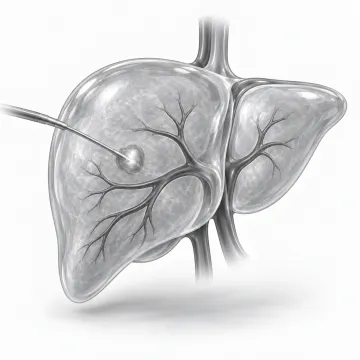
Microwave ablation
Heat small liver, lung or kidney tumors through a needle, often with a same-day or overnight stay.
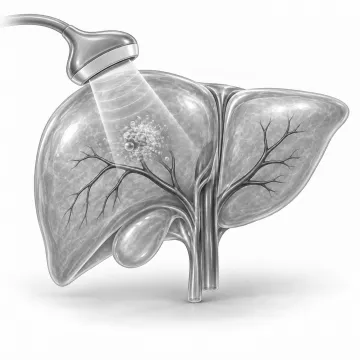
Histotripsy
Focused ultrasound breaks up liver tumors from outside the body. New, and not for everyone.
Written for patients by the Palo Alto Interventional team. General information only; your own plan depends on your health and imaging.
Talk to us about your options
Request a consultation online, or call 650-404-8445, Monday to Friday, 8 am to 5 pm. You can also ask your doctor to send a referral. We will review your imaging and help you decide whether a procedure makes sense.