
Tumor ablation
Destroy a tumor through a needle, not an incision.
Tumor ablation kills a tumor in place by heating or freezing it through a thin needle guided by CT or ultrasound. It treats small tumors in the liver, kidney, lung and bone, often with a same-day or overnight stay.
- Needle, no incision
- 1–3 hours
- Sedation or anesthesia
- Home same day or next
 Fabio Komlos, MDInterventional radiologist
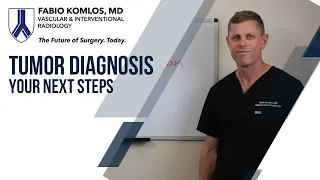 Watch the video explanation3:49 video · Minimally Invasive Cancer Treatment Explained Tumor Ablation Options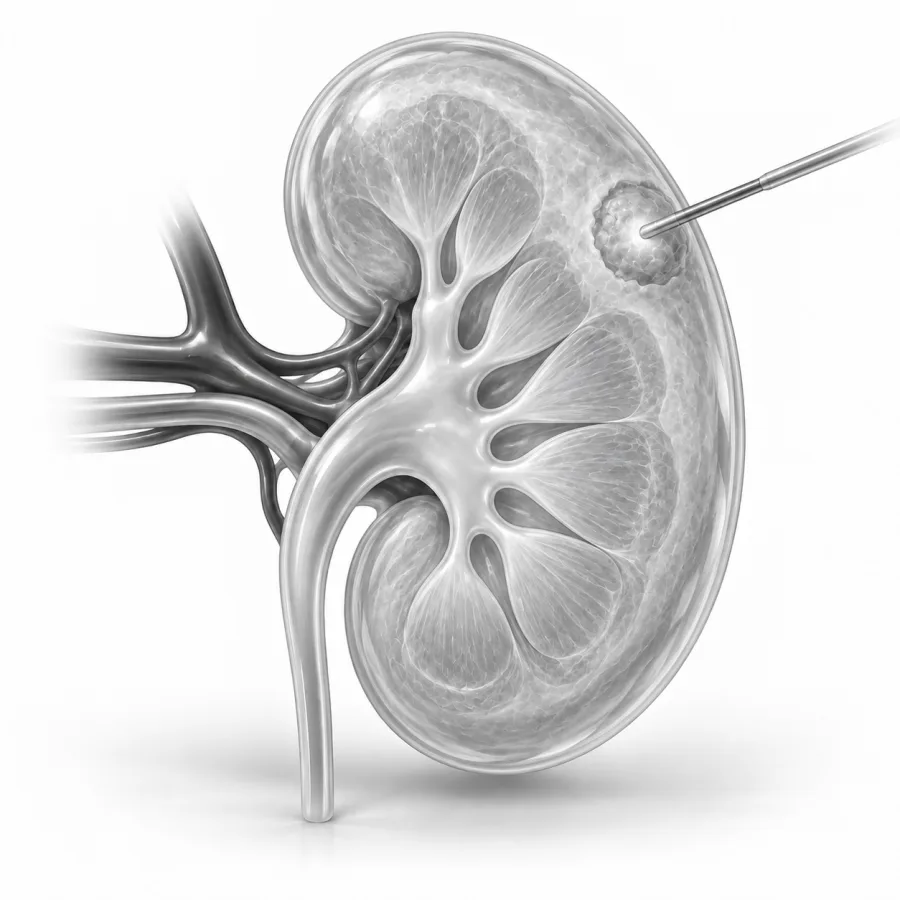
A needle about the width of a pen refill.
Minimally Invasive Cancer Treatment Explained Tumor Ablation Options
Dr. Fabio Komlos walks through tumor ablation the way he explains it in clinic, using the same images he uses to plan treatment.
Fabio Komlos, MDInterventional radiologist · 3:49Does Tumor Ablation Really Work? Clearing Up the Biggest Misconceptions
4:05
Liver Ablation
12:42
Renal Cryoablation
14:09
Quick answers
Under a minute eachWhat is tumor ablation?
Ablation means destroying tissue in place instead of cutting it out. We guide a thin needle, called a probe, through the skin and into the tumor using CT or ultrasound pictures. The probe then delivers extreme heat or cold that kills the tumor along with a thin rim of normal tissue around it, called the margin. The dead tissue stays where it is and slowly shrinks into a scar.
Ablation has been used since the 1990s. For the right tumors, especially small ones, it can work as well as surgery with a much easier recovery. It spares the healthy organ around the tumor, which matters when you have one kidney, weak lungs or a liver with cirrhosis.
On CT, the probe shows as a bright line entering the tumor. With cryoablation, the growing ice ball appears as a dark, sharp-edged zone that we can watch cover the tumor.
The main types
| Microwave ablation | Cryoablation | Radiofrequency ablation | |
|---|---|---|---|
| Energy | Heat, well above 60°C | Cold, down to about -40°C or colder | Heat from electrical current |
| Common uses | Liver, lung, kidney | Kidney, lung, bone, breast | Liver, bone, thyroid |
| Strengths | Fast, large and even burn, less cooled by blood vessels | Ice ball visible on CT, often less painful, good near nerves and bone | Long track record |
| Trade-offs | Harder to see the edge of the burn | Slightly more bleeding risk, longer procedure | Smaller zones, cooled by nearby vessels |
Learn more on the microwave ablation and cryoablation pages. A newer, needle-free option for liver tumors is histotripsy, which uses focused ultrasound instead of heat or cold.
Who it helps
Often a good fit
- Small tumors, usually 3 cm or less, and sometimes up to about 5 cm
- Early liver cancer or a few tumors that spread to the liver
- Small kidney tumors, about 4 cm or less
- Small lung tumors or a few lung metastases
- Painful bone tumors
- Surgery would be risky, or you prefer to avoid it
May not be right if
- The tumor is large, usually over 5 cm
- There are many tumors or cancer is widespread
- The tumor sits against a structure that cannot be protected, such as a major bile duct or bowel
- A bleeding problem cannot be corrected
- The tumor cannot be seen well on CT or ultrasound
When I review a case for ablation, I measure the tumor and then look at everything touching it: blood vessels, bowel, bile ducts, nerves. Those neighbors decide which energy I use and whether I need to protect them, for example by injecting fluid to push the bowel away. If surgery is clearly the better choice for you, I will say so.Fabio Komlos, MD, interventional radiologist · About Dr. Fabio Komlos
Common myths
- Myth: ablation is only for people who cannot have surgery. For small liver cancers and small kidney tumors, ablation is a standard first-choice option in major guidelines, not just a backup.
- Myth: ablation doesn't really work. For well-chosen small tumors, most are destroyed completely. If a tumor does come back at the edge, it can often be treated again.
- Myth: putting a needle in a tumor spreads cancer. Spread along the needle path, called tract seeding, is very rare with modern technique. We also heat or freeze the path as the probe comes out.
- Myth: recovery is like surgery. Most people go home the same day or the next morning and are back to normal activities within a few days to a week.
What to expect, in brief
Ablation is done at El Camino Hospital with moderate sedation or general anesthesia, depending on the organ and tumor. The actual heating or freezing usually takes 10–30 minutes per tumor, and the whole visit to the procedure room about 1–3 hours. Afterward you may feel sore for a few days. Some people get flu-like symptoms, called post-ablation syndrome, for several days. A CT or MRI about 4–6 weeks later checks that the whole tumor was treated, followed by regular scans.
Explore in detail
Common questions
Is ablation as good as surgery?
Does it hurt?
Can ablation be repeated?
Heat or cold: which is better?
Will insurance cover it?
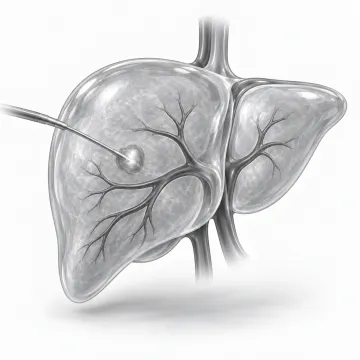
Microwave ablation
Heat small liver, lung or kidney tumors through a needle, often with a same-day or overnight stay.
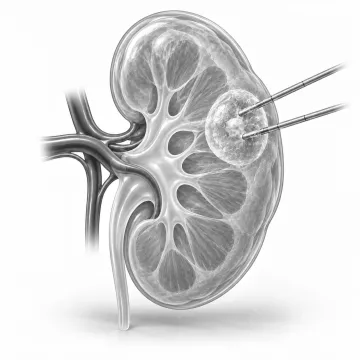
Cryoablation
Freeze small kidney, lung, bone or breast tumors through a needle, with a short recovery.
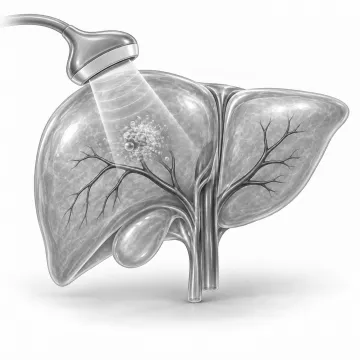
Histotripsy
Focused ultrasound breaks up liver tumors from outside the body. New, and not for everyone.
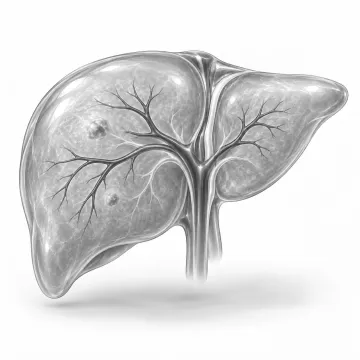
Liver tumors
Primary liver cancer and liver metastases: what they are and every way to treat them.
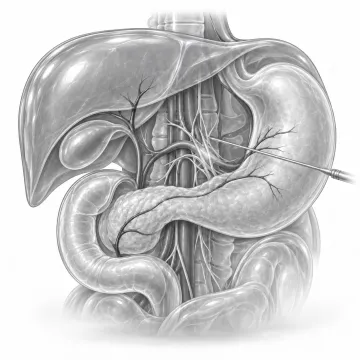
Cancer pain treatment
Nerve blocks, spine and bone procedures, and pain pumps for cancer pain medicines cannot control.
Written for patients by the Palo Alto Interventional team. General information only; your own plan depends on your health and imaging.
Talk to us about your options
Request a consultation online, or call 650-404-8445, Monday to Friday, 8 am to 5 pm. You can also ask your doctor to send a referral. We will review your imaging and help you decide whether a procedure makes sense.