
Y-90 radioembolization
Radiation aimed at liver tumors from the inside.
Y-90 radioembolization delivers millions of tiny radioactive beads straight into the arteries that feed a liver tumor, through a small tube placed at the groin or wrist. It takes two visits, and most people go home the same day each time.
- Two outpatient visits
- 1–2 hours each
- Moderate sedation
- Home the same day
 Fabio Komlos, MDInterventional radiologist
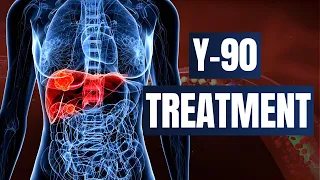 Watch the video explanation16:11 video · Understanding Y90 Radioembolization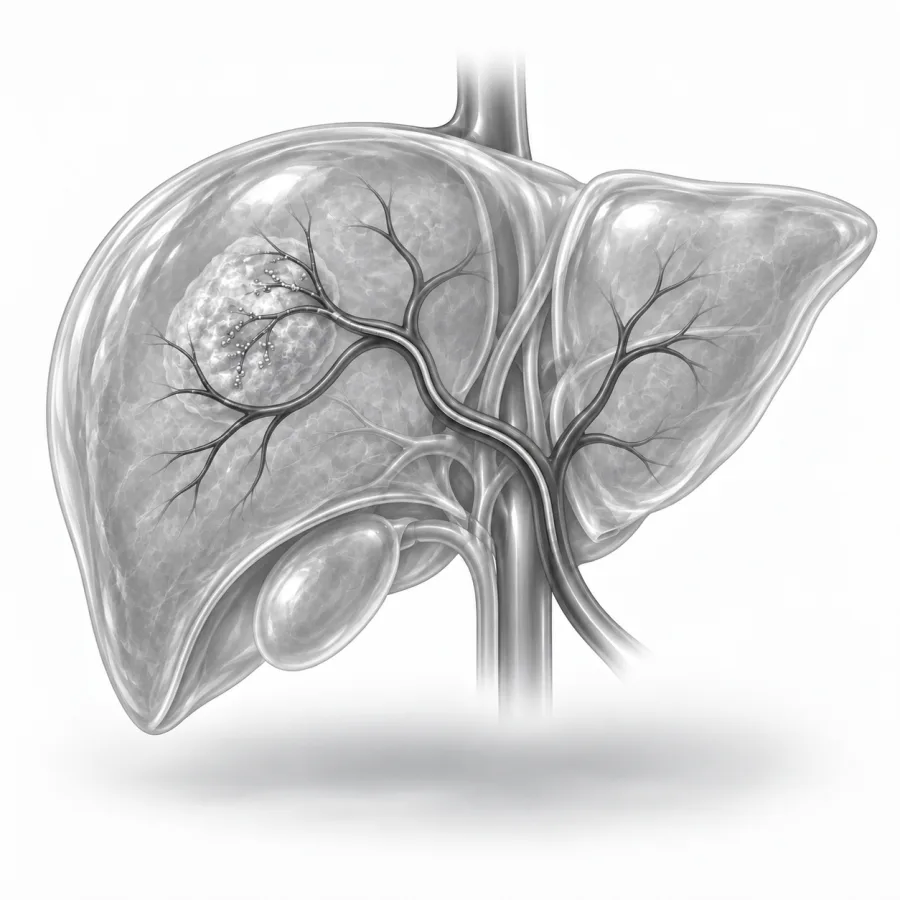
 On imaging
Selective angiogram: the catheter is placed in one artery so only the target area is treated.
Understanding Y90 Radioembolization
Dr. Fabio Komlos walks through y-90 radioembolization the way he explains it in clinic, using the same images he uses to plan treatment.
Fabio Komlos, MDInterventional radiologist · 16:11Y90 Radioembolization Explained — Minimally Invasive Liver Cancer Treatment
2:56
What is Y90 Radioembolization? How can you kill cancer without surgery.
4:45
How Interventional Radiologists Treat Liver Tumors Without Surgery — at is liver-directed therapy?
5:43
Quick answers
Under a minute eachWhat is Y-90 radioembolization?
Y-90 radioembolization is a way to give a strong dose of radiation to tumors in the liver while sparing most of the healthy liver and the rest of your body. It is also called selective internal radiation therapy (SIRT) or transarterial radioembolization (TARE). "Y-90" stands for yttrium-90, the radioactive element inside the beads.
The liver has two blood supplies. Healthy liver gets most of its blood from the portal vein, but liver tumors feed almost entirely from the hepatic artery. We use that difference. Through a thin tube called a catheter, we steer the beads into the small artery branches that lead to the tumor. The beads, each thinner than a hair, lodge in the tumor's tiny blood vessels and give off radiation right there.
The radiation only travels a few millimeters, about the width of a grain of rice. Most of it is delivered over the first two weeks and it is essentially gone within a month. The beads themselves stay in the liver for good, but they are harmless once the radiation has faded.
What we seeWho it helps, and who it may not
Y-90 is used for cancer that starts in the liver, called hepatocellular carcinoma (HCC), and for cancer that has spread to the liver from somewhere else, such as the colon, rectum, or neuroendocrine tumors. It is one of several options described on our liver tumors page.
Depending on your situation, the goal can be to destroy a small tumor completely, to control a tumor that cannot be removed with surgery, to shrink a tumor so surgery or a liver transplant becomes possible, or to keep a tumor in check while you wait for a transplant. Your care team should tell you plainly which goal applies to you.
Often a good fit
- Tumors limited mostly to the liver
- Liver that still works reasonably well
- Tumors too large, too many, or in the wrong spot for surgery or ablation
- Some tumors that have grown into a portal vein branch
- Waiting for a transplant, or needing tumors shrunk first
- Able to care for yourself most of the day
May not be right if
- Your liver is failing, for example with yellow skin (jaundice) or a lot of belly fluid
- The mapping scan shows too much flow to the lungs
- Beads could not be kept out of the stomach or bowel
- Cancer is widespread outside the liver
- You are pregnant
- You are too unwell to recover from any procedure
How Y-90 compares with other liver treatments
Most liver tumors can be treated in more than one way, and the options are often combined. A tumor board, where surgeons, oncologists, radiation oncologists and interventional radiologists review your scans together, helps decide the order.
| Y-90 radioembolization | Chemoembolization (TACE) | Ablation | |
|---|---|---|---|
| How it works | Radioactive beads in the tumor's arteries | Chemotherapy plus blocking beads in the tumor's arteries | A needle heats or freezes the tumor directly |
| Best for | Small to large tumors, one or several | Several tumors, often in intermediate-stage HCC | Small tumors, usually 3 cm or less |
| Visits | Two (mapping, then treatment) | One per session, often repeated | Usually one |
| Typical stay | Home the same day | Same day or one night | Same day or one night |
| How you feel after | Tired for 1–2 weeks, mild nausea | Pain, fever and nausea for several days are common | Sore for a few days, sometimes flu-like |
Other options include surgery, liver transplant, focused external radiation (SBRT), histotripsy and medicines such as immunotherapy. See chemoembolization and microwave ablation for more on those treatments.
How to prepare
- You will have recent blood tests and a CT or MRI of the liver before the first visit.
- Do not eat or drink after midnight before each visit. You can take your usual morning medicines with a small sip of water.
- If you take a blood thinner, we will tell you whether and when to pause it. See blood thinners.
- Tell us about any allergy to X-ray contrast dye, and about kidney disease or diabetes.
- Arrange for an adult to drive you home both days. You will receive sedation, so you cannot drive yourself.
- Leave jewelry and valuables at home. Plan for a long day and bring something to read.
The procedures are done at El Camino Hospital. When you arrive, a nurse starts an IV, checks your blood work, and gives fluids and medicines, usually including an antibiotic and an anti-nausea medicine. More general tips are on before your procedure and sedation.
What happens on mapping day and treatment day
Y-90 is done in two stages. The first visit is a rehearsal that checks where the beads will go. The second visit is the treatment itself.
- 1Mapping angiogram
You receive moderate sedation, so you are relaxed and drowsy but breathing on your own. We numb a spot at the top of the leg or the wrist and guide a catheter to the liver arteries using X-ray. We map exactly which branches feed the tumor.
- 2Protecting the stomach and bowel
If a small artery near the tumor heads toward the stomach or bowel, we may close it with tiny metal coils. Other vessels take over its job. Not everyone needs this step.
- 3Test particles and scan
We inject a harmless tracer made of protein particles about the size of the real beads. A nuclear medicine scan then shows where they landed and how much reaches the lungs. The whole mapping day often takes 6–8 hours at the hospital, and you go home that evening.
- 4Treatment day
About one to three weeks later, we repeat the angiogram and deliver the Y-90 beads into the branches chosen on mapping day. The room time is usually about an hour. Expect 4–6 hours at the hospital in total.
- 5Recovery and home
A small plug or pressure closes the puncture. You rest for about 2 hours, sometimes longer, then eat, walk, and go home the same day with a written radiation safety sheet.
The puncture is about the size of a pencil tip and does not need stitches. You may feel pressure at the start and brief warmth when contrast dye is injected. Most people feel little else.
Recovery and radiation safety
The most common side effect is tiredness. Many people also have mild nausea, a poor appetite, or a dull ache under the right ribs. These symptoms are usually milder than after chemoembolization. We send you home with anti-nausea medicine and often a medicine to protect the stomach.
- First 24 hoursRest at home. Keep the puncture site dry and avoid bending or lifting with that leg or arm. No driving for 24 hours after sedation.
- Days 2–7Fatigue, mild nausea and a low fever are common. You can shower and do light activity. Avoid lifting more than 10 pounds for about 5 days.
- Weeks 1–2Energy slowly returns. Most people are back to usual activities by the end of the second week. You will see us for a check-up and blood tests.
- About 1–3 monthsA CT, MRI or PET scan and blood tests show how the tumor is responding. The radiation keeps working for weeks, so early scans can look unchanged.
Radiation safety. You are not a danger to the people around you. The radiation stays inside your liver and very little reaches the outside of your body. As a simple precaution, for the first week or two avoid long close contact with pregnant women and young children, such as holding a child on your lap for a long time or sharing a bed. Normal time together in the same room is fine. Airport scanners can pick up tiny amounts of radiation for a few weeks, so ask us for a letter if you plan to fly within a month.
Results
Y-90 works slowly. Tumors often shrink or stop showing active blood flow over one to three months, and sometimes keep improving for longer. Some people need a second treatment, for example to another part of the liver a few weeks later.
For small primary liver cancers treated with a concentrated dose, Y-90 can destroy the tumor completely, with results that in published studies compare well with other local treatments. For larger or spread-out tumors the aim is usually control: slowing growth, easing symptoms, and buying time, often alongside medicines. Your scans guide the next step.
Mapping day is where I do most of my thinking. I study how every artery branches toward the tumor, and I look closely at anything heading toward the stomach or bowel, because keeping the beads in the liver is what keeps Y-90 gentle. I tell patients honestly what we are aiming for, whether that is a cure, a bridge to transplant, or control, and I also tell them that feeling tired for a week or two is normal.Fabio Komlos, MD, interventional radiologist · About Dr. Fabio Komlos
Risks and side effects
Serious problems are uncommon. The mapping step exists to lower these risks.
- Fatigue, nausea, poor appetite and right-sided belly discomfort, usually for one to two weeks.
- Bleeding or bruising at the puncture site, usually minor.
- Reaction to contrast dye or strain on the kidneys, more likely with kidney disease or diabetes.
- Stomach or bowel ulcer if beads travel outside the liver. This is uncommon and is why we map first.
- Radiation injury to the lung, very rare because we measure lung flow in advance.
- Liver injury, more likely if the liver was already weak or a large portion is treated. We check blood tests after treatment.
- Gallbladder irritation, infection or abscess in the treated area, uncommon.
Common questions
Will I be radioactive?
Will I lose my hair or feel sick like with chemotherapy?
Does it hurt?
Will Y-90 permanently damage my liver?
Why do I need two visits?
When can I drive and go back to work?
Can I still have chemotherapy, immunotherapy or surgery?
Will insurance cover it?
Liver tumors
Primary liver cancer and liver metastases: what they are and every way to treat them.
Chemoembolization (TACE)
Concentrated chemotherapy and a blocked blood supply, aimed right at a liver tumor.
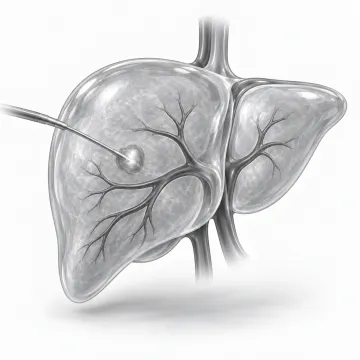
Microwave ablation
Heat small liver, lung or kidney tumors through a needle, often with a same-day or overnight stay.
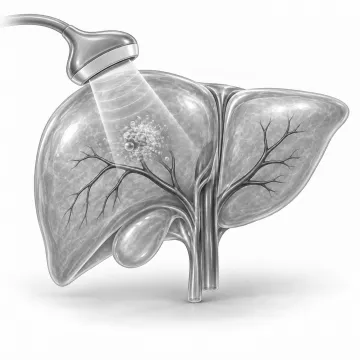
Histotripsy
Focused ultrasound breaks up liver tumors from outside the body. New, and not for everyone.
Portal vein embolization
Help the healthy part of your liver grow so that liver cancer surgery is safer or possible.
Written for patients by the Palo Alto Interventional team. General information only; your own plan depends on your health and imaging.
Talk to us about your options
Request a consultation online, or call 650-404-8445, Monday to Friday, 8 am to 5 pm. You can also ask your doctor to send a referral. We will review your imaging and help you decide whether a procedure makes sense.