
Spinal cord stimulators
Turn down chronic back and leg pain, try it first.
A spinal cord stimulator sends gentle electrical pulses to the spinal cord to quiet pain signals. You test it for about a week with temporary wires before deciding on a permanent implant.
- Trial first
- About 1 hour
- Sedation
- Home the same day
 Fabio Komlos, MDInterventional radiologist
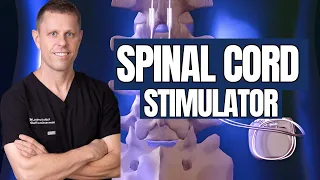 Watch the video explanation6:56 video · Spinal Stimulator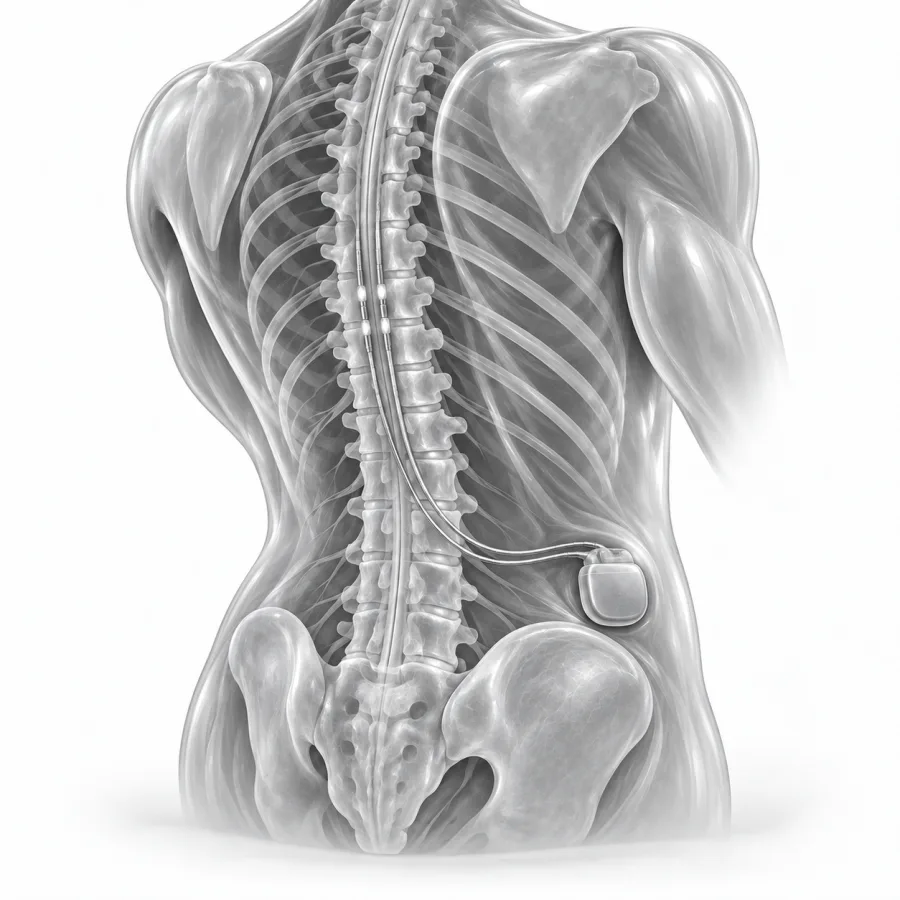
Temporary wires for about a week before any implant.
Spinal Stimulator
Dr. Fabio Komlos walks through spinal cord stimulators the way he explains it in clinic, using the same images he uses to plan treatment.
Fabio Komlos, MDInterventional radiologist · 6:56What is a spinal cord stimulator?
A spinal cord stimulator (SCS) is a small device that sends mild electrical pulses to the back of the spinal cord. Pain travels from your back, leg or arm up the spinal cord to the brain. The pulses change or block that signal, so less of the pain gets through. Doctors have used this treatment since the late 1960s, and today's devices are much smaller and smarter.
The stimulator does not fix the cause of the pain. It changes how your nervous system handles the pain signal. That is why results differ from person to person, and why everyone tries a temporary version first.
The three parts of the system
- Leads: thin, soft wires with 8 to 32 small contacts (electrodes). They lie in the epidural space, a thin layer just outside the covering of the spinal cord.
- Pulse generator: a battery-powered device about the size of a large coin or small matchbox, placed under the skin of the upper buttock or lower back.
- Remote control: a handheld device or phone app you use to turn the stimulator on and off, switch programs and change the strength.
Older settings replace pain with a light tingling or buzzing feeling, called paresthesia. Many newer settings use high-frequency or burst pulses that most people cannot feel at all. Most devices can do both, so you can choose what feels best.
On the live X-ray (fluoroscopy) image, the leads show up as thin white lines running up and down the middle of the spine, with small bright dots marking each contact.
Who it helps, and who it doesn't
Stimulators are for long-lasting nerve-type pain, usually pain that has gone on for more than 3 to 6 months despite medicines, physical therapy, injections or surgery. A pain specialist, spine surgeon or physiatrist (a rehabilitation doctor) usually reviews your history first. Most insurers also require a short visit with a psychologist, because chronic pain affects sleep, mood and stress, and treating those helps the device work better.
May help if you have
- Ongoing back and leg pain after spine surgery, sometimes called failed back surgery syndrome
- Sciatica or arm pain from nerve damage or narrowing of the spine (spinal stenosis) when surgery is not a good option
- Complex regional pain syndrome (CRPS), a burning pain in a hand or foot
- Painful diabetic nerve damage (neuropathy) in the feet
- Nerve pain after amputation or a nerve injury
May not be right if
- Your pain comes from a problem that surgery can fix, such as a nerve being squeezed with new weakness
- You have an active infection or a bleeding disorder
- You have untreated depression or active drug or alcohol misuse
- You cannot use the remote control or charge the device
- You will need frequent full-body MRI scans and your device choice would not allow it
Stimulators tend to work better earlier in the course of chronic pain, before long periods of inactivity, poor sleep and heavy medicine use take hold.
How it compares with other options
A stimulator is usually considered after simpler treatments have been tried. It can sit alongside other care rather than replace it. Here is how it compares with common choices.
| Spinal cord stimulator | Repeat spine surgery | Long-term pain medicines | |
|---|---|---|---|
| Can you try it first? | Yes, a 5 to 10 day trial | No | Yes |
| Reversible? | Yes, it can be removed | No | Yes |
| Recovery | About 6 weeks of limits after the implant | Weeks to months | None, but side effects build up |
| Main downsides | Hardware problems, battery changes, infection | Larger operation, may not help nerve pain | Drowsiness, constipation, dependence |
| Best for | Nerve pain in the legs, arms or back | A fixable structural problem | Short-term or mild pain |
Other options include epidural steroid injections, nerve blocks, peripheral nerve stimulation for pain in one area, and a pain pump for severe pain that needs medicine delivered to the spine.
The trial: a test drive
The trial shows whether a stimulator helps your type and location of pain before you commit to an implant. It is an outpatient procedure that usually takes 30 to 60 minutes.
You lie on your stomach. The doctor numbs the skin of the lower or middle back and, using live X-ray, guides a needle into the epidural space. One or two trial leads are threaded up to the right level. The doctor may ask you what you feel while testing the leads, so you stay awake enough to answer. The leads come out through the skin and connect to a small stimulator worn on a belt. There is no incision for the trial.
At home, you use the device during your normal day and keep a simple log of your pain, activity, sleep and pain medicines. Keep the dressing dry: no showers or baths during the trial, sponge baths only, and avoid bending, twisting and heavy lifting so the leads do not move. After about 5 to 10 days, the leads are pulled out in the clinic in a few seconds. It feels like pulling off a bandage.
The trial counts as a success if your pain drops by about half or more and you can do more. If it does not help, nothing further is needed, and the trial leaves no damage to the spinal cord or nerves. If it does help, the skin is usually allowed to heal for about 2 weeks before the permanent implant.
Getting ready for the implant
- You may need blood tests, an ECG (heart tracing) or other tests a few days before.
- Tell us about every medicine you take. Blood thinners, and often anti-inflammatory pills such as ibuprofen or naproxen, need to be stopped for a set number of days first. See blood thinners. Never stop a blood thinner without a plan from the doctor who prescribed it.
- Stop smoking and vaping as early as you can. Nicotine slows healing and raises the risk of infection.
- Nothing to eat or drink after midnight, unless we give you different instructions. Take approved morning medicines with a small sip of water.
- Shower with antibacterial soap the night before or that morning. Wear loose, clean clothes.
- Leave jewelry and valuables at home. Bring your medicine and allergy lists.
- Arrange an adult to drive you home and stay with you the first night.
More general advice is on before your procedure and sedation.
What happens during the implant
- 1Preparing
A nurse places an IV and you get antibiotics through it to lower the risk of infection. You lie on your stomach and receive sedation or light anesthesia. The skin of the back and buttock is cleaned and numbed.
- 2Placing the leads
Through a small opening in the middle of the back, the permanent leads are guided into the epidural space under live X-ray, in the same spot that worked during the trial. They are anchored so they stay in place.
- 3Creating the pocket
A small incision is made in the upper buttock or flank. The doctor creates a pocket under the skin for the pulse generator and tunnels the lead wires under the skin to it.
- 4Connecting and testing
The leads are connected to the generator and the system is checked. The generator is settled into its pocket.
- 5Closing
The incisions are closed with stitches under the skin and skin glue, and a dressing is applied. The whole procedure usually takes 1 to 2 hours.
Afterward, you recover for about 1 to 2 hours while nurses check your blood pressure, heart rate, oxygen and pain. A representative from the device company usually programs the stimulator before you leave. Most people go home the same day. Some stay overnight.
Recovery and living with a stimulator
- First 24 hoursRest at home. No driving, alcohol or important decisions after sedation. Soreness at the incisions is normal.
- First 3 daysIncision pain usually eases. Acetaminophen (Tylenol) and ice packs help. Showering is usually fine once the skin glue has sealed, but do not scrub the incisions.
- First 2 weeksNo baths, hot tubs or swimming. The skin glue falls off on its own in 1 to 2 weeks. A wound check visit is usually about 1 week after the implant.
- First 6 weeksAvoid bending, lifting more than about 10 pounds, twisting and reaching over your head. Scar tissue forms around the leads during this time and holds them in place. Walking is encouraged.
- After 6 to 8 weeksMost people return to normal activity. Your settings may be adjusted at follow-up visits to find the best relief.
Day-to-day life with the device
- Rechargeable devices need charging, often for a short time daily or a few times a week. They usually last about 8 to 10 years or longer. Non-rechargeable batteries last a few years and are replaced in a short outpatient procedure.
- Relief can change a little when you sit, stand or lie down. This is normal, and many devices adjust automatically.
- Phones, microwaves and household electronics are safe to use.
- Carry your device ID card. Turn the stimulator off before walking through airport or store security gates, which can briefly change the feeling.
- Many newer systems allow MRI scans under specific conditions, but not all do. Always tell any doctor or technologist that you have a stimulator.
- Ask your doctor before chiropractic spine manipulation, as it could move the leads.
Results and risks
Success means meaningful relief, not zero pain. The usual goal is at least 50% less pain, along with better sleep, more activity and fewer pain pills. Published studies show that roughly half to two-thirds of people with a successful trial keep good relief for years. Some people find that relief fades over time, and a settings change or new program often helps.
When I meet someone considering a stimulator, I want to understand exactly where the pain goes, what it feels like and what they hope to do again, like walking the dog or sleeping through the night. The trial is the most honest test we have, so I ask patients to keep a real log and judge it by what they can do, not just by a number. If the trial does not help, that is useful information, and we move on to other options.Fabio Komlos, MD, interventional radiologist · About Dr. Fabio Komlos
Possible risks
- Lead movement (migration): the most common problem. Relief may shift or fade. A reprogramming visit, or sometimes a short procedure to reposition the lead, fixes it.
- Infection: uncommon, about 2 to 5 in 100 implants in published studies. A serious infection usually means removing the device.
- Pain at the generator site: usually settles, but a few people need the generator moved.
- Spinal headache: from a small leak of spinal fluid, usually treated with rest, fluids and caffeine, or a blood patch.
- Fluid pocket (seroma) near the device: usually goes away on its own.
- Hardware problems: a broken lead or battery failure that may need a repair procedure.
- Bleeding or nerve injury near the spinal cord: very rare, but serious. It can cause weakness or paralysis and needs emergency care.
The treatment is reversible. If you decide you no longer want the stimulator, the leads and generator can be removed.
Common questions
Does the trial hurt?
Will I feel the stimulator all the time?
Can I stop taking my pain medicines?
When can I drive?
Can I have an MRI?
What if it stops working?
Will insurance cover it?
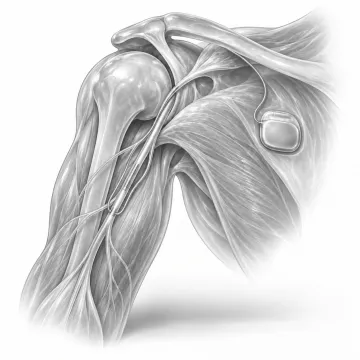
Peripheral nerve stimulators
Ease pain in the back, shoulder, knee or a limb with a thin wire and gentle electrical pulses.
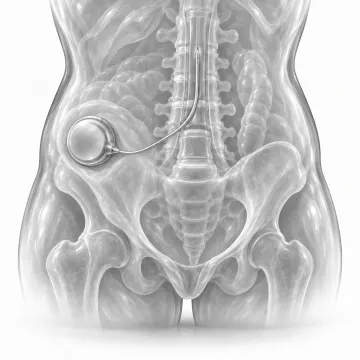
Pain pumps (intrathecal drug delivery)
Deliver pain medicine directly to the spinal cord for severe pain, with fewer side effects.
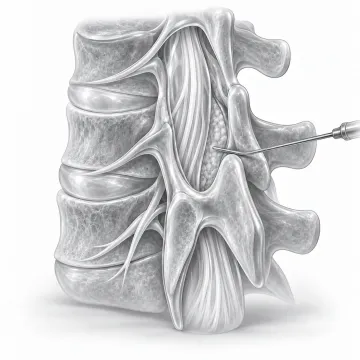
Epidural steroid injections
Ease sciatica, arm pain or back pain with a precise, image-guided steroid injection.
Nerve blocks
Pinpoint and calm the nerve carrying your pain with a precise, image-guided injection.
Cancer pain treatment
Nerve blocks, spine and bone procedures, and pain pumps for cancer pain medicines cannot control.
Written for patients by the Palo Alto Interventional team. General information only; your own plan depends on your health and imaging.
Talk to us about your options
Request a consultation online, or call 650-404-8445, Monday to Friday, 8 am to 5 pm. You can also ask your doctor to send a referral. We will review your imaging and help you decide whether a procedure makes sense.