
Ramiplasty
Get back on your feet after a painful pelvic fracture.
Ramiplasty injects medical bone cement into a broken pubic bone through a needle, guided by CT. It aims to ease pain and help you walk when a fracture from weak bones or cancer is slow to heal.
- Specialized procedure
- About 1 hour
- Sedation
- Home same or next day
 Fabio Komlos, MDInterventional radiologist
 Watch the video explanation9:27 video · Kyphoplasty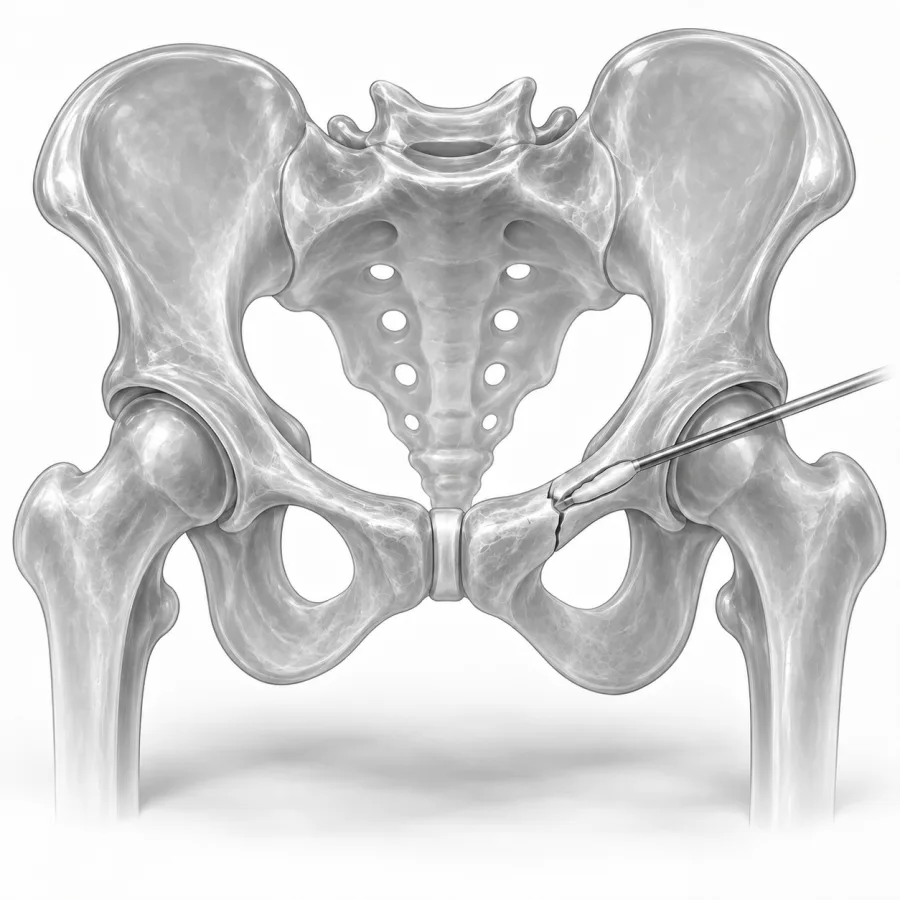
CT guides the cement into the broken bone.
Kyphoplasty
Dr. Fabio Komlos walks through ramiplasty the way he explains it in clinic, using the same images he uses to plan treatment.
Fabio Komlos, MDInterventional radiologist · 9:27What is a pubic ramus fracture?
The pelvis is a ring of bone. At the front, two thin bars of bone on each side, called the pubic rami, connect the hip area to the pubic bone in the middle. These bars are narrow, and when bones are weak, they can break.
Common causes
- Osteoporosis: thinning bones, most often in older women. A simple fall from standing, or no clear injury at all, can crack the bone. This is called an insufficiency or fragility fracture.
- Cancer in the bone: such as myeloma or cancer that has spread to the pelvis, which weakens the bone from inside.
- Radiation to the pelvis: past radiation treatment for cancer can make the bone more fragile years later.
Symptoms are pain in the groin, the front of the pelvis or the inner thigh, sharply worse when you stand, walk or put weight on one leg. Many people cannot walk without a walker, and some cannot get out of bed. Pubic ramus fractures often come with a hidden crack in the sacrum at the back of the pelvis, because the pelvis is a ring and tends to break in more than one place.
On CT, the fracture appears as a thin dark line or a break across the narrow bar of pubic bone. MRI shows swelling around a fresh break and can reveal cracks elsewhere in the pelvis that X-rays miss.
What is ramiplasty?
Ramiplasty, also called pubic ramus cementoplasty, is a cousin of kyphoplasty and sacroplasty. Using CT scans, and sometimes live X-ray, the doctor guides a needle into the broken bone and slowly injects medical-grade bone cement (PMMA). The cement hardens within minutes and acts like an internal splint. It reduces movement at the break, which is the main source of pain, and supports the bone so you can put weight on it.
We want to be clear: ramiplasty is a specialized procedure. It is done at relatively few centers, and the evidence for it comes from smaller studies, not large randomized trials. It is considered when standard care has not worked well enough, or when cancer has weakened the bone.
Who it may help, and who it doesn't
Most pubic ramus fractures from osteoporosis heal on their own over 6 to 12 weeks with pain medicine, physical therapy, a walker and time. That remains the first choice for most people. Ramiplasty may be considered in specific situations.
May be considered if
- Pain still keeps you from walking after several weeks of standard care
- You are stuck in bed or a hospital because of the pain
- Pain medicines cause confusion, falls, constipation or other problems
- Cancer has spread to the pubic bone and is causing pain or threatens to break it
- The fracture has not healed on follow-up imaging
May not be right if
- Your pain is improving steadily with standard care
- The broken pieces are far apart or the pelvis is unstable, which may need surgery
- The fracture runs into the hip joint
- You have an infection in the bone, skin or elsewhere in the body
- You have a bleeding problem that cannot be corrected
How it compares with other options
| Ramiplasty | Standard care | Surgical fixation | |
|---|---|---|---|
| What it involves | Cement through a needle | Pain medicine, walker, physical therapy | Screws or plates placed by a surgeon |
| Anesthesia | Sedation or general | None | Usually general |
| Time to walking comfortably | Often days, varies | Usually 6 to 12 weeks | Weeks |
| Strength of evidence | Small studies | Standard first choice | More established for unstable fractures |
For cancer in the bone, radiation therapy is often used to control pain and the tumor. Cement can be combined with radiation, and sometimes with a tumor ablation in the same session. Your oncologist, orthopedic surgeon and our team decide together what is best.
How to prepare
- You will need recent imaging, usually CT and often MRI of the pelvis, to show the fracture and any others nearby.
- Tell us about blood thinners. Most need to be stopped for a set number of days. See blood thinners.
- Nothing to eat or drink after midnight. Take approved morning medicines with a small sip of water.
- Tell us about any allergies and about any hip or pelvic surgery in the past.
- Arrange an adult to drive you home and stay with you, or plan for an overnight stay.
More general advice is on before your procedure and sedation.
What happens during ramiplasty
- 1Preparing
You lie on the CT table, usually on your back. You receive sedation or general anesthesia and antibiotics through your IV. The skin is cleaned and numbed.
- 2Placing the needle
Using CT images, the doctor guides a hollow needle into the broken pubic bone, often from the side of the hip or near the groin, staying clear of the hip joint, bladder, nerves and blood vessels.
- 3Injecting the cement
Thick bone cement is injected slowly while CT or X-ray images check that it stays in the bone. Sometimes a bone sample is taken first if cancer is suspected.
- 4Finishing
The needle is removed and the puncture is covered with a small bandage or skin glue. The procedure usually takes about 1 hour, longer if other fractures are treated in the same session.
You lie flat for about 1 to 2 hours while the cement fully hardens. Many people go home the same day. Those who were already in the hospital, or who need help getting walking again, may stay a night or longer.
Recovery and results
- First dayRest. Soreness at the needle site is normal. A nurse or therapist helps you stand and walk with your walker when ready. No driving after sedation.
- First weekWalk several times a day with support. Many people notice easier standing and walking within days. Shower after 24 hours, but no baths or pools for 1 week.
- Weeks 2 to 6Continue physical therapy and slowly reduce the walker as balance and strength allow. Your doctor may taper pain medicines.
- Longer termTreating bone strength or the cancer becomes the focus, to prevent more fractures.
In published case series, most people treated with ramiplasty reported less pain and easier walking, often within days. These studies are small and not all compare against standard care, so we cannot promise a specific result. Some people have little change.
I see ramiplasty as a problem-solving tool for a small group of patients, often older adults who were independent until a fall and are now stuck in bed because every step hurts. I look closely at the CT to make sure the break is in a spot I can reach safely and that there is not a second fracture that is really causing the pain. I am honest that the evidence is limited, and I only recommend it when I think the chance of helping someone walk again outweighs the risks.Fabio Komlos, MD, interventional radiologist · About Dr. Fabio Komlos
Risks
- Cement leaking out of the bone. Small leaks into soft tissue are fairly common and usually harmless. A leak into the hip joint, or near a nerve such as the obturator nerve that supplies the inner thigh, could cause pain or weakness and is uncommon.
- Pain or bruising at the needle site for a few days.
- Infection, rare.
- Bleeding or injury to nearby blood vessels, bladder or nerves, rare.
- Cement traveling through a vein to the lungs, rare and usually without symptoms.
- No improvement in pain, especially if other pelvic fractures are the main source.
- A new fracture elsewhere, because the underlying bone weakness remains.
Common questions
Is ramiplasty a common procedure?
Does it hurt?
Will I still need a walker?
Can both sides, or my sacrum, be treated at the same time?
Does the cement need to come out?
Will insurance cover it?
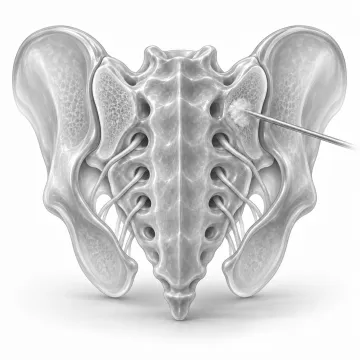
Sacroplasty
Stabilize a painful fracture at the base of the spine with bone cement, through a needle.
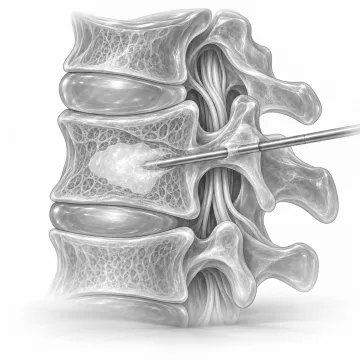
Kyphoplasty
Stabilize a painful spine compression fracture with bone cement, through a needle.
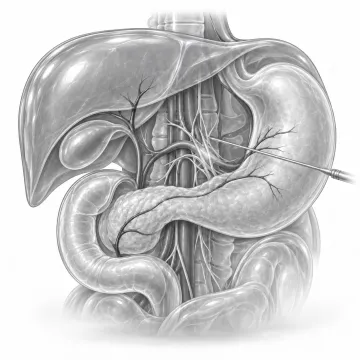
Cancer pain treatment
Nerve blocks, spine and bone procedures, and pain pumps for cancer pain medicines cannot control.
Tumor ablation
Heat or freeze a tumor through a needle, with no incision and a short recovery.
Palliative cancer care
Small procedures that ease fluid build-up, pain, blockages and eating problems caused by cancer.
Written for patients by the Palo Alto Interventional team. General information only; your own plan depends on your health and imaging.
Talk to us about your options
Request a consultation online, or call 650-404-8445, Monday to Friday, 8 am to 5 pm. You can also ask your doctor to send a referral. We will review your imaging and help you decide whether a procedure makes sense.