
Kyphoplasty
Relieve the pain of a spine fracture, often in days.
Kyphoplasty strengthens a broken spinal bone by filling it with medical bone cement through a needle in the back. It usually takes about an hour per level, and most people go home the same day.
- Outpatient
- About 1 hour
- Moderate sedation
- Home the same day
 Fabio Komlos, MDInterventional radiologist
 Watch the video explanation9:27 video · Kyphoplasty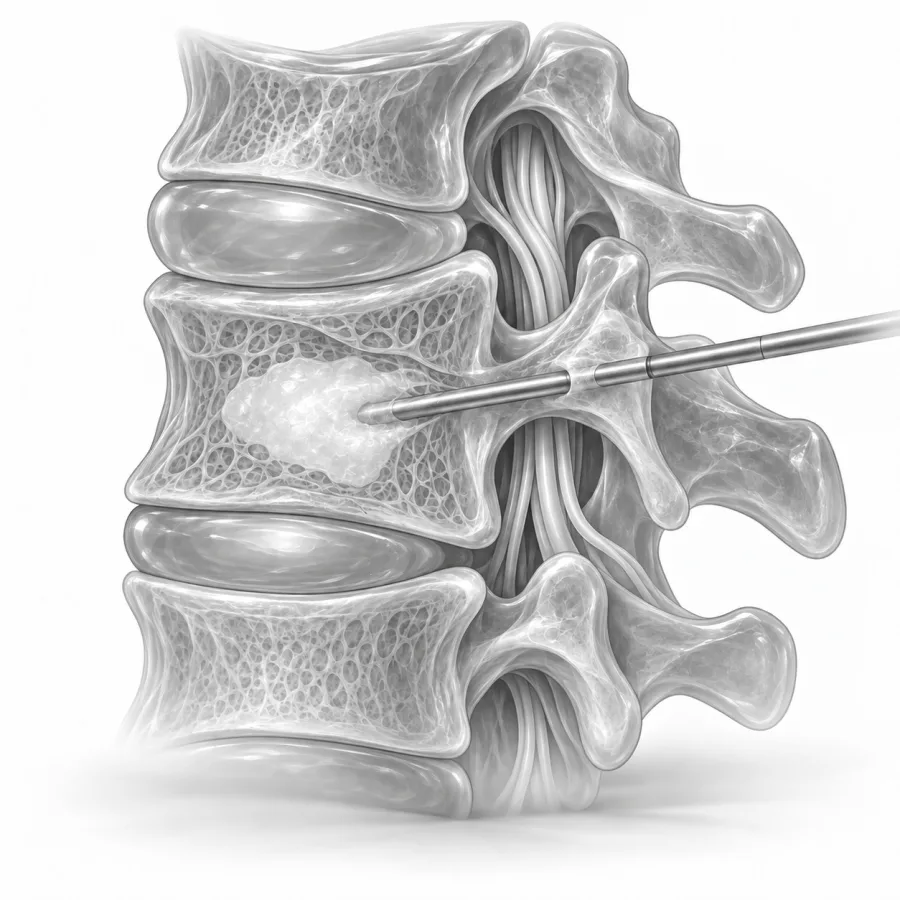
Two small needle punctures, closed with skin glue.
Kyphoplasty
Dr. Fabio Komlos walks through kyphoplasty the way he explains it in clinic, using the same images he uses to plan treatment.
Fabio Komlos, MDInterventional radiologist · 9:27What is a vertebral compression fracture?
The spine is a stack of bones called vertebrae. When one of these bones is weak, it can crack and collapse, like a sugar cube pressed flat. This is a vertebral compression fracture. It often happens with little or no injury, such as bending to lift a bag, coughing or getting out of a chair.
Common causes
- Osteoporosis: thinning of the bones with age, especially after menopause, or from long-term steroid medicines. It is by far the most common cause.
- Cancer in the spine: such as multiple myeloma or cancer that has spread to the bone from the breast, lung, prostate, kidney or elsewhere.
- Injury: a fall or accident, usually in stronger bones.
The typical symptom is sudden, sharp back pain at the level of the fracture, worse when you stand, walk or turn in bed, and better lying still. Several fractures can cause a loss of height and a rounded, hunched upper back (kyphosis), which can make breathing and eating harder.
On MRI, a new fracture looks bright on a special water-sensitive image because the broken bone is swollen. An old, healed fracture does not. This is the key test for deciding whether kyphoplasty is likely to help.
What is kyphoplasty?
Kyphoplasty and vertebroplasty are closely related procedures that stabilize a fractured vertebra with medical-grade bone cement. Using live X-ray, the doctor guides a needle through the back into the broken bone. In kyphoplasty, a small balloon is first inflated inside the bone to create a space and sometimes restore a little height, then the cement fills that space. In vertebroplasty, cement is injected without a balloon.
The cement hardens in about 10 to 20 minutes and acts like an internal cast. It stops the broken pieces from moving against each other, which is the main source of pain.
Who it helps, and who it doesn't
Most compression fractures heal on their own in about 6 to 12 weeks with pain medicines, a back brace, gentle activity and time. Kyphoplasty is considered when pain is severe, keeps you in bed, or does not improve with those measures, or when pain medicines cause problems such as confusion, constipation or falls.
Good candidates
- A recent fracture that shows swelling on MRI
- Pain that matches the level of the fracture when the doctor presses on it
- Severe pain despite a few weeks of medicines and rest, or pain that keeps you from walking
- Painful fractures caused by myeloma or other cancer in the spine
- Hospital patients who cannot get up because of fracture pain
May not be right if
- The fracture is old and fully healed
- The pain mainly comes from something else, like a slipped disc, arthritis or narrowing of the spine
- Pieces of bone push into the spinal canal or there is new leg weakness, which may need surgery
- You have an infection in the spine or elsewhere in the body
- You have a bleeding problem that cannot be corrected
How it compares with other options
| Kyphoplasty | Brace, medicines and time | Open spine surgery | |
|---|---|---|---|
| How long to feel better | Often 1 to 2 days | Usually 6 to 12 weeks | Weeks to months |
| Anesthesia | Moderate sedation or general | None | General anesthesia |
| Hospital stay | Usually none | None, unless pain is severe | Several days |
| Best for | Severe pain from a recent fracture | Milder pain that is improving | Unstable fractures or nerve compression |
Research on these procedures has had mixed results. Some studies comparing vertebroplasty with a sham (fake) procedure found little difference, while others, especially those treating very recent and very painful fractures, found faster and greater pain relief with cement. Kyphoplasty studies have shown better pain relief and function than non-surgical care in the first months. Medical societies, including radiology and spine groups, support these procedures for carefully chosen patients.
How to prepare
- You will need recent imaging, usually an MRI, to confirm a new fracture. If you cannot have an MRI, a CT scan or bone scan may be used.
- Tell us about blood thinners. Most need to be stopped for a set number of days. See blood thinners.
- Nothing to eat or drink after midnight. Take approved morning medicines with a small sip of water.
- Leave jewelry and valuables at home.
- Arrange an adult to drive you home and stay with you the first night.
On the day, a nurse will place an IV, check your vital signs and may give antibiotics and anti-nausea medicine. More general advice is on before your procedure and sedation.
What happens during kyphoplasty
- 1Positioning
You lie on your stomach on padded supports. You receive moderate sedation through your IV, or sometimes general anesthesia, and the skin of your back is cleaned and numbed.
- 2Placing the needles
Using live X-ray from two directions, the doctor guides one or two hollow needles through the back of the vertebra into the fractured bone. If cancer is suspected, a small bone sample (biopsy) can be taken now.
- 3Balloon and cement
A small balloon is inflated inside the bone to make a cavity, then removed. Thick bone cement is slowly injected under continuous X-ray to fill the space.
- 4Finishing
The needles are removed and the tiny punctures are sealed with skin glue. The procedure takes about 1 hour for one level, a little longer for more.
Afterward, you lie flat for about 1 to 2 hours while the cement fully sets and nurses check you. Most people walk before going home the same day. Some, especially those already in the hospital, stay overnight.
Recovery and results
- First 24 hoursRest at home. No driving, alcohol or important decisions after sedation. Soreness at the needle sites is normal. Ice packs and acetaminophen (Tylenol) help.
- Days 1 to 3Many people notice their fracture pain is clearly better. Walk short distances several times a day. You can shower after 24 hours, but do not soak in a bath or pool for 1 week.
- Weeks 1 to 6Slowly increase activity. Avoid lifting more than about 10 pounds and heavy bending or twisting. Your doctor may taper your pain medicines.
- After 6 weeksMost people are back to their usual activities. Treating the underlying bone weakness becomes the priority.
Most people with a recent painful fracture get significant pain relief, often within a day or two, and can move more easily and use fewer pain medicines. Studies often report good relief in about 3 in 4 people or more.
Kyphoplasty treats the fracture, not the osteoporosis. Having one fracture raises the chance of another. Ask your primary care doctor or an endocrinologist about a bone density test (DEXA), calcium, vitamin D, exercise, fall prevention and medicines that strengthen bone.
Before I recommend kyphoplasty, I compare where you hurt with what the MRI shows. When the tender spot on your back lines up with a fresh, swollen fracture, the chance of good relief is high. I also remind patients that the fracture is a warning sign about bone strength, so we make sure someone is looking after their osteoporosis or their cancer treatment as well.Fabio Komlos, MD, interventional radiologist · About Dr. Fabio Komlos
Risks
Kyphoplasty is generally safe, and serious problems are uncommon.
- Cement leaking outside the bone. Small leaks are fairly common on imaging and usually cause no symptoms. Leaks that press on a nerve or the spinal cord are rare.
- New fractures in nearby vertebrae, mostly due to the underlying osteoporosis.
- Bleeding or bruising at the needle sites.
- Infection, rare.
- Temporary increase in back pain for a day or two.
- Nerve irritation or injury, rare and usually temporary.
- Cement traveling through a vein to the lungs, rare and usually without symptoms.
- Rib fracture from lying on the stomach in people with very fragile bones, uncommon.
Common questions
Does kyphoplasty hurt?
How soon will my pain improve?
Is it too late if my fracture happened months ago?
Will I get taller again?
Does the cement ever wear out?
When can I drive?
Will insurance cover it?
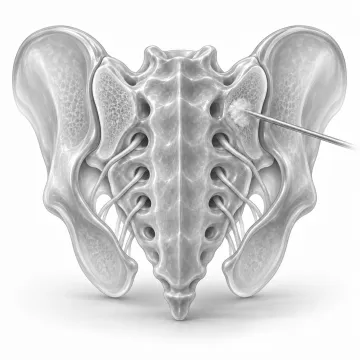
Sacroplasty
Stabilize a painful fracture at the base of the spine with bone cement, through a needle.
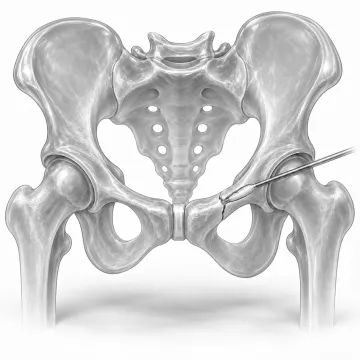
Ramiplasty
Stabilize a painful pubic bone fracture with bone cement, so walking hurts less.
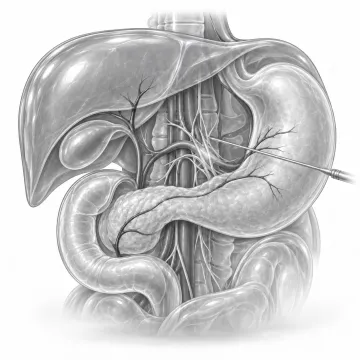
Cancer pain treatment
Nerve blocks, spine and bone procedures, and pain pumps for cancer pain medicines cannot control.
Epidural steroid injections
Ease sciatica, arm pain or back pain with a precise, image-guided steroid injection.
Palliative cancer care
Small procedures that ease fluid build-up, pain, blockages and eating problems caused by cancer.
Written for patients by the Palo Alto Interventional team. General information only; your own plan depends on your health and imaging.
Talk to us about your options
Request a consultation online, or call 650-404-8445, Monday to Friday, 8 am to 5 pm. You can also ask your doctor to send a referral. We will review your imaging and help you decide whether a procedure makes sense.