
Pleurodesis
Stop fluid from coming back around your lung.
When fluid keeps building up around the lung, two main options can give lasting relief: talc pleurodesis, which seals the space shut during a hospital stay of a few days, or a small tunneled catheter you drain at home.
- Hospital stay 2–5 days
- Chest tube
- Numbing and sedation
- For recurring fluid
 Fabio Komlos, MDInterventional radiologist
 Watch the video explanation8:23 video · PleurX Catheter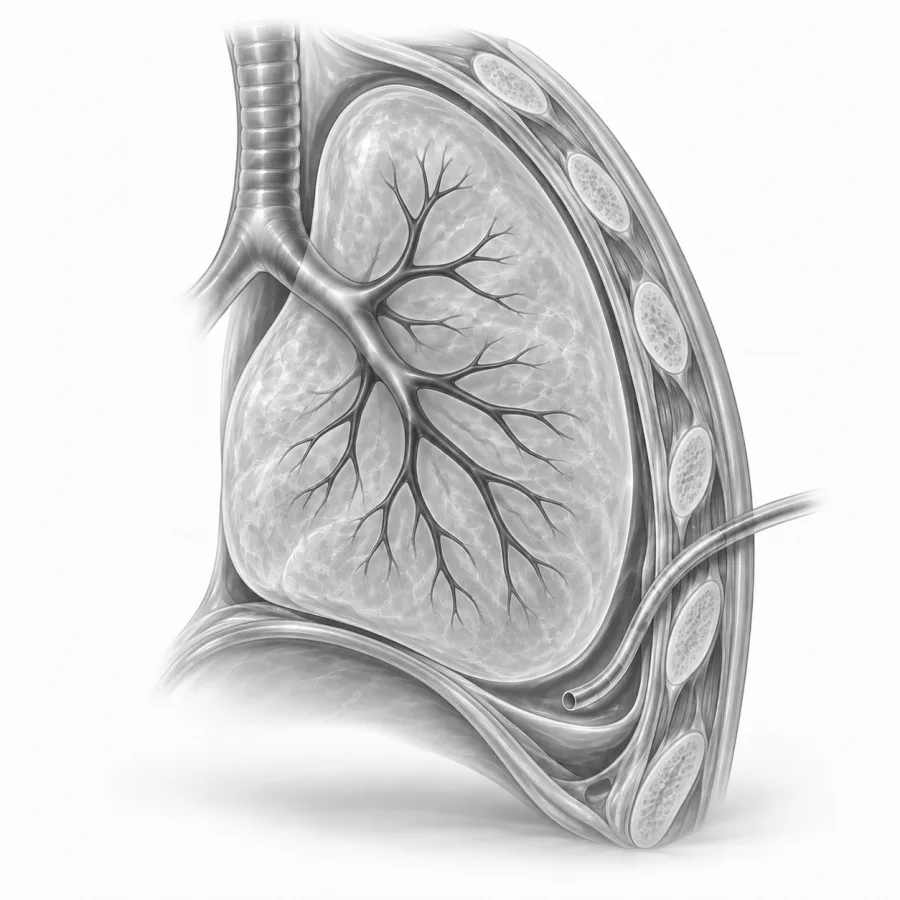
Seal the space, or drain it at home.
PleurX Catheter
Dr. Fabio Komlos walks through pleurodesis the way he explains it in clinic, using the same images he uses to plan treatment.
Fabio Komlos, MDInterventional radiologist · 8:23Thoracentesis Procedure: Everything You Need to Know
12:23
What problem does pleurodesis treat?
The lung is wrapped in two thin layers, like a balloon inside a plastic bag. Normally only a spoonful of fluid sits between them. When fluid builds up in that space, it is called a pleural effusion. It squeezes the lung and makes you short of breath.
Draining the fluid with a needle, called thoracentesis, gives quick relief. But when the cause is cancer, or sometimes heart or liver disease, the fluid often returns within days or weeks. Repeated needle drains become tiring. Pleurodesis makes the two layers stick together so there is no space left for fluid to collect.
On a chest X-ray, fluid shows as a white area at the bottom of the lung with a curved top edge. After a good drainage, the lung expands and the black, air-filled lung reaches the chest wall again.
Your two main options
| Talc pleurodesis | Indwelling pleural catheter | |
|---|---|---|
| What it is | Sterile talc powder placed through a chest tube to seal the space | A soft tube tunneled under the skin that you drain at home |
| Hospital stay | Usually 2–5 days | Usually home the same day |
| Aftercare | None once healed | Drain every day or few days, with help from family or a nurse |
| Works when the lung is stuck | No | Yes |
| Main downside | Pain and fever for a day or two; may fail | Tube care; small infection risk |
Both work well, and large studies show similar improvement in breathing. The catheter means fewer days in the hospital. Over weeks to months, about a third to a half of people with a catheter find that the space seals on its own and the tube can be removed. Talc can also be given through a catheter to speed that up. Learn more on the PleurX catheter and chest PleurX pages.
Who it helps, and who it may not
Talc pleurodesis may suit you if
- Fluid keeps coming back after drainage
- Your breathing got better when the fluid was drained
- The lung fully re-expands after draining
- You prefer no tube at home
A home catheter may be better if
- The lung stays partly collapsed after draining, called a trapped lung
- You want to avoid a hospital stay
- Talc has already been tried and failed
- You are frail and want the least invasive option
If draining the fluid did not help your breathing, neither option is likely to help, and we will look for another cause of breathlessness.
How to prepare
- You will usually have had at least one thoracentesis and a recent chest X-ray or CT.
- Do not eat for several hours beforehand if you will receive sedation. We will give you exact times.
- Blood thinners may need to be paused. See blood thinners.
- For talc pleurodesis, pack a bag for a few nights in the hospital.
- For a home catheter, plan for someone to learn drainage with you.
What happens during talc pleurodesis
Talc can also be sprayed during a keyhole chest procedure done by a surgeon or lung specialist, called thoracoscopy. Here we describe the bedside method through a chest tube, called talc slurry.
- 1Placing a chest tube
With numbing medicine and often light sedation, we use ultrasound to place a small tube between the ribs into the fluid. You feel pressure but should not feel sharp pain.
- 2Draining and checking
The fluid drains over hours to a day or two. A chest X-ray confirms that the lung has fully expanded and the two layers are touching.
- 3Giving the talc
Sterile talc mixed with saline is passed through the tube, usually after a numbing medicine. The tube is clamped for about an hour so the talc coats the space.
- 4Tube removal
The tube is reopened to drain. Once very little fluid comes out, usually in 1–3 days, the tube is removed and you go home.
Recovery
- First 1–2 daysChest pain and a low fever are common after talc as the layers become inflamed. That inflammation is what seals them. We give regular pain medicine.
- Days 2–5The tube comes out once drainage slows. A small dressing covers the site. You go home.
- First week at homeKeep the dressing dry for 48 hours, then shower normally. Avoid heavy lifting for about a week.
- 2–4 weeksA follow-up chest X-ray checks that the fluid has not returned.
Results and risks
Talc pleurodesis stops the fluid from returning in roughly 7 to 8 out of 10 people when the lung fully expands. If it fails, a home catheter is usually the next step.
- Chest pain and fever for a day or two after talc. Common.
- Failure to seal, especially if the lung does not fully expand.
- Infection of the pleural space or tube site, uncommon.
- Collapsed lung or bleeding from tube placement, uncommon.
- Breathing problems from the talc, rare with the modern, larger-particle talc used today.
- Home catheter issues: blockage, leaking, or infection, which are usually treatable without removing the tube.
The single most important thing I look at is whether your lung fully re-expands once the fluid is out. If it does, talc has a good chance of solving the problem for good. If it stays trapped, I recommend a home catheter, because talc cannot seal a space that will not close. Either way, my aim is to get you breathing comfortably and out of the hospital quickly.Fabio Komlos, MD, interventional radiologist · About Dr. Fabio Komlos
Common questions
Does pleurodesis hurt?
Is the talc the same as baby powder?
Which is better, talc or a home catheter?
Can the fluid come back after pleurodesis?
How long will I be in the hospital?
Can I still have chemotherapy?
Will insurance cover it?
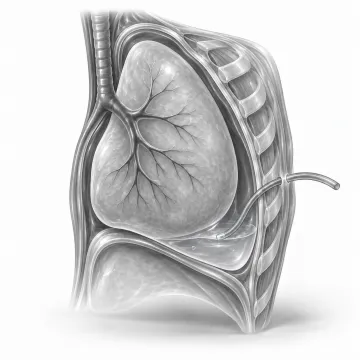
Thoracentesis
Drain fluid around the lung through a thin tube between the ribs, often with relief the same day.
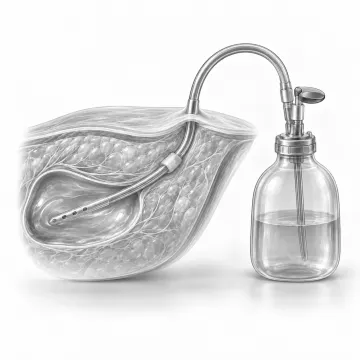
PleurX catheter
A tunneled home drain for fluid that keeps returning in the chest or belly.
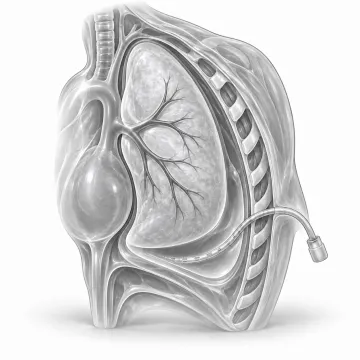
Chest PleurX catheter
A home drain for fluid that keeps building up around the lung.
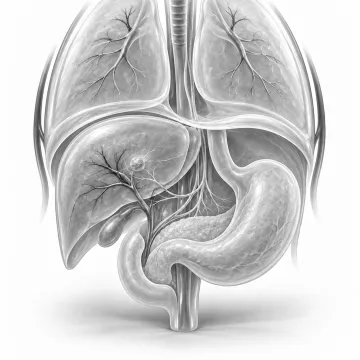
Palliative cancer care
Small procedures that ease fluid build-up, pain, blockages and eating problems caused by cancer.
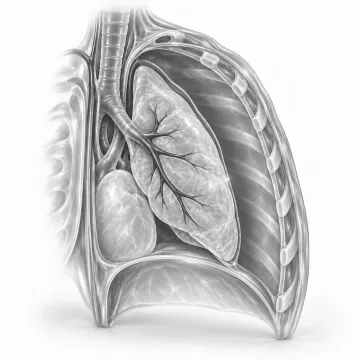
Pneumothorax (collapsed lung)
A collapsed lung: causes, symptoms, when it is an emergency and chest tube treatment.
Written for patients by the Palo Alto Interventional team. General information only; your own plan depends on your health and imaging.
Talk to us about your options
Request a consultation online, or call 650-404-8445, Monday to Friday, 8 am to 5 pm. You can also ask your doctor to send a referral. We will review your imaging and help you decide whether a procedure makes sense.