
Lung biopsy
Find out what a lung nodule really is.
A CT-guided lung biopsy takes a few thin samples of a lung spot through a needle between the ribs. The needle part takes about 30 minutes, and most people go home 2 to 3 hours later.
- Outpatient
- About 1 hour
- Moderate sedation
- Chest X-ray after
 Fabio Komlos, MDInterventional radiologist
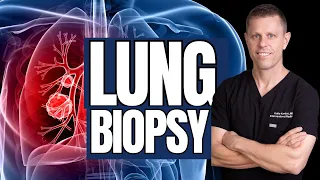 Watch the video explanation6:29 video · Lung Biopsy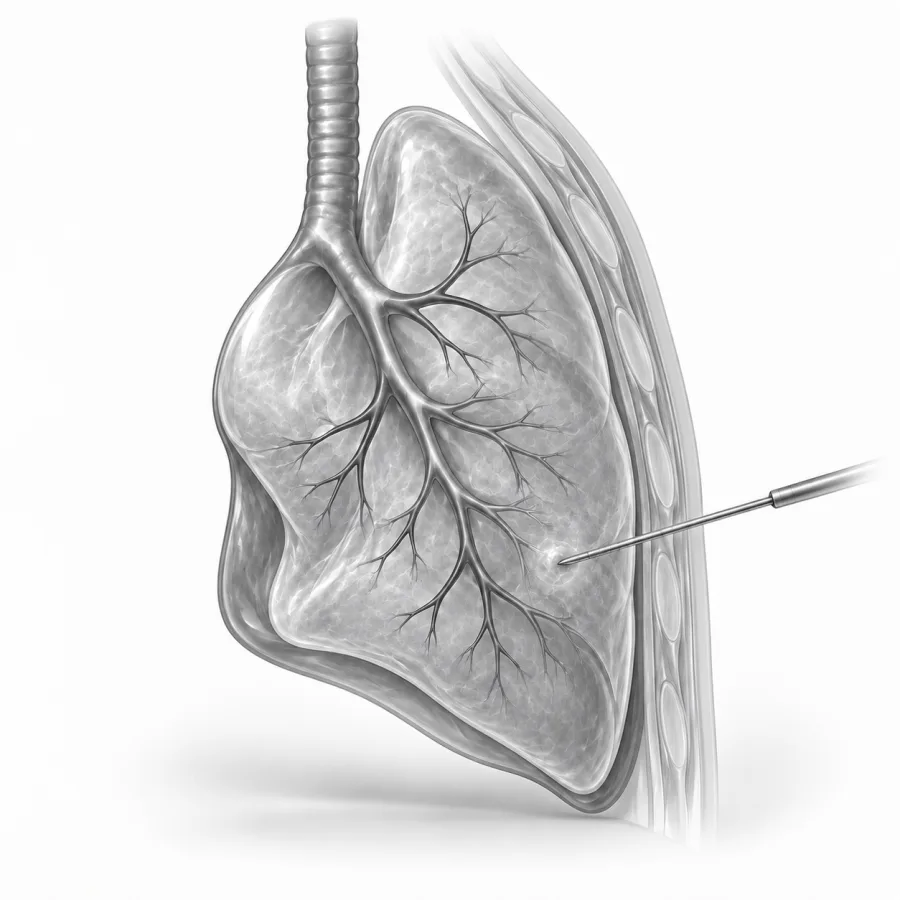
A single needle puncture between the ribs.
Lung Biopsy
Dr. Fabio Komlos walks through lung biopsy the way he explains it in clinic, using the same images he uses to plan treatment.
Fabio Komlos, MDInterventional radiologist · 6:29Lung Biopsy Prep: Five Critical Steps Before Your Procedure
3:16
How do you know if you have cancer or not?
12:30
If you are having a procedure and you are on blood thinners you need to watch this
10:17
What is a lung biopsy and why do you need one?
A lung biopsy removes a few tiny pieces of a spot in the lung so a pathologist can look at them under a microscope. The spot may be called a nodule (small, under 3 cm) or a mass (larger). CT scans find many of these, often by chance.
A scan can show the size and shape of a nodule, but it cannot say for sure what it is made of. A biopsy can. The common causes are:
- Old or ongoing infection, such as a fungus or tuberculosis (TB)
- A new infection, such as bacterial pneumonia
- Inflammation or scar tissue
- A tumor, which can be harmless (benign) or cancer (malignant)
If it is cancer, the sample tells your doctors the exact type and allows genetic (molecular) testing of the tumor. Those results guide the choice of surgery, radiation, targeted drugs or immunotherapy.
On the planning CT, the lung looks almost black because it is full of air, and the nodule is a small white or gray spot. We measure the shortest safe path from the skin to the spot, between the ribs and away from blood vessels.
Who it helps, and other ways to get an answer
Not every nodule needs a biopsy. Many small ones are simply watched with follow-up CT scans, because most are not cancer. A biopsy makes sense when a nodule is large enough, is growing or looks suspicious, and when the answer will change your treatment.
| CT-guided needle biopsy | Bronchoscopy biopsy | Surgical biopsy | |
|---|---|---|---|
| Best for | Spots in the outer part of the lung | Spots near the main airways and lymph nodes in the chest | When other methods fail, or to remove the nodule at once |
| How | Needle through the chest wall | Thin camera through the mouth into the airways | Small incisions, camera-assisted surgery |
| Anesthesia | Moderate sedation | Usually general anesthesia | General anesthesia |
| Hospital stay | Usually home the same day | Usually home the same day | Often 1 to 3 nights |
Your lung doctor, surgeon and our team often decide together which approach fits your nodule best. Sometimes a PET scan is done first to help decide.
A needle biopsy works well if
- The nodule is in the outer two-thirds of the lung
- The nodule is about 1 cm or larger
- You can lie still and follow breathing instructions for about 30 minutes
It may be harder or riskier if
- You have severe emphysema or very limited lung function
- The spot sits behind a large blood vessel or deep near the heart
- You cannot stop blood thinners safely
- You have a constant cough you cannot control
Five steps to prepare
A little preparation makes the biopsy safer and smoother. These are the five things we ask every patient to do. See also before your procedure.
- 1Plan your blood thinners. Tell us about aspirin, clopidogrel (Plavix), warfarin, apixaban (Eliquis), rivaroxaban (Xarelto), fish oil and supplements. Most need to pause for a few days. Never stop them on your own. See blood thinners.
- 2Do not eat for 8 hours. Take your usual morning medicines, including inhalers and blood pressure pills, with a small sip of water.
- 3Bring a driver. Because of sedation, an adult must take you home, and you should not drive until the next day.
- 4Practice holding still. We ask you to breathe gently and hold your breath the same way each time. Try a few relaxed breath-holds of 10 to 15 seconds at home.
- 5Clear your week. Plan no heavy lifting or hard exercise for 7 days, and do not book a flight for about a week.
What happens during the biopsy
- 1Getting ready
At El Camino Hospital, a nurse starts an IV and gives you moderate (twilight) sedation. You lie on the CT table on your back, front or side, depending on where the nodule is.
- 2Planning scan
A low-dose CT scan shows the nodule. We mark the skin, clean it and numb it with local anesthetic, which stings briefly.
- 3Taking the samples
Guided by quick CT scans, we move a thin needle to the edge of the nodule and take several small samples through it. You feel pressure, and you may hear a click. Sometimes we leave a tiny marker (fiducial) to help with later treatment.
- 4Check scan
We remove the needle, apply skin glue and do a final CT to look for any air leak or bleeding.
- 5Recovery and X-ray
You rest for about 2 hours, then have a chest X-ray. If your lung looks good, you go home.
On the planning scan I look for the shortest path that crosses the fewest lung surfaces, because every surface crossed raises the chance of an air leak. I ask patients to breathe the same easy way each time, and I explain what I am doing as I go. Most people tell me it was easier than they feared.Fabio Komlos, MD, interventional radiologist · About Dr. Fabio Komlos
Recovery at home
- First 2–3 hoursRest in recovery, lying on the biopsy side if we ask you to. A chest X-ray checks for an air leak before you leave.
- Rest of the dayTake it easy at home. No driving, alcohol or important decisions after sedation. You can eat normally, starting light.
- Day 1Shower as usual. Most people go back to desk work and driving. Mild soreness is normal.
- Up to 1 weekSome cough and blood-streaked spit are normal. No heavy lifting, hard exercise, baths or swimming. Avoid flying.
- 1–2 weeksSkin glue falls off on its own. Back to all activities.
For pain, acetaminophen (Tylenol) is usually enough. Ibuprofen is fine for most people unless we have told you to avoid it. Pain that keeps getting worse is not normal and should be checked.
Results
Results are usually ready in about 2 business days and go to the doctor who referred you. Genetic testing of a cancer, or a second opinion from another pathology lab, can add several days. Tests for slow-growing infections like TB or fungus can take up to 4 weeks.
A needle biopsy gives a clear answer in about 9 out of 10 cases. If the result is unclear or does not match the scan, your doctors may repeat the biopsy, try bronchoscopy, recommend surgery or keep watching the nodule.
Risks, told honestly
Air leak (pneumothorax). This is the most common problem. Air escapes from the lung through the needle hole and collects between the lung and the chest wall, letting part of the lung fall in (collapse). Some air leak shows up in about 1 in 5 people. Most leaks are small, cause no symptoms and go away on their own. You may just need a second X-ray a few hours later or the next day. Read more about pneumothorax.
About 1 in 15 to 1 in 20 people need a small chest tube to remove the air. It is placed through the same area with numbing medicine, and it usually stays 1 to 2 days while the hole seals, so you stay in the hospital overnight. The risk is higher with emphysema, deeper nodules and smaller nodules.
Bleeding. Coughing up a little blood or blood-streaked spit is common and usually stops within minutes to days. Heavy bleeding into the lung is rare. Rare risks include infection and air bubbles entering the bloodstream (air embolism), which occurs in far fewer than 1 in 1,000 biopsies.
Common questions
Does a lung biopsy hurt?
Will I need a chest tube?
Why do I cough up blood afterward?
When can I fly?
Can I bring my own inhaler?
How accurate is the biopsy?
Will insurance cover it?
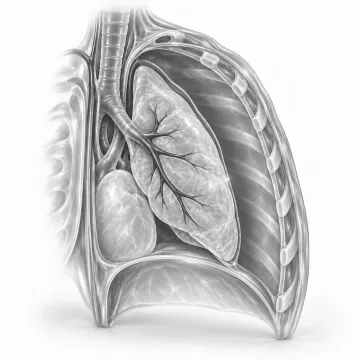
Pneumothorax (collapsed lung)
A collapsed lung: causes, symptoms, when it is an emergency and chest tube treatment.
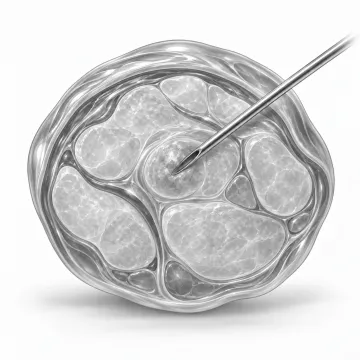
Image-guided biopsies
Get a tissue diagnosis through a needle, guided by ultrasound or CT, usually without an incision.
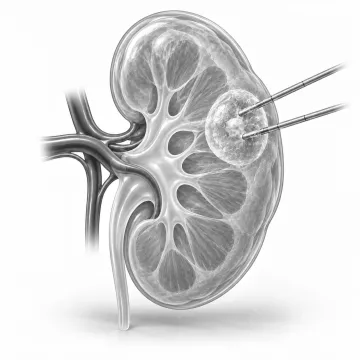
Cryoablation
Freeze small kidney, lung, bone or breast tumors through a needle, with a short recovery.
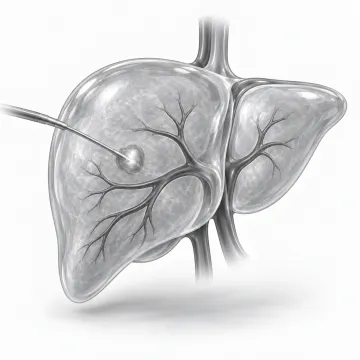
Microwave ablation
Heat small liver, lung or kidney tumors through a needle, often with a same-day or overnight stay.
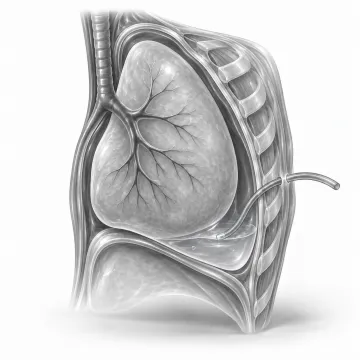
Thoracentesis
Drain fluid around the lung through a thin tube between the ribs, often with relief the same day.
Written for patients by the Palo Alto Interventional team. General information only; your own plan depends on your health and imaging.
Talk to us about your options
Request a consultation online, or call 650-404-8445, Monday to Friday, 8 am to 5 pm. You can also ask your doctor to send a referral. We will review your imaging and help you decide whether a procedure makes sense.