
Interventional urology
Get urine flowing again when a kidney is blocked.
When a stone, tumor or scar blocks the tube that carries urine from a kidney, we can open a path with a thin drain or stent placed through a small nick in the back, usually in under an hour.
- Kidney blockage
- Image-guided
- Moderate sedation
- Often same day
 Fabio Komlos, MDInterventional radiologist
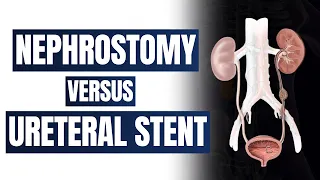 Watch the video explanation23:30 video · What are Double J stents, Nephrostomy tubes, and NU stents?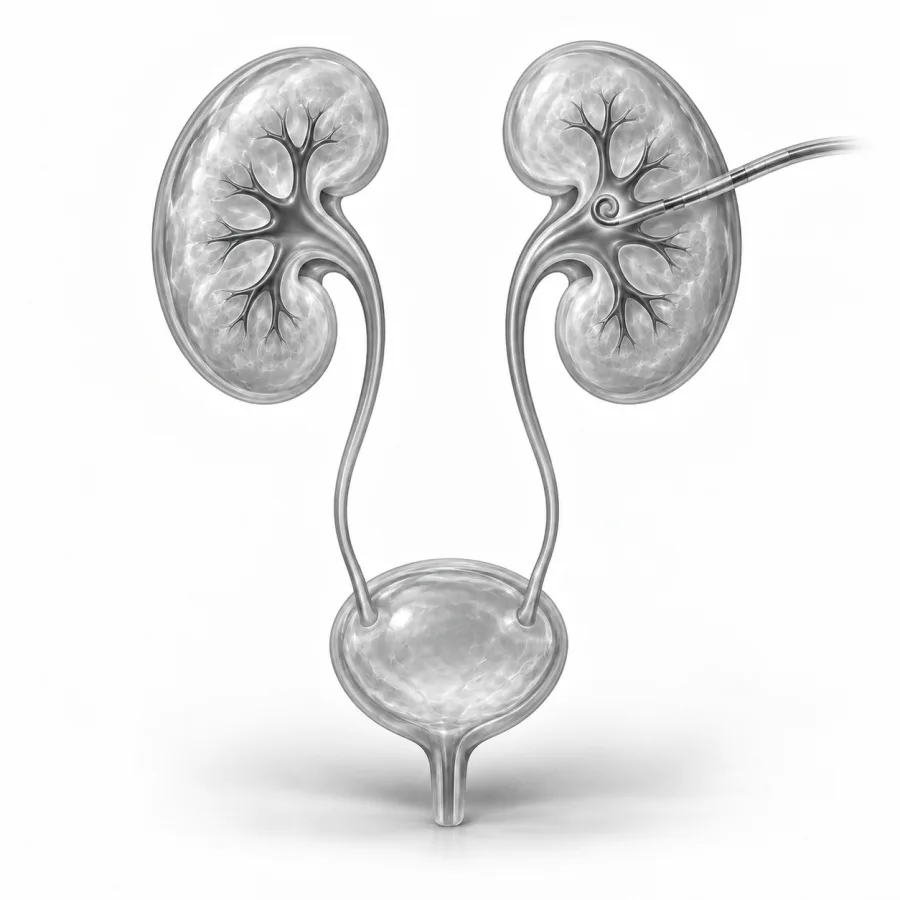
 On imaging
Fluoroscopy (live X-ray) during a nephrostomy: contrast outlines the kidney and the tube.
What are Double J stents, Nephrostomy tubes, and NU stents?
Dr. Fabio Komlos walks through interventional urology the way he explains it in clinic, using the same images he uses to plan treatment.
Fabio Komlos, MDInterventional radiologist · 23:30Before your procedure
3:29
Quick answers
Under a minute eachWhat happens when a kidney is blocked?
Each kidney makes urine all day long. The urine collects in a funnel inside the kidney, then travels down a narrow tube called the ureter to the bladder. If something blocks the ureter, urine backs up and the kidney swells. Doctors call this swelling hydronephrosis.
A blocked kidney can cause pain in your side or back, nausea, and less urine. Sometimes it causes no symptoms at all and is found on a scan. Over days to weeks, the pressure can damage the kidney. If the trapped urine becomes infected, it can spread to the blood. This is called sepsis, and it is an emergency.
Common causes of a blocked ureter
- Kidney stones stuck in the ureter
- Cancers that press on or grow into the ureter, such as bladder, cervical, prostate, colon or ovarian cancer
- Scar tissue after surgery or radiation
- Swollen lymph nodes in the belly or pelvis
- Pregnancy, when the growing uterus presses on the ureter
- A leak of urine from an injured ureter or bladder
What we seeHow interventional radiology helps
Interventional radiologists use live X-ray and ultrasound to guide thin tubes through a small nick in the skin of your back and into the kidney. There is no surgical cut. Most procedures take 20 to 60 minutes under moderate sedation, which means medicine through an IV that makes you relaxed and drowsy while you keep breathing on your own.
Urologists (surgeons who treat the urinary tract) can often place a stent from below, through the bladder, using a small camera. We work closely with them. The route from the back is a good choice when the path from below is blocked, when you are too sick for anesthesia, or when the kidney needs to be drained quickly because of infection.
The three main options
Which tube you get depends on where the blockage is, whether a wire can be passed through it, whether there is infection, and how long you are likely to need help.
| Nephrostomy tube | Ureteral stent | Nephroureteral stent | |
|---|---|---|---|
| Where it goes | Back into the kidney | Fully inside, kidney to bladder | Back, through kidney, to bladder |
| Outside bag | Yes | No | Yes at first, can often be capped |
| Best when | Infection, or path can't be crossed | Long-term drainage with no outside tube | A bridge between the two |
| Changed about every | 2–3 months | 3–6 months | 2–3 months |
| Main trade-off | Living with a bag | Bladder irritation | Tube on the back |
- Nephrostomy tube: a drain from the kidney straight out of the back into a bag. It is the fastest way to relieve a blocked or infected kidney.
- Ureteral stent: a soft tube that sits completely inside you, from the kidney to the bladder. Nothing shows on the outside.
- Nephroureteral stent: one tube that enters through the back and runs down to the bladder. It can drain into a bag or be capped so urine flows inside.
How we choose with you
Often these tubes are steps along one path. A person with an infected, blocked kidney may start with a nephrostomy tube. Once the infection clears, we may change it to a nephroureteral stent, then to a fully internal ureteral stent, and later remove everything when the cause is fixed.
When I look at the CT or ultrasound, the first question I ask is whether the kidney is infected. If it is, I drain it first and save the fancier plan for later, because a simple tube can be lifesaving. After that, I try to get patients to the option that fits their daily life best, and for most people that means as little outside tubing as possible.Fabio Komlos, MD, interventional radiologist · About Dr. Fabio Komlos
Questions we ask
- Is there a fever or infection?
- Where exactly is the blockage?
- Can a wire get through it?
- Is this short-term or long-term?
- How are your kidney tests?
Things you can tell us
- How you feel about a bag
- Your work and hobbies
- Who can help you at home
- Blood thinners you take
- Allergies to contrast dye
Living with a kidney tube
Most people go back to normal daily life within a day or two. You can shower, walk and work. Tubes that leave the body need a clean dressing and a bag that hangs below the kidney. All tubes need to be changed on a schedule because minerals from urine slowly build up inside them. We will book these changes for you.
Our guide on managing your drain covers everyday care, and home supplies lists bags, holders and dressings that make life easier.
Explore in detail
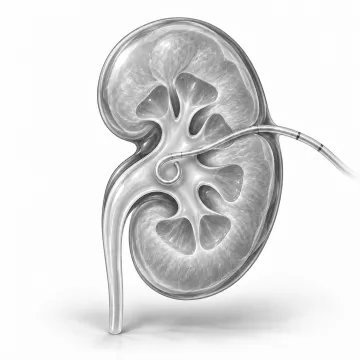
Nephrostomy tube
A thin drain from the kidney through the back that relieves a blockage or infection.
Learn more →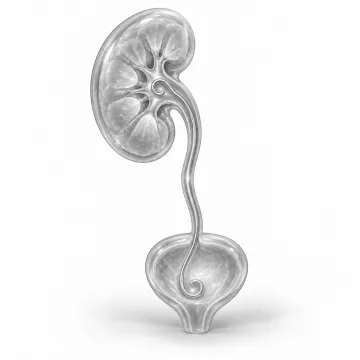
Ureteral stent
A soft internal tube from kidney to bladder that keeps urine flowing, with no outside bag.
Learn more →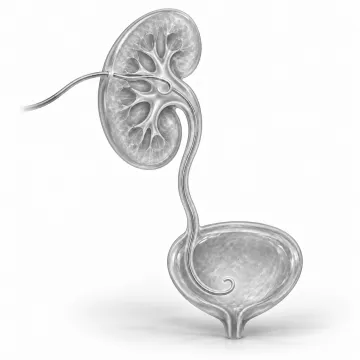
Nephroureteral stent
One tube from the back to the bladder that can drain to a bag or be capped for internal flow.
Learn more →Common questions
Does it hurt to have a kidney tube placed?
Will I have to live with a bag?
How long will I need the tube?
Do I need to stay in the hospital?
Why can't the urologist just fix it from below?
Will insurance cover it?
Nephrostomy tube
A thin drain from the kidney through the back that relieves a blockage or infection.
Ureteral stent
A soft internal tube from kidney to bladder that keeps urine flowing, with no outside bag.
Nephroureteral stent
One tube from the back to the bladder that can drain to a bag or be capped for internal flow.
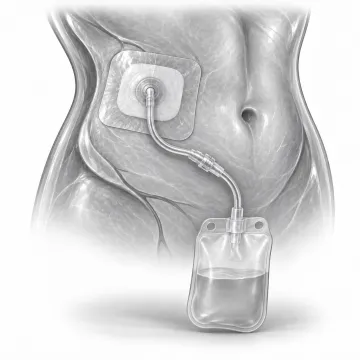
How do I manage my drain?
Emptying, flushing, dressing changes and daily records for a drainage catheter at home.
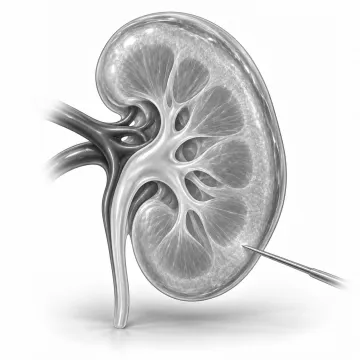
Kidney biopsy
Diagnose kidney disease or check a transplant with an ultrasound-guided needle sample.
Written for patients by the Palo Alto Interventional team. General information only; your own plan depends on your health and imaging.
Talk to us about your options
Request a consultation online, or call 650-404-8445, Monday to Friday, 8 am to 5 pm. You can also ask your doctor to send a referral. We will review your imaging and help you decide whether a procedure makes sense.