
Nephroureteral stent
Let urine flow inside you, with a safety valve outside.
A nephroureteral stent is one soft tube that enters through your back, passes through the kidney and runs down to the bladder. Once it is capped, urine drains internally and most people can go without a bag.
- 30–60 minutes
- Moderate sedation
- Can be capped
- Changed every 2–3 mo
 Fabio Komlos, MDInterventional radiologist
 Watch the video explanation23:30 video · What are Double J stents, Nephrostomy tubes, and NU stents?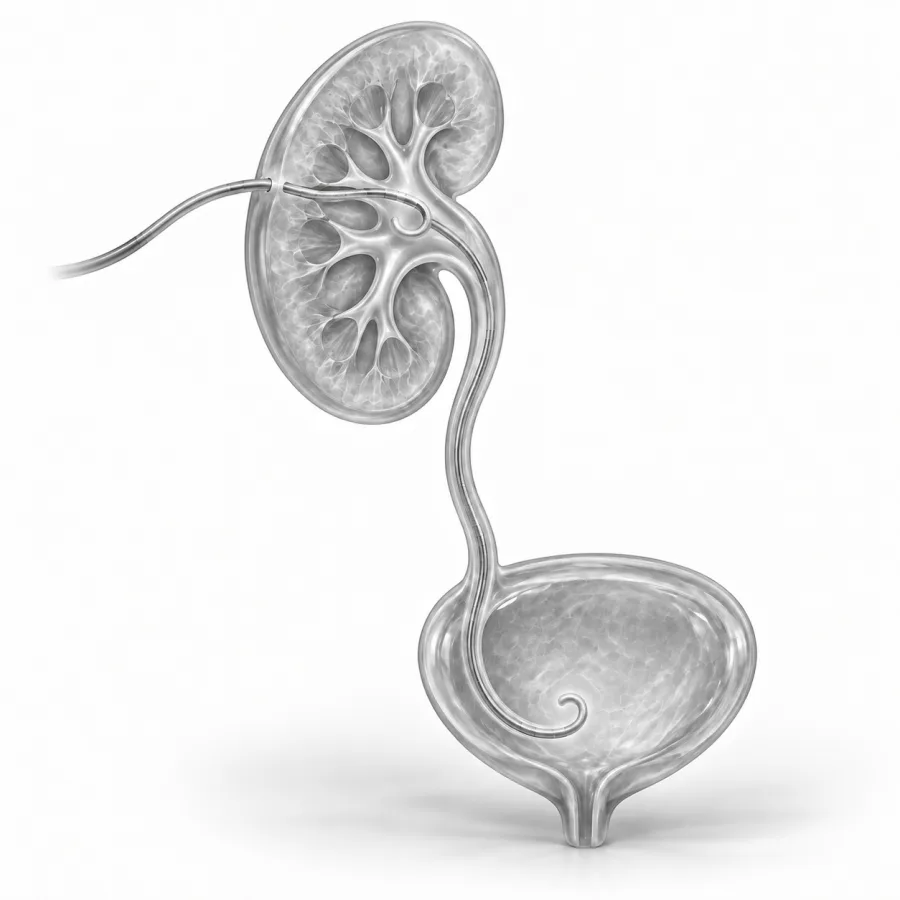
 On imaging
Fluoroscopy (live X-ray) during a nephrostomy: contrast outlines the kidney and the tube.
What are Double J stents, Nephrostomy tubes, and NU stents?
Dr. Fabio Komlos walks through nephroureteral stent the way he explains it in clinic, using the same images he uses to plan treatment.
Fabio Komlos, MDInterventional radiologist · 23:30Before your procedure
3:29
What is a nephroureteral stent?
A nephroureteral stent, often called an NU stent or NUS, combines two things in one tube. Like a nephrostomy tube, it enters through the skin of your back into the kidney. Like a ureteral stent, it continues down the ureter, the tube that carries urine to the bladder, and ends in a small curl inside the bladder.
The tube has side holes along its length. Urine can drain in two directions: out through the back into a bag, or down through the tube into the bladder so you pee normally. Which way it goes depends on whether the outside end is open or capped.
What we seeWhy choose an NU stent
An NU stent is often a bridge. It is useful when we want the comfort of internal drainage but also want an easy way back if things do not go as planned.
- After a nephrostomy tube, as a step toward having no bag
- When a fully internal stent may clog quickly, for example with bleeding, debris or a tight cancer blockage
- After a ureter injury or leak, to support healing
- When it is hard to change stents from below through the bladder
- When you want a stent that we can check and change entirely from the back
Benefits
- Most people can cap it and skip the bag
- Can be reopened to a bag in seconds
- Changed quickly over a wire at the back
- Easy to check with a dye study
Trade-offs
- A tube still exits the back
- Needs a daily dressing
- May cause bladder symptoms like a stent
- No baths or swimming while it is in
How it compares
| Nephrostomy | NU stent | Ureteral stent | |
|---|---|---|---|
| Exits the back | Yes | Yes | No |
| Needs a bag | Always | Only if uncapped | Never |
| Drains to bladder | No | Yes | Yes |
| Easy to reopen if blocked | Not needed | Yes, uncap it | Needs a procedure |
| Usual change interval | 2–3 months | 2–3 months | 3–6 months |
Our interventional urology page explains how these three tubes work together along one treatment path.
How to prepare
- Tell us about blood thinners and follow our instructions about pausing them. See blood thinners.
- Do not eat for about 6 hours before. Clear liquids are usually fine until 2 hours before.
- Tell us about contrast allergies and any chance of pregnancy.
- Let us know if you have a fever. An active infection is usually treated first.
- Arrange for an adult to drive you home after sedation.
What happens during the procedure
- 1Getting ready
You lie on your stomach. You receive moderate sedation through your IV, and monitors track your heart, blood pressure and oxygen.
- 2Entering the kidney
We numb the skin and use your existing nephrostomy track, or make a new small needle stick into the kidney under ultrasound and X-ray. Contrast dye shows the ureter and the blockage.
- 3Placing the stent
A guidewire is steered down the ureter, through the narrow spot and into the bladder. The NU stent slides over the wire so its tip curls in the bladder and its side holes sit along the ureter and kidney.
- 4Securing and connecting
The outside end is secured to your skin, covered with a dressing and usually connected to a bag at first.
The procedure usually takes 30 to 60 minutes. You rest for about an hour afterward and most people go home the same day.
Capping and daily life
At first, the tube usually drains into a bag for a day or more while any bleeding clears. Then we ask you to cap it, which means closing the outside end so urine flows down into the bladder. This is called a capping trial.
- First dayTube open to a bag. Rest, no driving after sedation. Pink urine is normal.
- Day 1 to 3If we have told you to, cap the tube. Watch for side pain, fever or leaking around the tube.
- If capping goes wellKeep it capped. Change the dressing daily and shower normally. No bag needed.
- If capping causes problemsUncap it and reconnect the bag, then call us. This takes the pressure off right away.
- Every 8 to 12 weeksShort visit to change the tube over a wire, or to convert or remove it.
Signs that capping is not working
- New or worsening pain in your side or back
- Fever or chills
- Urine leaking around the tube at the skin
- Much less urine than usual
Care of the skin is the same as for a nephrostomy tube: wash your hands, change the dressing daily or when wet, keep the tube taped so it cannot be pulled, and do not soak in a bath or pool. See managing your drain and home supplies.
Converting or removing the stent
The NU stent is rarely the last step. Once your kidney drains well with the tube capped, we can often swap it for a fully internal ureteral stent, so nothing exits your back. If the blockage has been fixed, we can remove it after a dye check shows urine flows freely. If internal drainage does not work, we can change it back to a simple nephrostomy tube.
I like the NU stent because it lets us test internal drainage without burning any bridges. If you do well capped for a week or two, I feel confident moving you to a fully internal stent. If you don't, you just open the cap, and we have learned something useful without another urgent procedure.Fabio Komlos, MD, interventional radiologist · About Dr. Fabio Komlos
Risks
- Blood in the urine, usually for a few days. Heavy bleeding is uncommon.
- Infection, which may show as fever or chills and needs prompt treatment.
- Bladder irritation, with urgency or burning, similar to a ureteral stent.
- Leaking at the skin, often a sign the tube needs to be uncapped or changed.
- Tube blockage or dislodgement, which may need a quick exchange.
- Injury to nearby organs, which is rare with imaging guidance.
Common questions
What does capping mean?
What should I do if it hurts after I cap it?
Can I shower with an NU stent?
Will I still need a bag?
How is it different from a nephrostomy tube?
Can it be changed to a fully internal stent?
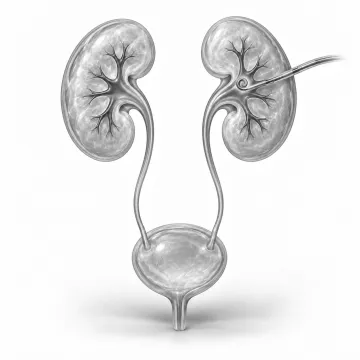
Interventional urology
Drains and stents that relieve a blocked kidney, placed with X-ray guidance through the skin.
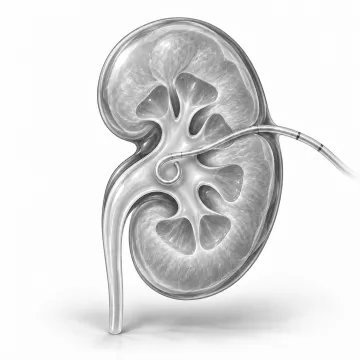
Nephrostomy tube
A thin drain from the kidney through the back that relieves a blockage or infection.
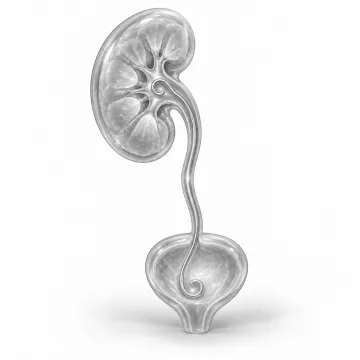
Ureteral stent
A soft internal tube from kidney to bladder that keeps urine flowing, with no outside bag.
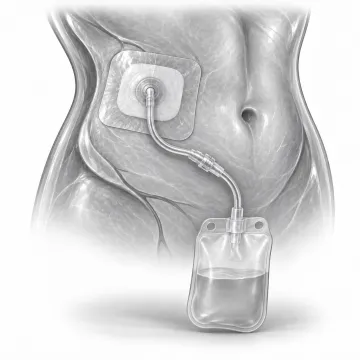
How do I manage my drain?
Emptying, flushing, dressing changes and daily records for a drainage catheter at home.
Written for patients by the Palo Alto Interventional team. General information only; your own plan depends on your health and imaging.
Talk to us about your options
Request a consultation online, or call 650-404-8445, Monday to Friday, 8 am to 5 pm. You can also ask your doctor to send a referral. We will review your imaging and help you decide whether a procedure makes sense.