
How do I manage my drain?
Care for your drain at home with confidence.
A few minutes a day keeps your drain working: empty and measure it, flush it if we asked you to, change the dressing and write down the numbers. Good care often means the drain comes out sooner.
- 5–10 minutes a day
- Flush once daily
- Record every output
- Shower after 24 hours
 Fabio Komlos, MDInterventional radiologist
 Watch the video explanation5:54 video · How to Flush a Catheter Correctly?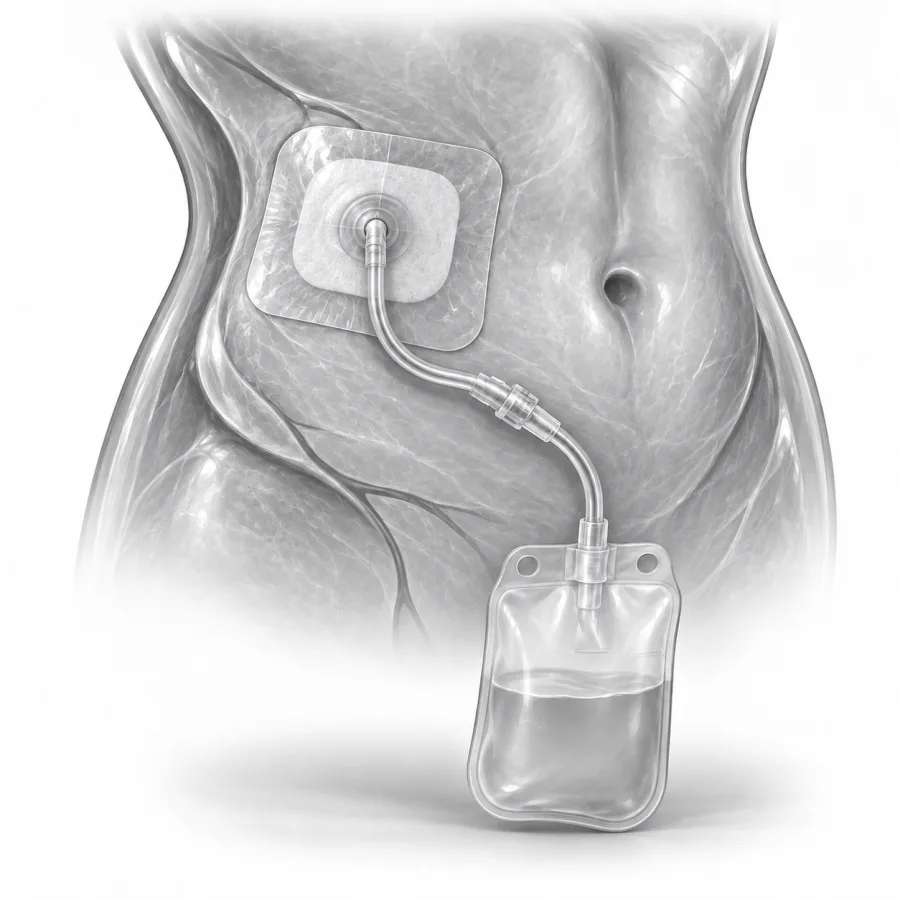
Daily output and temperature tell us when the drain can come out.
How to Flush a Catheter Correctly?
Dr. Fabio Komlos walks through how do i manage my drain? the way he explains it in clinic, using the same images he uses to plan treatment.
Fabio Komlos, MDInterventional radiologist · 5:54Seromas and Lymphoceles: Advanced Treatment Options
6:43
Know your drain
A drainage catheter is a thin, soft tube with small holes near its tip. The tip sits inside the fluid pocket, and the other end comes out through your skin. Outside the body, the tube connects to a collection device that pulls fluid out gently with suction.
Parts you will see
- The tube: held at the skin with a small stitch and covered by a dressing.
- A 3-way stopcock or a Y-shaped flush port: a small valve in the line where you attach a syringe to flush.
- A collection device: most often a Jackson-Pratt (JP) bulb, a soft squeeze bulb about the size of an egg. For thick or large amounts of fluid we may use an accordion drain, a larger pump that folds like an accordion and empties into a bag.
- A clip or strap: to pin the bulb to your clothing or strap the accordion to your leg or belt.
The suction only works when the bulb or accordion is squeezed flat. If it puffs back up full of air, it is no longer pulling fluid out.
How to empty your drain
Empty the bulb when it is about half full, or every 8 to 12 hours, even if there is only a little fluid. You will need a measuring cup marked in milliliters (mL) and your drainage log.
JP bulb
- 1Wash your hands well with soap and water.
- 2Pull the plug out of the top of the bulb. Pour the fluid into the measuring cup.
- 3Read the amount. Write down the date, time and amount on your log.
- 4Wipe the plug with an alcohol pad. Squeeze the bulb flat in your fist, and while it is flat, push the plug back in.
- 5Check that the bulb stays flat. If you cannot squeeze and plug at the same time, press the bulb flat against a table while you close it.
- 6Flush the fluid down the toilet and wash your hands again.
Check the accordion pump several times a day. To restart the suction, press down on the top until it is fully folded. Any fluid inside the pump moves into the attached bag.
Accordion drain
- 1Wash your hands with soap and water.
- 2Hold the bag over the toilet or a measuring container and open the valve cap at the bottom by turning it.
- 3Measure the fluid and write the amount on your log.
- 4Turn the valve cap back to the closed position. If you forget, the bag will leak.
- 5Press the accordion flat again and wash your hands.
How to flush your drain
Flushing pushes a small amount of sterile salt water, called saline, through the tube so it does not clog. Most people flush once a day, and more often if the fluid is thick. Use 5 to 10 mL of sterile saline, or the amount we told you. Prefilled 10 mL saline syringes are the easiest. It takes about 5 minutes once you have done it a few times.
With a 3-way stopcock
- 1Wash your hands. Remove the cap from the side port and wipe the port with an alcohol pad.
- 2Screw the saline syringe onto the side port.
- 3Turn the dial so the word off (or the handle) points toward the bulb. Now the syringe connects only to the tube going into your body.
- 4Push the saline in slowly and steadily. Do not force it.
- 5Turn the dial back so off points toward the side port where the syringe is. Now the bulb connects to the tube again.
- 6Remove the syringe and put a clean cap on the side port.
- 7Squeeze the bulb flat so suction restarts. Within a minute you should see fluid moving toward the bulb.
With a Y-shaped flush port
- 1Close the pinch clamp on the tubing that goes to the bulb.
- 2Wipe the flush port with an alcohol pad and attach the saline syringe.
- 3Push the saline in slowly. Do not force it.
- 4Remove the syringe and open the pinch clamp.
- 5Squeeze the bulb flat so suction restarts.
Do not pull back on the syringe to suck fluid out unless we have taught you to. Do not count the flush in your output: if you flushed 10 mL, subtract 10 mL from that day's total.
Most drain problems I see are not dangerous. They are a clogged tube or a bulb that lost its suction. When a patient calls to say nothing is coming out, I first ask whether the bulb is flat and whether they flushed today. Very often a good flush and a flat bulb fix it in two minutes.Fabio Komlos, MD, interventional radiologist · About Dr. Fabio Komlos
Dressing changes and skin care
Change the dressing once a day, and any time it gets wet or dirty. A soft, padded adhesive dressing or split gauze held with tape works well. Tape a loop of the tube to your skin a few inches from the site, so a tug pulls on the tape and not on the stitch.
- 1Wash your hands and gently remove the old dressing.
- 2Clean around the tube with soap and water or saline on gauze. Work from the tube outward.
- 3Let the skin dry fully. Do not put creams or powders at the site unless we suggest them.
- 4Place a clean dressing around the tube and tape it down.
- 5Throw away the old dressing. Wrap it in a small plastic bag if it is bloody. Wash your hands.
A little clear or pink fluid on the gauze is normal. A small amount of redness right at the edge of the tube is common. Spreading redness, warmth, swelling or pus is not, so call us.
Showering and daily life
You can usually shower 24 hours after the drain is placed. It is fine if the tube gets wet. Pin or strap the bulb so it does not hang from the tube. After the shower, pat the area dry and put on a fresh dressing. Do not soak in a bath, hot tub, pool or the ocean while the drain is in.
- Activity: most people are back to light daily activity within about a week. Avoid heavy lifting, contact sports and strenuous exercise while the drain is in and for about 1 week after it comes out.
- Driving: not for the rest of the day if you had sedation. After that, drive only if the drain does not limit your movement and you are not taking opioid pain medicine.
- Sleeping: sleep on the other side, or place the bulb beside you on the bed. Pinning it to your pajamas keeps it from pulling.
- Clothes: loose tops and a drain belt or lanyard make the bulb easier to carry.
Recording your output
Keep a simple log. Each time you empty the drain, write the date, time and amount. At the end of the day, add up the total. Also write your highest temperature of the day. Bring the log to every clinic visit, or send us a photo of it.
There is no single right color. Fluid that is not infected is usually clear, golden or pink. Infected fluid is cloudy and can be thick, yellow, green, brown or gray. Over time, we expect the amount to go down and the fluid to become thinner and clearer. A small amount of blood can appear as the pocket collapses, and that is usually fine.
- First few daysOutput is often highest. Empty the bulb every 8 to 12 hours and flush daily.
- Days 3 to 5Culture results are usually back. We may adjust your antibiotics.
- End of week 1Output should be falling. Call us if it is not, or if it suddenly stops.
- Output under 20 mL a dayIf the fluid is thin and clear, we may repeat a scan and schedule removal.
- RemovalDone in clinic without sedation. The stitch is cut and the tube slides out in a few seconds.
Solving common problems
- Nothing is draining: check that the bulb is flat and the stopcock is turned toward the bulb. Look for kinks. Flush the tube. If the bulb fills with air right away, the system may have a leak; call us. If the bulb stays flat for more than an hour and nothing comes out, the pocket may simply be empty. That is often good news, but let us know.
- Leaking around the tube: this usually means the tube is clogged. Flush it, check the bulb is flat, then clean the skin and change the dressing. Call us if it keeps leaking.
- A clot or stringy plug in the tube: pinch the tube near your skin and slide your fingers toward the bulb to milk the plug along, or flush it.
- The tube slid out partway or completely: do not push it back in. Cover the site with clean gauze, keep the tube and call us the same day.
- Blood in the bulb: a little pink or streaky fluid is normal. Bright red blood that fills the bulb, or blood so thick you cannot see through the tube for more than a day, needs a call.
Supplies to keep at home
- Prefilled 10 mL sterile saline syringes
- Alcohol pads
- Sterile caps for the stopcock side port
- Split gauze or padded adhesive dressings, and medical tape
- A measuring cup marked in mL
- Your drainage log and a thermometer
- Safety pins, a drain belt or a lanyard
- Gloves, if a family member helps you
We send you home with a starter supply. For where to find more, see home supplies.
Common questions
What if I forget to flush one day?
Can I use tap water to flush?
Does it hurt to have the drain removed?
How do I know the drain is working?
Can I go back to work with a drain?
Why do you want my temperature every day?
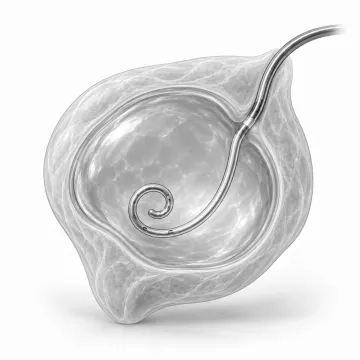
Drainage of fluid collections
Image-guided drainage of abscesses, seromas and lymphoceles through a small tube.
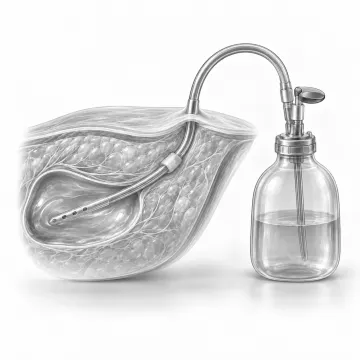
PleurX catheter
A tunneled home drain for fluid that keeps returning in the chest or belly.
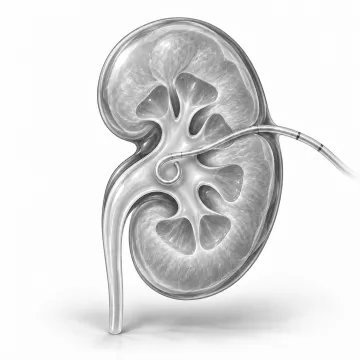
Nephrostomy tube
A thin drain from the kidney through the back that relieves a blockage or infection.
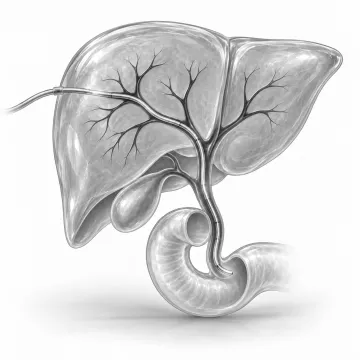
Biliary drain
A thin tube through the liver that drains blocked bile, easing jaundice, itching and infection.
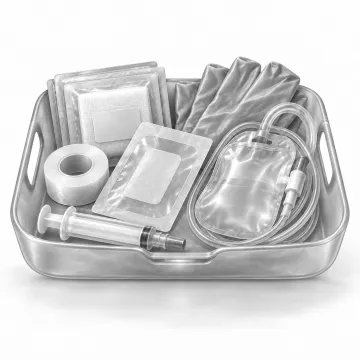
Home supplies for drains and tubes
What supplies you need for drains, kidney and bile tubes, and feeding tubes, and where to get them.
Written for patients by the Palo Alto Interventional team. General information only; your own plan depends on your health and imaging.
Talk to us about your options
Request a consultation online, or call 650-404-8445, Monday to Friday, 8 am to 5 pm. You can also ask your doctor to send a referral. We will review your imaging and help you decide whether a procedure makes sense.