
Nephrostomy tube
Relieve a blocked or infected kidney quickly.
A nephrostomy tube is a thin, soft drain placed through your back into the kidney so trapped urine can flow into a bag. Placing it usually takes 20 to 30 minutes.
- 20–30 minutes
- Moderate sedation
- Often same day
- Changed every 2–3 mo
 Fabio Komlos, MDInterventional radiologist
 Watch the video explanation23:30 video · What are Double J stents, Nephrostomy tubes, and NU stents?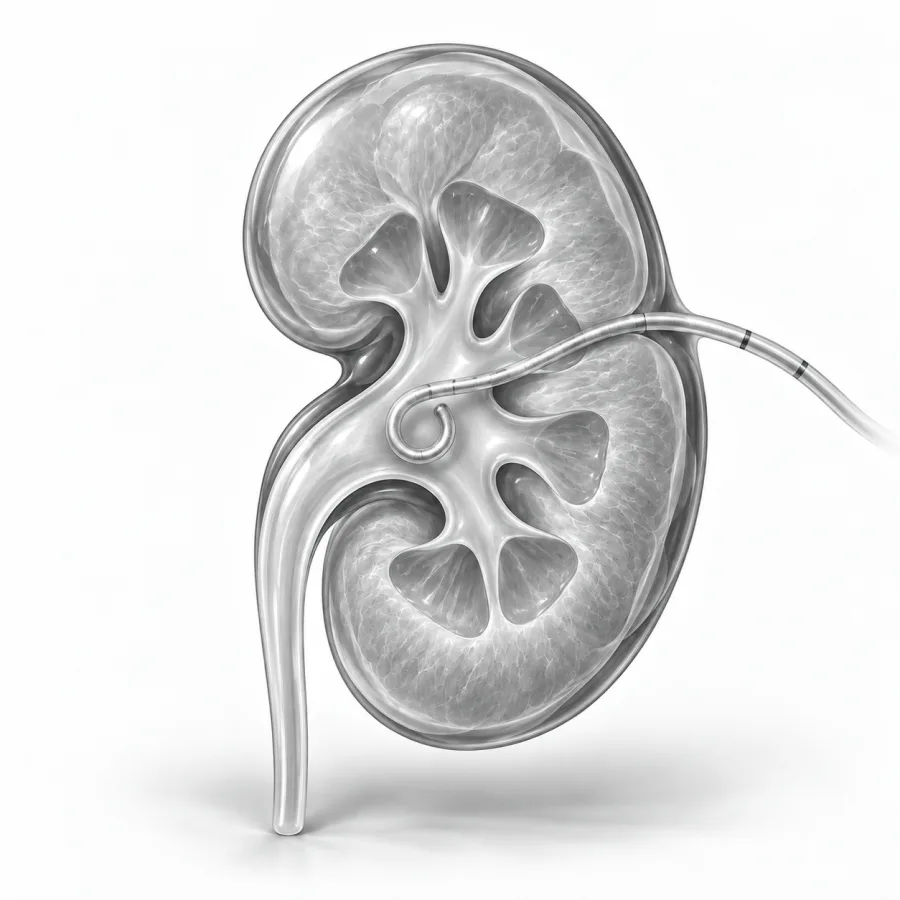
 On imaging
Fluoroscopy (live X-ray) during a nephrostomy: contrast outlines the kidney and the tube.
What are Double J stents, Nephrostomy tubes, and NU stents?
Dr. Fabio Komlos walks through nephrostomy tube the way he explains it in clinic, using the same images he uses to plan treatment.
Fabio Komlos, MDInterventional radiologist · 23:30Before your procedure
3:29
If you are having a procedure and you are on blood thinners you need to watch this
0:43
What is a nephrostomy tube?
A nephrostomy tube is a thin, flexible plastic drain, about the width of a pencil lead to a drinking straw. One end sits inside the part of the kidney where urine collects. The other end comes out through the skin of your back and connects to a drainage bag. The tip inside the kidney curls into a small loop so it stays in place.
Doctors often call it a percutaneous nephrostomy, or PCN. Percutaneous means through the skin. The tube gives urine a way out when its normal path, the ureter, is blocked. You can read more about blocked kidneys on our interventional urology page.
What we seeWho needs one
Common reasons
- A blocked ureter from a stone, tumor, scar tissue or swollen lymph nodes
- A blocked kidney that has become infected. Along with antibiotics, the tube can be lifesaving.
- Worsening kidney function because urine cannot drain
- A urine leak from the ureter or bladder, so the leak can heal
- Preparing for a procedure to remove large kidney stones through the back
A good choice when
- The kidney is infected and needs fast drainage
- A stent from below could not be placed
- You are too sick for general anesthesia
- The blockage cannot be crossed with a wire
Extra care is needed if
- You take blood thinners that cannot be paused
- Your blood does not clot well
- You cannot lie on your stomach or side
- You are pregnant (we use ultrasound to limit X-ray)
How it compares with the alternatives
A urologist can sometimes place a ureteral stent from below, through the bladder, using a small camera. That leaves nothing outside your body, but it usually needs general anesthesia, and it may not work when a tumor or scar blocks the way. A nephrostomy tube works in almost every case, and it drains infection quickly.
| Nephrostomy tube | Stent from below | |
|---|---|---|
| Route | Back, into the kidney | Through the bladder |
| Anesthesia | Moderate sedation | Usually general |
| Outside tube and bag | Yes | No |
| Works if path is blocked | Yes | Sometimes not |
| Common side effect | Tube care, skin irritation | Bladder urgency and discomfort |
Many people start with a nephrostomy tube and later switch to a nephroureteral stent or a fully internal stent once the kidney has settled.
How to prepare
- Tell us about blood thinners such as warfarin, apixaban (Eliquis), rivaroxaban (Xarelto) or clopidogrel (Plavix). We will tell you if and when to pause them. See our blood thinners guide.
- Do not eat for about 6 hours before a planned procedure. Clear liquids are usually fine until 2 hours before. We will confirm your exact times.
- Tell us if you have had a reaction to contrast dye or if you might be pregnant.
- We will check your blood tests, including clotting and kidney function.
- Plan for an adult to drive you home, because you will get sedation.
If your kidney is infected, there may be little time to prepare. In that case the tube is often placed urgently, sometimes within hours. Our before your procedure and sedation pages explain the general steps.
What happens during the procedure
- 1Getting ready
You lie on your stomach or side on the X-ray table. A nurse gives you sedation through your IV and connects monitors for your heart, blood pressure and oxygen.
- 2Numbing and finding the kidney
We clean the skin of your back and numb it with local anesthetic. Using ultrasound and X-ray, we guide a thin needle into the part of the kidney where urine collects.
- 3Placing the tube
A soft guidewire goes through the needle, and the tube slides over the wire into the kidney. We inject a little contrast dye to check its position. Urine usually starts to drain right away.
- 4Securing it
The tube is held with a small stitch or an adhesive holder and covered with a dressing. It is connected to a drainage bag, and you go to recovery.
The whole procedure usually takes 20 to 30 minutes. You may feel pressure and a brief deep ache as the tube goes in. Afterward, you rest for about an hour while nurses watch you. You can eat and drink once you are awake.
Living with a nephrostomy tube
- First dayRest at home. No driving, alcohol or big decisions after sedation. Light meals if you feel queasy.
- First weekPink urine, like rosé wine or cranberry juice, is normal. The site is sore for 2 to 3 days. Acetaminophen (Tylenol) usually helps.
- After 24 hoursMost normal activities, including driving, are fine. Avoid heavy lifting and hard exercise for the first day or two.
- Every dayKeep the bag below the kidney, check that the tubing is not kinked, and empty the bag when it is half full.
- Every 8 to 12 weeksThe tube is changed over a wire in a short visit, usually without a new needle stick.
Daily care
- 1Wash your hands with soap and water before touching the tube or bag.
- 2Change the dressing once a day, or sooner if it is wet or dirty. Clean the skin around the tube with soap and water and dry it well.
- 3Empty the bag through the valve at the bottom into the toilet, then close the valve firmly. Write down how much drained if we ask you to.
- 4Change the bag every 2 to 4 weeks, or sooner if it smells, leaks or is full of blood or clots.
- 5Tape or strap the tubing to your body so it cannot be pulled.
You can shower from the first night. It is fine if the tube gets wet. Afterward, dry the area and put on a fresh dressing. Do not soak in a bath, hot tub, pool or the ocean while the tube is in. A leg bag or belly holder can make the tube easier to hide under clothes. See home supplies and our general guide to managing your drain.
Most people do not need to flush the tube. If the urine is very bloody or clotted, or drainage suddenly stops, we may teach you to flush it with 5 to 10 mL of sterile saline using a syringe and a three-way valve called a stopcock. Only flush if we have shown you how.
How long the tube stays in and how it comes out
The tube stays until the cause of the blockage is fixed, for example after a stone is removed or an infection clears. For some people, especially with cancer, it may stay for months or longer. In that case we change it every 8 to 12 weeks, because minerals and debris slowly clog the tube.
When it is time to remove it, we usually do this under X-ray. We inject dye to be sure urine now flows freely to the bladder. Removal takes a few minutes and feels like a brief tug. The small hole usually seals within a day or two.
When someone comes in with a fever and a blocked kidney, I tell the family that this small tube is often the most important thing we do that day. Once the kidney is drained and the antibiotics can work, most people feel much better within a day or two. Then we sit down together and plan how to get you to the least tubing you need.Fabio Komlos, MD, interventional radiologist · About Dr. Fabio Komlos
Risks and side effects
A nephrostomy is a common and generally safe procedure. Serious problems are uncommon, but you should know about them.
- Blood in the urine is expected for a few days. Heavy bleeding that needs a transfusion or another procedure happens in roughly 1 to 3 in 100 people.
- Fever and chills can happen for a few hours after the tube is placed in an infected kidney, as bacteria are stirred up. Rarely this becomes sepsis, which is treated in the hospital.
- Injury to nearby organs, such as the bowel, spleen, liver or lung lining, is rare. Imaging guidance helps us avoid them.
- Tube problems: the tube can clog, leak or slip out. A tube that comes out needs to be replaced within a day or so, before the track closes.
- Skin irritation around the tube is common and usually improves with good dressing care.
Common questions
Does it hurt?
Can I shower with a nephrostomy tube?
Can I still pee normally?
What if the tube falls out?
Can I sleep on the side with the tube?
Can I travel with a nephrostomy tube?
Will insurance cover it?
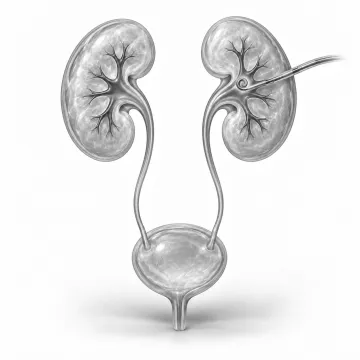
Interventional urology
Drains and stents that relieve a blocked kidney, placed with X-ray guidance through the skin.
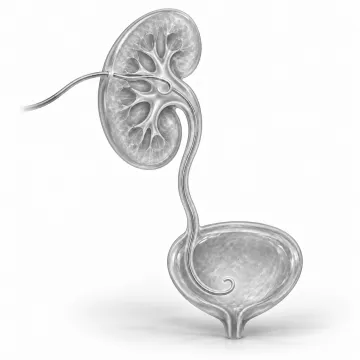
Nephroureteral stent
One tube from the back to the bladder that can drain to a bag or be capped for internal flow.
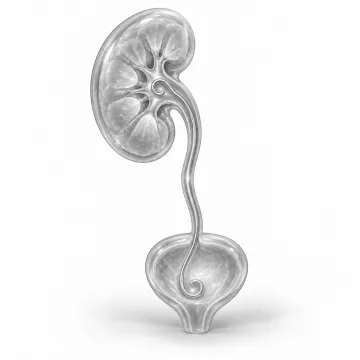
Ureteral stent
A soft internal tube from kidney to bladder that keeps urine flowing, with no outside bag.
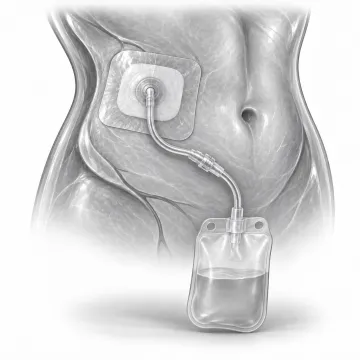
How do I manage my drain?
Emptying, flushing, dressing changes and daily records for a drainage catheter at home.
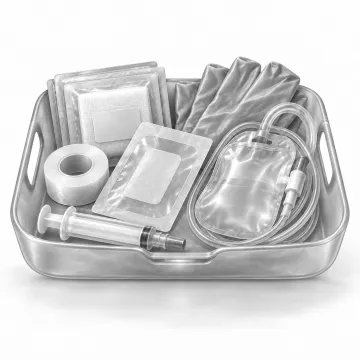
Home supplies for drains and tubes
What supplies you need for drains, kidney and bile tubes, and feeding tubes, and where to get them.
Written for patients by the Palo Alto Interventional team. General information only; your own plan depends on your health and imaging.
Talk to us about your options
Request a consultation online, or call 650-404-8445, Monday to Friday, 8 am to 5 pm. You can also ask your doctor to send a referral. We will review your imaging and help you decide whether a procedure makes sense.