
TIPS (transjugular intrahepatic portosystemic shunt)
Lower liver pressure to stop bleeding and fluid buildup.
A TIPS is a small metal stent placed inside the liver, through a vein in the neck, that lets blood bypass a scarred liver. It lowers the pressure that causes bleeding veins and belly fluid. It usually takes 1 to 3 hours.
- 1–3 hours
- General anesthesia
- 1–2 night stay
- Neck vein access
 Fabio Komlos, MDInterventional radiologist
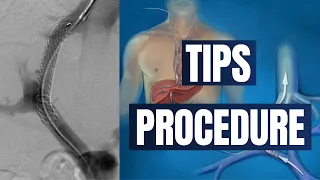 Watch the video explanation14:50 video · Transjugular Intrahepatic Portosystemic Shunt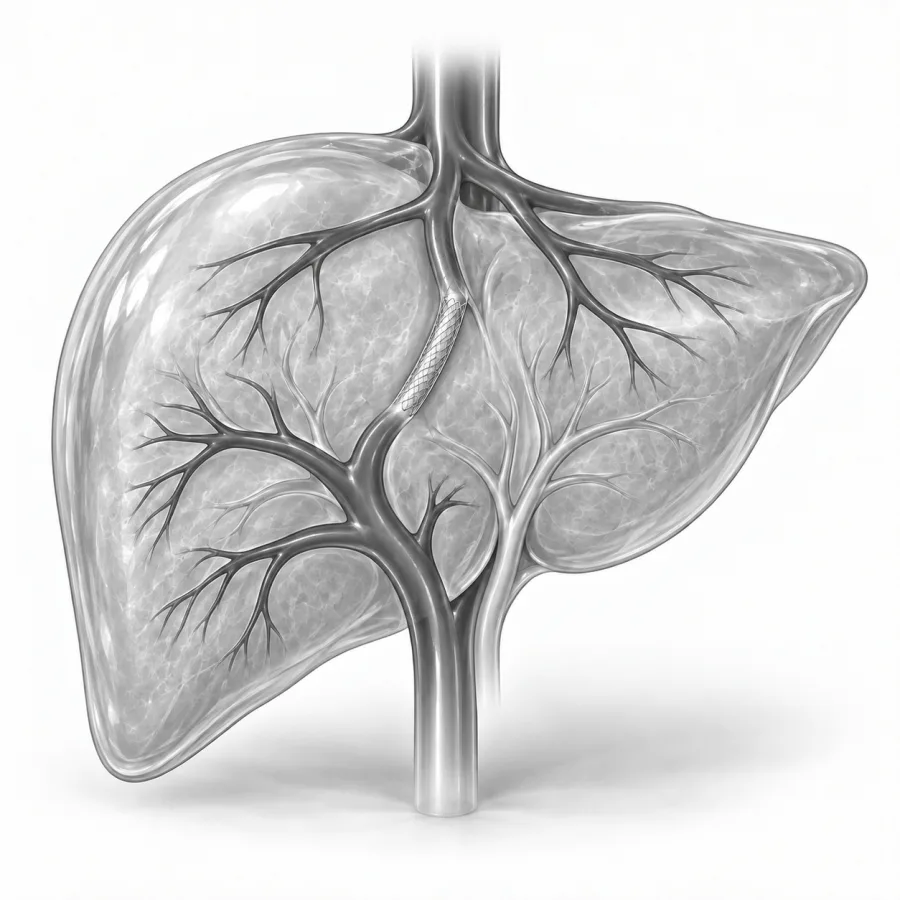
Placed through a small nick in the neck.
Transjugular Intrahepatic Portosystemic Shunt
Dr. Fabio Komlos walks through tips (transjugular intrahepatic portosystemic shunt) the way he explains it in clinic, using the same images he uses to plan treatment.
Fabio Komlos, MDInterventional radiologist · 14:50Removing Ascites Fluid: Paracentesis Explained
10:32
What Is Portal Vein Thrombosis?
4:27
What problem does a TIPS treat?
Blood from your stomach and intestines flows to the liver through a large vein called the portal vein. When the liver is scarred, a condition called cirrhosis, blood cannot pass through easily. Pressure builds up in the portal vein. This is called portal hypertension.
The high pressure pushes blood into smaller veins in the esophagus and stomach, which swell into varices. Varices can burst and bleed heavily. The pressure also pushes fluid out into the belly, called ascites, or into the chest, called hepatic hydrothorax. Common causes of cirrhosis include alcohol, hepatitis B and C, and fatty liver disease.
A TIPS creates a new path inside the liver that connects the portal vein to a hepatic vein, one of the veins that carries blood out of the liver to the heart. A metal stent lined with fabric holds the path open. Some blood now bypasses the scarred liver, and the pressure falls.
On the X-ray, the TIPS stent looks like a short, curved mesh tube inside the liver. When contrast dye is injected, it flows smoothly from the portal vein through the stent toward the heart, and the swollen varices stop filling.
Who it helps, and who it may not
Main reasons for a TIPS
- Bleeding varices that do not stop with banding and medicines, or that keep coming back
- A first major variceal bleed in people at high risk of rebleeding. Doing a TIPS within about 3 days can improve survival in selected patients.
- Ascites that keeps returning despite medicines and a low-salt diet, needing frequent drainage
- Fluid around the lung from liver disease that keeps coming back
- Budd-Chiari syndrome, a blockage of the veins that drain the liver
Good candidates
- Liver function still reasonably good
- Heart pumps normally
- No recent confusion from liver disease
- Committed to follow-up visits and scans
May not be right if
- Very advanced liver failure
- Heart failure or severe high lung pressure
- Frequent or severe confusion from liver disease
- An uncontrolled infection
- A large tumor in the path of the stent
A TIPS treats the pressure, not the liver disease itself. Many people who need a TIPS should also be evaluated for a liver transplant. The TIPS stent sits entirely inside the liver and is removed with it during a transplant.
How it compares with other options
| TIPS | Banding and medicines | Repeated paracentesis | |
|---|---|---|---|
| Treats | The high pressure itself | Bleeding varices | Belly fluid |
| How often | Once, with checkups | Repeated scopes, daily pills | Every 1–4 weeks |
| Hospital stay | 1–2 nights | Usually none for banding | Usually none |
| Main downside | Risk of confusion, stress on the liver | Varices can rebleed | Protein loss, frequent visits |
First-line care for varices is medicines called beta blockers and banding, where rubber bands are placed on varices through a camera. For ascites, the first steps are a low-salt diet and water pills, then drainage with paracentesis. A tunneled belly drain is another option for some people. Surgical shunts are rarely done today. A TIPS is usually the next step when these do not work well enough.
How to prepare
- We review your liver function, kidney function, blood counts and clotting. We often use a score called MELD to estimate risk.
- An echocardiogram (heart ultrasound) checks that your heart can handle the extra blood flow.
- A CT or ultrasound shows us your liver veins and the portal vein.
- Tell us about blood thinners and any past confusion from liver disease.
- Do not eat after midnight before a planned procedure, or as we instruct. Plan to stay in the hospital one or two nights.
In an emergency bleed, a TIPS may be done urgently in the hospital, sometimes after a stay in intensive care. See before your procedure and sedation.
What happens during the procedure
- 1Anesthesia and access
Most people have general anesthesia. We numb the right side of the neck and, with ultrasound, place a thin tube into the jugular vein.
- 2Reaching the liver
Using live X-ray, we guide a catheter down through the heart's large vein into a hepatic vein. We measure pressures and inject dye to map the veins.
- 3Creating the shunt
A long, thin needle passes through the liver from the hepatic vein into the portal vein. A balloon widens the path, and a fabric-lined metal stent is placed to hold it open.
- 4Checking the result
We measure pressures again to confirm they have dropped to the target. If needed, we block large varices with coils or glue. The neck tube comes out and the tiny nick is closed with glue or a small bandage.
The procedure usually takes 1 to 3 hours, depending on your anatomy.
Recovery and follow-up
- First dayYou recover in the hospital. The neck may be sore or bruised. Mild belly discomfort is common.
- 1–2 daysMost people with a planned TIPS go home. People treated for heavy bleeding may stay longer.
- 7–10 daysMost normal activities are fine. Avoid heavy lifting until we say otherwise.
- Weeks to monthsBelly fluid usually shrinks gradually. You may still need a drainage or two at first.
- OngoingDoppler ultrasound checks the stent, usually within a few weeks and then at regular visits.
Keep taking your liver medicines as your liver doctor directs. Many people are started on lactulose or rifaximin to help prevent confusion. Keep avoiding alcohol completely and follow a low-salt diet if you have ascites.
Results
A TIPS stops variceal bleeding in more than 9 out of 10 people. The chance of bleeding again is much lower than with banding alone. For ascites, about 2 out of 3 people have much less fluid, though it can take weeks to months. Modern fabric-lined stents stay open well, and most narrowing can be fixed with a short procedure through the neck.
Before I recommend a TIPS, I look closely at three things: how well your liver works, how strong your heart is, and whether you have had confusion from your liver before. I tell every patient and family plainly that TIPS trades one problem for a possible other, confusion, and that we plan for it together. When the patient is well chosen, it can change their life, from monthly drainages or emergency bleeds to living normally.Fabio Komlos, MD, interventional radiologist · About Dr. Fabio Komlos
Risks, including confusion
The most important side effect is hepatic encephalopathy. Because some blood now skips the liver, toxins that the liver normally clears reach the brain. This can cause sleepiness, forgetfulness, confusion or personality changes. New or worse encephalopathy happens in about 1 in 3 people after a TIPS. Most cases are mild and improve with lactulose and rifaximin. In a small number, the stent needs to be narrowed or closed.
- Worsening liver function, especially in people with advanced liver disease.
- Heart strain, because more blood returns to the heart.
- Bleeding, including bleeding into the belly or from the liver, which is uncommon but can be serious.
- Stent narrowing or blockage, which can bring back symptoms and is usually treated with a balloon or new stent.
- Infection, kidney strain from contrast dye, and neck bruising.
- Death is rare, and is more likely in people who are already very sick or bleeding heavily.
Common questions
Will a TIPS cure my liver disease?
What is hepatic encephalopathy?
Will I still need paracentesis?
Can I still have a liver transplant?
How long does the stent last?
Does it hurt?
Will insurance cover it?
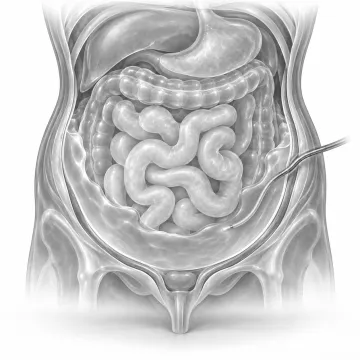
Paracentesis
Drain fluid from the belly through a thin tube, with numbing medicine and quick relief.
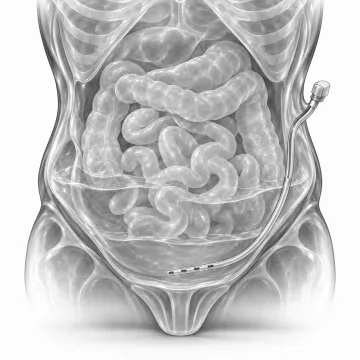
Abdominal PleurX catheter
A home drain for fluid that keeps building up in the belly (ascites).
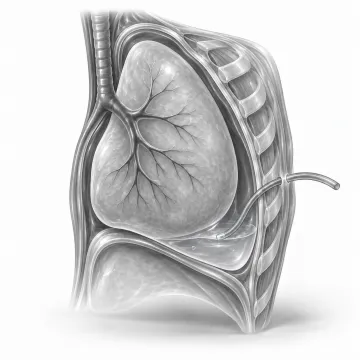
Thoracentesis
Drain fluid around the lung through a thin tube between the ribs, often with relief the same day.
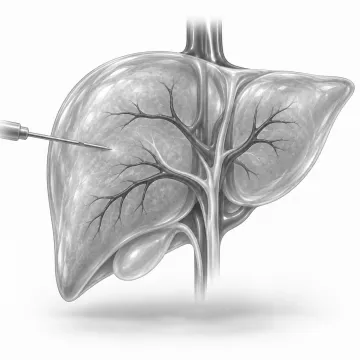
Medical liver biopsy
Measure liver inflammation, fat and scarring with a needle sample, through the side or the neck.
Liver tumors
Primary liver cancer and liver metastases: what they are and every way to treat them.
Written for patients by the Palo Alto Interventional team. General information only; your own plan depends on your health and imaging.
Talk to us about your options
Request a consultation online, or call 650-404-8445, Monday to Friday, 8 am to 5 pm. You can also ask your doctor to send a referral. We will review your imaging and help you decide whether a procedure makes sense.