
Compression stockings
Gentle squeeze, healthier veins.
Compression stockings help your leg veins move blood back toward the heart. They ease swelling, aching and heaviness from vein disease, and you may need them before or after a vein procedure. Here is how to choose the right strength and length, and how to put them on.
- 20-30 mmHg for most people
- Knee-high for vein disease
- Put on in the morning
- Replace every 3 to 6 months
 Fabio Komlos, MDInterventional radiologist
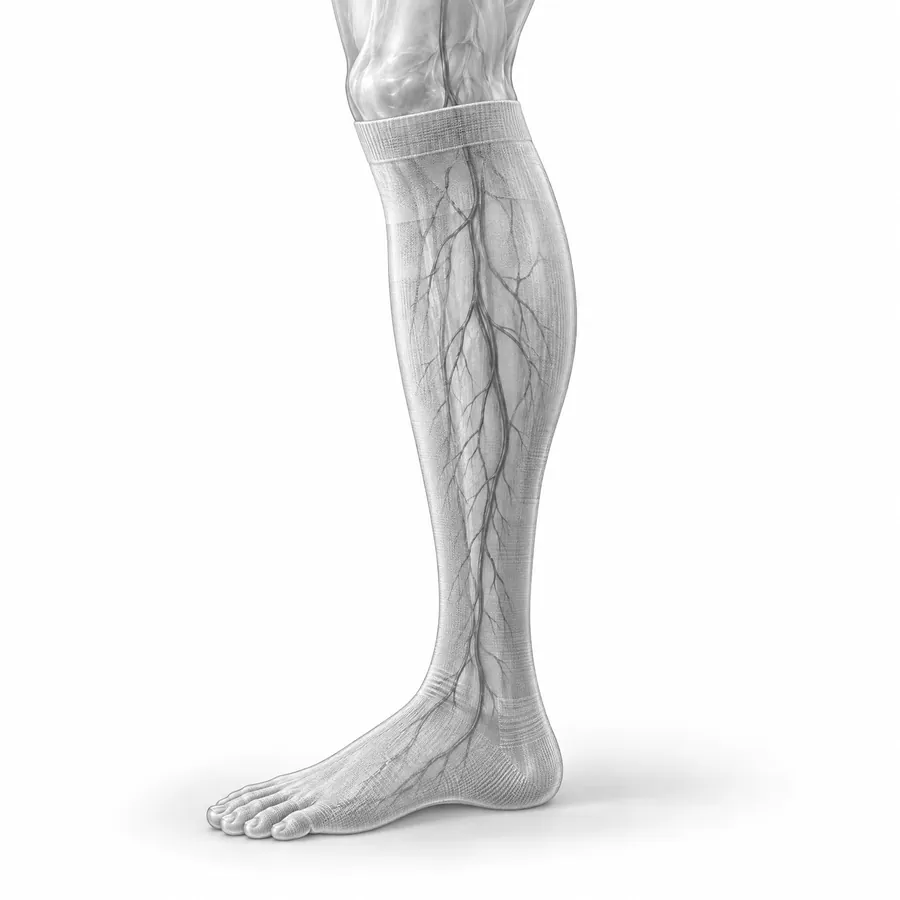
Graduated compression gently pushes blood up the leg.
How compression stockings help
Leg veins have small valves that keep blood moving up toward the heart. When the valves weaken, blood pools in the legs. This causes varicose veins, swelling, aching and a heavy feeling, especially at the end of the day.
Graduated compression stockings are tightest at the ankle and get looser toward the knee and thigh. That gentle squeeze helps the veins push blood upward and keeps fluid from building up.
When they are used
- To ease swelling, aching and heaviness from vein disease
- Before a vein procedure. Many insurance plans ask for a trial of compression stockings before they cover treatment for varicose veins. We will tell you if yours does.
- After a vein procedure, to help healing and reduce bruising and swelling
- Sometimes after a blood clot in the leg (DVT), if your doctor recommends it
Choosing the strength and length
Compression is measured in millimeters of mercury (mmHg). The higher the number, the firmer the squeeze.
- 20-30 mmHg is what we recommend for most people. It works well and is comfortable enough to wear every day.
- 30-40 mmHg also works very well, but these stockings are often hard to put on. Use them only if your doctor recommends it.
- Knee-high stockings are right for most people with vein disease.
- Thigh-high or pantyhose styles may be needed for some vein procedures. Confirm with your doctor which one you need before you buy.
Open-toe styles are easier for some people to put on and are cooler in warm weather.
Getting the right fit
- 1Measure your legs in the morning, before swelling builds up.
- 2Measure around the narrowest part of the ankle and the widest part of the calf. For thigh-high styles, also measure around the upper thigh.
- 3Use the size chart for the brand you are buying. Sizes differ between brands.
- 4If you are between sizes or unsure, a medical supply store can measure you.
Putting them on and wearing them
- Put them on in the morning, when your legs are least swollen.
- Turn the stocking inside out down to the heel, slip your foot in, then roll it up the leg. Rubber gloves help you grip.
- Smooth out wrinkles. Do not roll or fold the top down; that can squeeze too tightly.
- Wear them during the day and take them off at night, unless your doctor tells you otherwise.
- Wash them by hand or on a gentle cycle and air dry. Replace them every 3 to 6 months, when they start to feel loose.
The best compression stocking is the one you will actually wear. If a 30-40 mmHg stocking stays in the drawer because it is too hard to put on, a 20-30 mmHg stocking you wear every day will help you more.Fabio Komlos, MD, interventional radiologist · About Dr. Fabio Komlos
When to be careful
Check with your doctor before you use compression stockings if you have peripheral arterial disease or poor circulation in your legs, diabetes with numb feet, open wounds or fragile skin on your legs, or heart failure.
Where to buy
You can buy compression stockings at pharmacies, medical supply stores and online. Here are some easy options we have found; they are not endorsements, and not always the best product or lowest price. Buy from wherever is easiest for you.
Compression stockings
- Jobst compression stockings20-30 mmHg graduated compressionShop on Amazon
- Sigvaris compression stockingsKnee-high and thigh-high stylesShop on Amazon
- Amazon Basics thigh-high compression stockingsA lower-cost thigh-high optionShop on Amazon
- Truform open-toe compression stockings20-30 mmHg, easier for some people to put onShop on Amazon
As an Amazon Associate, Palo Alto Interventional earns from qualifying purchases.
Supplies for drains, tubes and back pain are on our home supplies page.
Common questions
Do I need a prescription?
How many hours a day should I wear them?
Can I sleep in them?
They are too hard to put on. What can I do?
Will compression stockings make my varicose veins go away?
Varicose veins
Why leg veins bulge and ache, and how to treat them without major surgery.
Spider veins
What spider veins are and how sclerotherapy fades them, session by session.
DVT (deep vein blood clots)
Blood clots in the leg or arm: signs, blood thinners, clot removal and long-term care.
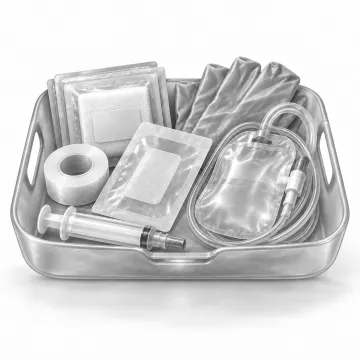
Home supplies
Supplies for drains, kidney and bile tubes, feeding tubes, compression stockings and back pain, and where to get them.
After your procedure
Puncture site care, activity, showering, driving, pain and when to call after an IR procedure.
Written for patients by the Palo Alto Interventional team. General information only; your own plan depends on your health and imaging.
Talk to us about your options
Request a consultation online, or call 650-404-8445, Monday to Friday, 8 am to 5 pm. You can also ask your doctor to send a referral. We will review your imaging and help you decide whether a procedure makes sense.