
Spider veins
Fade spider veins with a few small injections.
Spider veins are tiny red, blue or purple veins just under the skin. Sclerotherapy, a series of fine-needle injections, fades most of them over several weeks, with no downtime.
- Very common
- Usually harmless
- 15–30 min sessions
- No downtime
 Fabio Komlos, MDInterventional radiologist
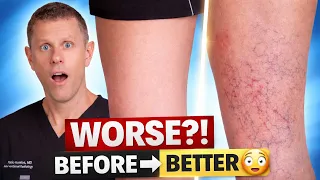 Watch the video explanation5:03 video · 7 things you need to know before you do Sclerotherapy for Spider Veins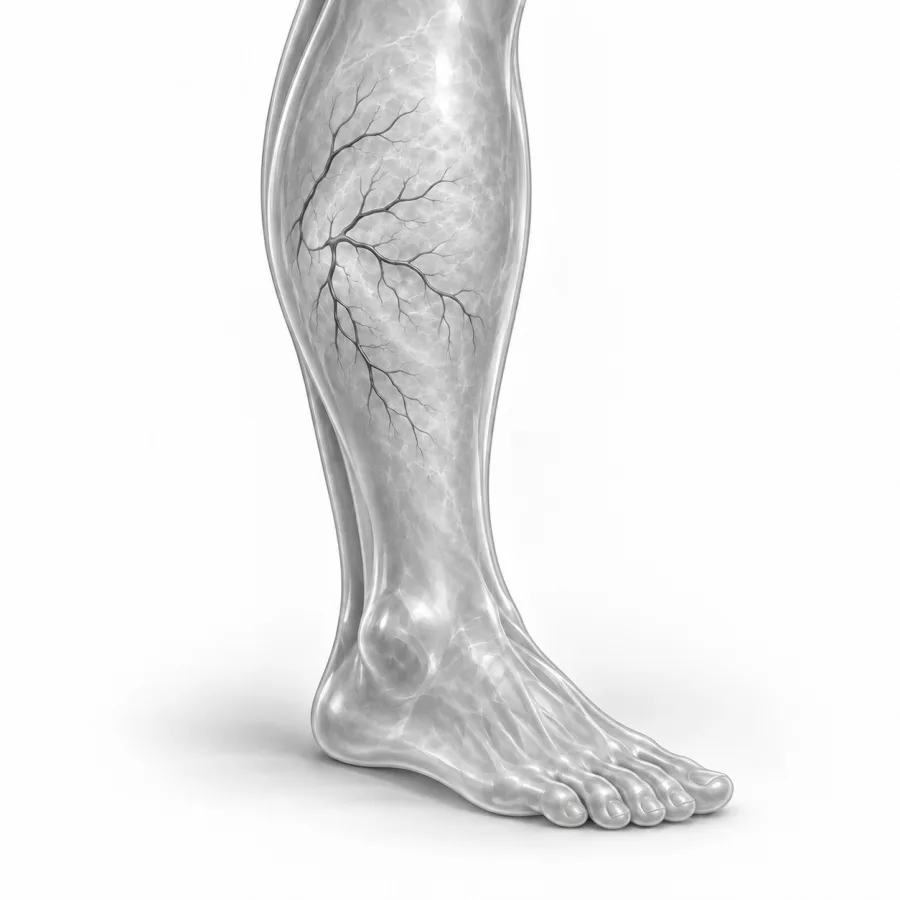
Most people go right back to their day.
7 things you need to know before you do Sclerotherapy for Spider Veins
Dr. Fabio Komlos walks through spider veins the way he explains it in clinic, using the same images he uses to plan treatment.
Fabio Komlos, MDInterventional radiologist · 5:03Understanding Venous Problems: Varicose Veins, DVT, and More
18:10
Doctor Reveal 3 Proven Ways to Eliminate Varicose Veins WITHOUT Surgery!
3:00
Quick answers
Under a minute eachWhat are spider veins?
Spider veins are small, widened veins in the top layers of the skin. Doctors call them telangiectasias. They are usually less than 1 millimeter wide and look like fine red or purple lines, starbursts or a spider's web. Slightly larger blue-green veins, 1 to 3 millimeters wide, are called reticular veins. They often feed clusters of spider veins.
They are most common on the thighs, calves and ankles, and can also appear on the face. They are a mild form of the same vein weakness that causes varicose veins: tiny valves let blood slip backward, and small veins stretch.
Common reasons people get them
- Family history
- Being a woman, and hormone changes from puberty, pregnancy, menopause or hormone pills
- Pregnancy
- Getting older
- Standing or sitting for long periods
- Sun damage, especially on the face
- A past injury to the area
Symptoms and when to look deeper
For most people, spider veins are a cosmetic concern and cause no symptoms. Some people feel mild burning, itching or aching over them, especially after long days on their feet.
If you also have aching, heavy or swollen legs, bulging veins, skin darkening near the ankles or spider veins clustered around the ankle, there may be a larger leaky vein underneath. In that case, we check with a duplex ultrasound first. Treating that deeper leak comes before treating the surface veins, or the spider veins tend to come back quickly.
On a duplex ultrasound, the technologist looks at the larger veins below the skin. If blood flows backward in them when the calf is squeezed, that deeper leak may be feeding the spider veins you see.
Is sclerotherapy right for me?
Sclerotherapy is the standard treatment for spider and reticular veins on the legs. A medicine called a sclerosant is injected into the vein with a very fine needle. It irritates the inner lining so the vein walls stick together and close. Over the next weeks, your body absorbs the closed vein and it fades.
Good candidates
- Spider or reticular veins on the legs that bother you
- Mild burning or aching over small veins
- Healthy enough to walk daily after each session
- Realistic expectations: fading, not perfection
Not right now, or not right for you
- Pregnant or breastfeeding
- A recent blood clot, or a clotting disorder not yet discussed with us
- Unable to walk or bedbound
- A known allergy to the sclerosant
- An untreated leaky vein underneath, which should be treated first
| Sclerotherapy | Surface laser | |
|---|---|---|
| Best for | Leg spider and reticular veins | Very fine veins, face veins, needle-shy patients |
| How it works | Medicine closes the vein from inside | Light energy heats the vein through the skin |
| Sessions | Usually 2–4 | Usually 2–5 |
| Main trade-offs | Bruising, brown staining | Skin redness, less effective on larger leg veins |
What a sclerotherapy session is like
- 1Get ready
Wear shorts or bring them, and skip lotion on your legs that day. Bring your compression stockings if we asked you to buy them. We photograph the veins so we can track progress.
- 2Injections
You lie on a table. Using a very fine needle, we inject small amounts of sclerosant into many veins, sometimes as a foam for slightly larger ones. Most people feel tiny pricks and, with some medicines, a brief sting or cramp.
- 3Compression
Cotton balls or pads may be taped over the injection spots. You put on compression stockings before you leave.
- 4Walk
You walk out of the room and take a 10 to 20 minute walk. A session takes about 15 to 30 minutes.
No sedation is needed. You can drive yourself home and go back to work the same day.
Aftercare and results
- First 48 hoursWear stockings as instructed. Walk every day. Avoid hot baths, hot tubs, saunas and hard workouts. Regular walking and light activity are encouraged.
- First 1–2 weeksKeep wearing stockings during the day, usually for 1 to 2 weeks. Protect treated skin from strong sun or tanning. Treated veins may look darker and bruised at first.
- 3–6 weeksSmall spider veins fade noticeably. Larger reticular veins take longer.
- 3–6 monthsFull result. A touch-up session can treat veins that did not fully fade.
Most people see clear improvement after a few sessions, but it is rare for every vein to disappear. Sclerotherapy does not stop new spider veins from forming later, because the tendency runs in families. Many people come back for a touch-up every few years.
Before I inject a single spider vein, I want to know whether something bigger is feeding it. If there is a leak underneath, I fix that first, because otherwise we are painting over a water stain. I also tell patients to plan on more than one visit and to judge the result at three months, not three days, because veins often look worse before they look better.Fabio Komlos, MD, interventional radiologist · About Dr. Fabio Komlos
Side effects and risks
Common and temporary
- Bruising and small red bumps at injection sites, lasting days to a couple of weeks
- Itching or mild aching over treated veins for a few days
- Brown lines or spots along treated veins (hyperpigmentation), which usually fade over months but can take up to a year
- Small firm lumps of trapped blood in larger veins, which can be drained at a follow-up visit
- Matting: a blush of new, very fine red veins near a treated area, which often fades on its own
Uncommon or rare
- A small skin sore where the medicine irritated the skin, which heals over weeks and may leave a small scar
- Allergic reaction to the medicine
- Brief visual changes or a migraine-like headache, mainly after foam
- A blood clot in a deeper vein, which is very rare
Common questions
Does sclerotherapy hurt?
How many sessions will I need?
Can I exercise afterward?
Will insurance cover spider vein treatment?
Is it safe to close these veins?
Can you treat spider veins on the face?
When is the best time of year to start?
Varicose veins
Why leg veins bulge and ache, and how to treat them without major surgery.
Bleeding varicose vein: what to do
Step-by-step first aid for a bleeding varicose vein, and when to call 911.
Vascular malformations
Venous, lymphatic and arteriovenous malformations: what they are and how they are treated.
Written for patients by the Palo Alto Interventional team. General information only; your own plan depends on your health and imaging.
Talk to us about your options
Request a consultation online, or call 650-404-8445, Monday to Friday, 8 am to 5 pm. You can also ask your doctor to send a referral. We will review your imaging and help you decide whether a procedure makes sense.