
Adjustable compression wraps (circaid juxtafit)
Compression for legs that stockings don't fit.
If you have chronic venous insufficiency and cannot put on compression stockings, an adjustable compression wrap such as the circaid juxtafit can give you the same benefit. You wrap it around your lower leg, fasten the bands and tighten them to the right pressure, and you can re-adjust it during the day as the swelling goes down.
- For when stockings won't work
- Adjustable bands
- Set the pressure with a guide card
- Re-tighten as swelling improves
 Fabio Komlos, MDInterventional radiologist
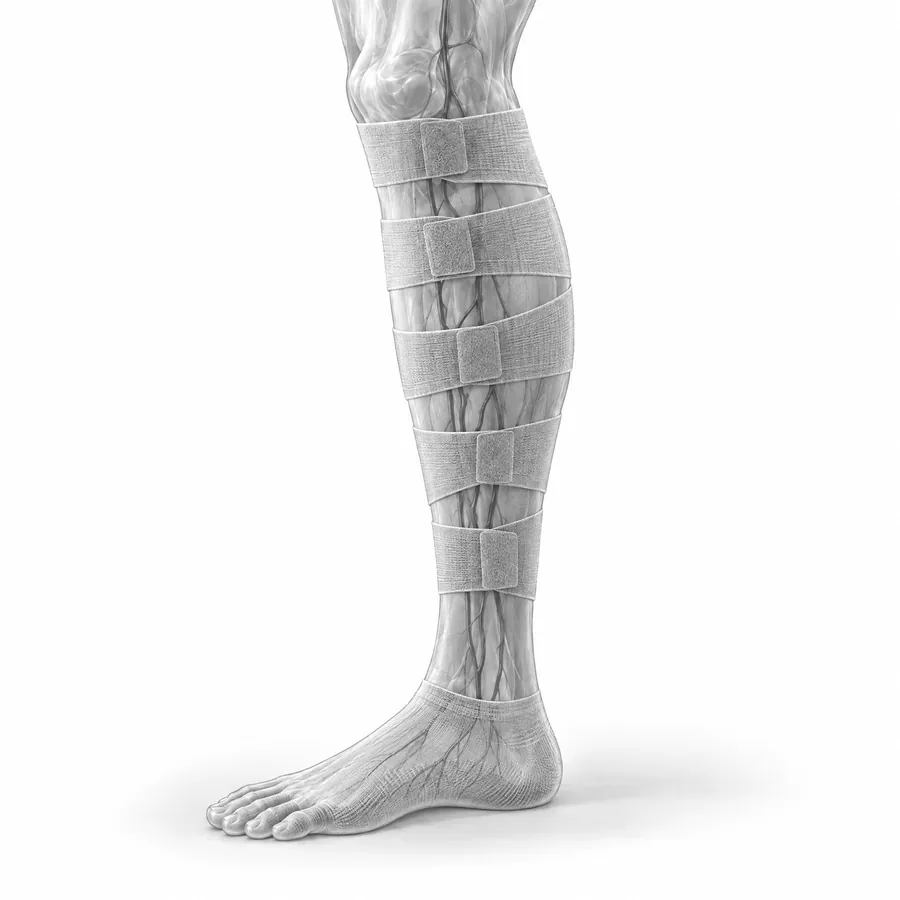
Tighten the bands as the swelling goes down.
What it is
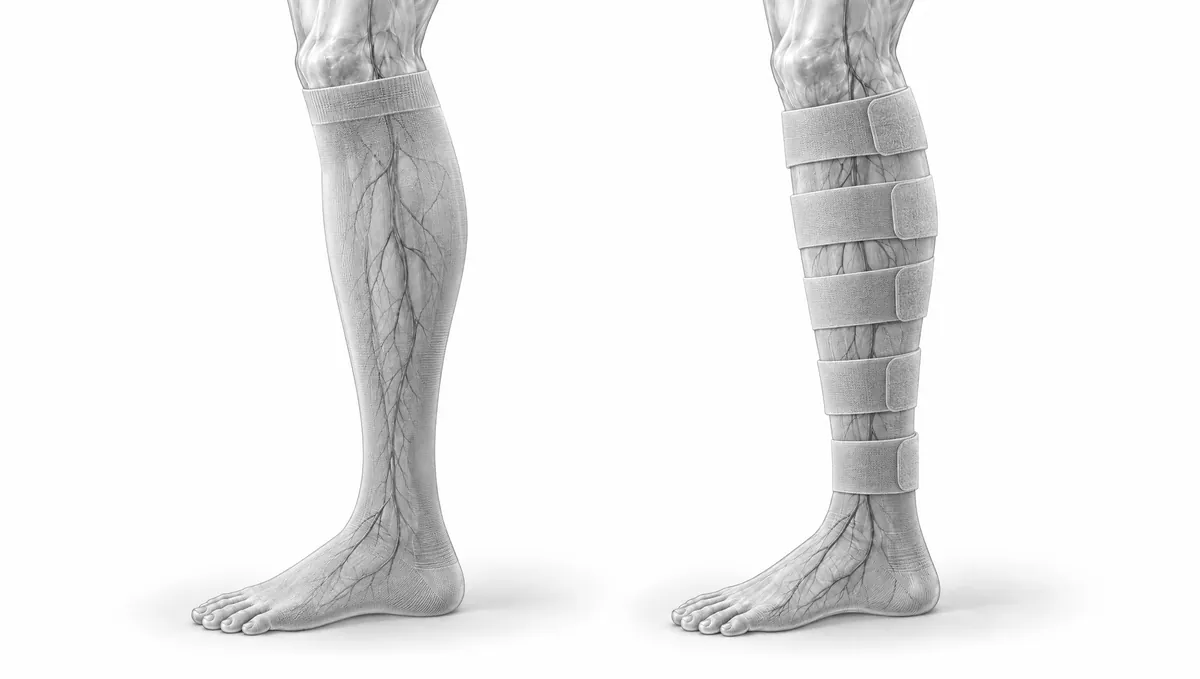
The circaid juxtafit is an inelastic (short-stretch) compression wrap for the lower leg, made by medi. Instead of a tube of fabric that you pull up your leg like a compression stocking, it opens flat. You place it around your calf and close a series of overlapping bands with hook-and-loop fasteners, from the ankle up to just below the knee.
A pressure guide card that comes with it shows how far to stretch each band, so you can set the compression your doctor recommends: 20-30, 30-40, 40-50 or more than 50 mmHg. A thin compression sock or foot wrap covers the foot and ankle.
Who it helps
We recommend an adjustable wrap for people with chronic venous insufficiency who need compression but cannot use stockings, most often because:
- Mobility problems. Bending down to the feet is hard because of back or hip problems, weight, or recent surgery.
- Weak or painful hands. Arthritis or limited hand strength makes it impossible to pull a tight stocking over the heel.
- Legs that are too swollen or an unusual shape, so stockings don't fit, roll down, or dig into the skin.
- Swelling that changes a lot during the day or over the first weeks of treatment, so a stocking that fits in the morning is too tight or too loose later.
- Venous leg ulcers or fragile skin, where a wrap can go over a wound dressing (under the guidance of your wound care team).
Adjustable wraps are also widely used for lymphedema. If your swelling is from lymphedema, your doctor or lymphedema therapist will tell you which product and pressure are right for you.
Advantages over stockings
- Easier to put on and take off. You can apply it sitting down, and a family member or caregiver can help without any special skill.
- Adjustable. You can tighten the bands as your leg gets smaller, instead of buying new stockings in a smaller size.
- Steady pressure. Stockings and bandages loosen as swelling goes down; with a wrap you simply re-tighten the bands.
- Works with walking. Inelastic compression gives a firm push when your calf muscle contracts during walking, which helps the veins pump blood back up, and feels gentler at rest.
- Washable and reusable. One wrap usually lasts about 6 months with daily use.
What the research shows
Adjustable compression wraps have been compared with the standard inelastic bandages applied by nurses in several randomized trials:
- Venous leg swelling: in a randomized trial of patients with chronic venous edema, adjustable wraps reduced leg volume more than inelastic bandages after one week (26% vs 19%), with similar comfort. The pressure under the bandages dropped by more than half over time, while the wraps kept their pressure because patients re-adjusted them (Mosti et al., Eur J Vasc Endovasc Surg 2015).
- Venous leg ulcers: a multicenter randomized trial found adjustable wraps more effective and less expensive than inelastic bandages for healing venous leg ulcers (Mosti et al., Phlebology 2020).
- Leg lymphedema: in a randomized trial, a self-applied adjustable wrap reduced leg volume almost twice as much as multilayer bandages after 24 hours (10.3% vs 5.9%) (Damstra and Partsch, J Vasc Surg Venous Lymphat Disord 2013).
- Self-application: when people applied a juxtafit wrap to their own legs, they reached consistent, effective pressures, more reliably than bandages applied by trained staff (Partsch, Phlebology 2019).
There are limits. In a study of people over 65, only about a third could put the wrap on by themselves with enough pressure; obesity, a weak grip and memory problems made it harder (Balet et al., Int Angiol 2021). If that sounds like you, plan for a family member or home health nurse to help, at least at first.
How to put it on
- 1Start in the morning
Put the wrap on when your leg is least swollen, before you have been up and about for long. Sit down with your leg supported.
- 2Cover the foot
Put on the thin compression sock or foot piece first, so the ankle and foot are covered.
- 3Open the wrap and place it
Lay the open wrap behind your calf with the bottom edge just above the ankle bone and the top just below the knee.
- 4Close the bands from the bottom up
Fasten each band in turn, overlapping the one below. Use the pressure guide card to stretch each band to the level your doctor prescribed.
- 5Check and re-adjust
Smooth out any gaps. During the day, if the wrap feels loose, re-tighten the bands to the same mark on the card.
When to be careful
As with any compression, check with your doctor first if you have peripheral arterial disease or poor circulation, diabetes with numb feet, heart failure, or a skin infection.
Where to get one
The wrap comes in sizes by calf and ankle measurement and in short or long lengths. Measure your leg in the morning and use the size chart. Some insurance plans cover adjustable wraps with a prescription, especially for venous ulcers or lymphedema; check with your plan or a medical supply store.
Adjustable compression wrap
As an Amazon Associate, Palo Alto Interventional earns from qualifying purchases.
More information, sizing and instructions are on the official circaid juxtafit website. Compression stockings and other supplies are on our home supplies page.
Common questions
Is a wrap as good as a compression stocking?
Can I wear it at night?
How often do I need to re-tighten it?
Can I shower with it?
Do I need a prescription?
Compression stockings
How compression stockings work, which strength and length to choose, how to put them on, and where to buy them.
Varicose veins
Why leg veins bulge and ache, and how to treat them without major surgery.
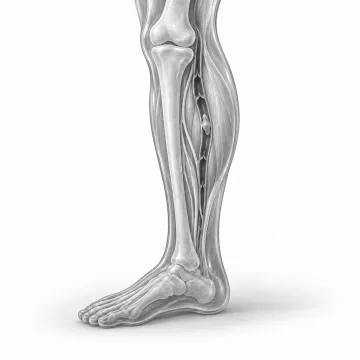
DVT (deep vein blood clots)
Blood clots in the leg or arm: signs, blood thinners, clot removal and long-term care.
Home supplies
Supplies for drains, kidney and bile tubes, feeding tubes, compression stockings and back pain, and where to get them.
Written for patients by the Palo Alto Interventional team. General information only; your own plan depends on your health and imaging.
Talk to us about your options
Request a consultation online, or call 650-404-8445, Monday to Friday, 8 am to 5 pm. You can also ask your doctor to send a referral. We will review your imaging and help you decide whether a procedure makes sense.