
Understanding your dialysis access
Know your dialysis access and keep it working.
Your access is your lifeline for dialysis. This guide explains fistulas, grafts, catheters and peritoneal dialysis, how to check your access in 30 seconds every day, and which warning signs need a same-day call.
- 4 main access types
- Check it every day
- Fistula is preferred
- Problems often fixable
 Fabio Komlos, MDInterventional radiologist
 Watch the video explanation4:18 video · Dialysis Access Explained What Are the Options?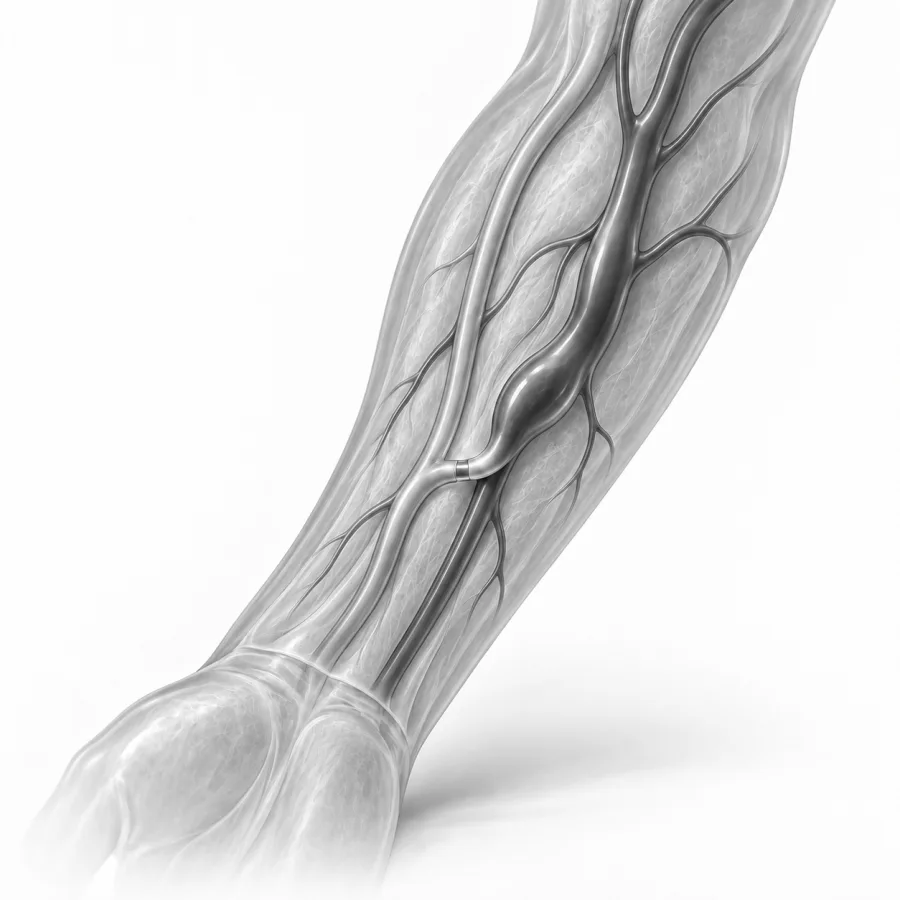
Feel the buzz, listen for the whoosh, look for changes.
Dialysis Access Explained What Are the Options?
Dr. Fabio Komlos walks through understanding your dialysis access the way he explains it in clinic, using the same images he uses to plan treatment.
Fabio Komlos, MDInterventional radiologist · 4:18Common Dialysis Access Problems Explained: Catheter, Fistula, & Graft
19:56
How can you create an arteriovenous fistula with no cuts or scars?
12:27
Dialysis Access — Hand Pain What You Should Know About Steal Syndrome
2:54
Quick answers
Under a minute eachWhat is a dialysis access?
When your kidneys stop working, dialysis does their job of cleaning waste, salt and extra water out of your blood. There are two kinds. In hemodialysis, your blood runs through a machine filter and back into your body, usually three times a week. In peritoneal dialysis (PD), fluid is placed inside your belly and the lining of the belly acts as the filter.
Either way, you need a reliable way in, called an access. For hemodialysis, the access must carry a lot of blood quickly, far more than a normal arm vein can handle. For PD, the access is a soft tube in your belly. Your access is often called your lifeline, because without it you cannot get dialysis.
Interventional radiologists are doctors who use X-ray and ultrasound to treat problems from the inside, through small punctures. We place catheters, create some fistulas without surgery, and repair accesses that are narrowed or clotted. If you are new to our specialty, see what is interventional radiology.
The four main types of access
- Arteriovenous fistula (AV fistula or AVF): a direct connection between an artery and a vein, usually in the forearm or upper arm. The extra blood flow makes the vein grow larger and stronger so it can be punctured with needles at each session. It is the preferred access for most people because it lasts the longest and has the fewest infections.
- Arteriovenous graft (AV graft or AVG): a soft plastic tube placed under the skin to join an artery and a vein. It is used when your own veins are too small for a fistula. It can be used sooner than a fistula, but it narrows and clots more often.
- Tunneled dialysis catheter: a soft tube that enters a large vein in the lower neck and runs under the skin of the chest to come out below the collarbone. It works the same day, so it is often used to start dialysis quickly or as a bridge while a fistula matures. It has the highest risk of infection. See dialysis catheters.
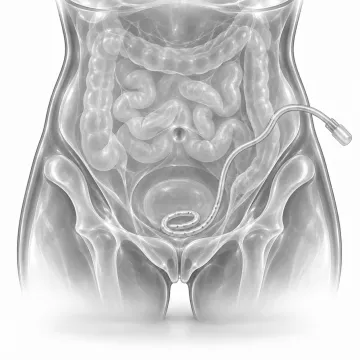
- Peritoneal dialysis catheter: a soft tube placed through the belly wall, used for PD at home. See peritoneal dialysis catheters.
| Fistula | Graft | Tunneled catheter | PD catheter | |
|---|---|---|---|---|
| Where | Arm | Arm (sometimes thigh) | Neck and chest | Belly |
| Ready to use | About 6–12 weeks, sometimes longer | About 2–4 weeks | Same day | About 2–4 weeks |
| Needles each session | Yes | Yes | No | No |
| Infection risk | Lowest | Low to moderate | Highest | Moderate (belly infection) |
| How long it lasts | Often years | Often 2–3 years, with repairs | Weeks to months, ideally | Years, if PD keeps working |
On a fistulogram, contrast dye makes the fistula show up as a wide dark channel running up the arm from the artery connection toward the shoulder, so narrow spots stand out as a waist in the channel.
A fistula without surgery: the percutaneous AV fistula
A fistula has traditionally been made by a surgeon through an incision at the wrist or elbow. A newer option, the percutaneous AV fistula (pAVF), creates the connection from inside the blood vessels, through needle punctures near the elbow. There is no open incision and no stitches, and it usually takes about an hour under sedation and local numbing.
The doctor uses ultrasound and X-ray to guide thin catheters into a deep artery and vein that lie side by side below the elbow, then uses a small burst of heat energy to join them. Blood then flows into the arm veins through a natural connecting vein. Like a surgical fistula, it still needs time to mature, usually about 6–12 weeks, and some people need a balloon treatment afterward to help it grow.
May be a good fit if
- You need a first fistula and have not had one in that arm
- Ultrasound shows the right vein and artery near the elbow
- You would prefer to avoid a surgical scar
May not be right if
- Your veins near the elbow are too small or scarred
- The needed connecting vein is missing
- Your artery is narrow or hardened
- You need dialysis within days (a catheter comes first)
A surgical fistula is still an excellent choice and is the right option for many people. An ultrasound map of your arm veins and arteries tells us which approach fits your anatomy.
How to check your fistula or graft every day
A working fistula or graft has a steady flow of blood you can feel and hear. Checking it every morning and evening takes less than a minute and is the best way to catch a problem early, while it can still be fixed with a small procedure.
The daily check
- 1Feel for the thrill. Place your fingertips lightly over the access. You should feel a continuous buzzing or purring vibration, like a cat purring.
- 2Listen for the bruit. Put your ear, or a stethoscope, near the access. You should hear a steady whooshing sound, like wind or a seashell.
- 3Look. Check for new swelling, redness, bruising, scabs that will not heal, or skin that looks shiny or thin over a bulge.
- 4Compare. Notice whether the thrill feels weaker, or has changed to a hard pounding pulse. A change matters more than any single reading.
Protect your access arm
- No blood pressure cuffs, blood draws or IVs in the access arm. Tell every nurse and doctor, and consider a medical alert bracelet.
- Avoid tight sleeves, watches, bracelets or straps over the access.
- Do not sleep on the access arm or carry heavy bags draped over it.
- Wash the access with soap and water every day and before each dialysis session.
- Keep your blood pressure from dropping too low, and stay within your fluid limits, since low pressure and dehydration can make an access clot.
If you have chronic kidney disease but are not on dialysis yet, protect your arm veins for a future fistula. Ask that blood draws come from the back of the hand when possible, and avoid a PICC line if another option exists. See PICC lines.
Warning signs and what to do
Call us or your dialysis unit the same day if
- The thrill is weaker, has become a strong pounding pulse, or is gone
- Your dialysis team has trouble placing needles, or the machine alarms about low flow or high pressure
- Bleeding after dialysis takes longer than usual to stop (for example, more than 20–30 minutes)
- Your arm, hand, face or neck swells
- Redness, warmth, pus or pain over the access, or fever above 100.4°F
- A bulge in the access is growing, or the skin over it is shiny, thin or scabbed
A lost thrill usually means the access has clotted. This is common and often fixable, but it needs a quick response so you do not miss dialysis. See clotted dialysis access. Slower changes, such as a weaker thrill or long bleeding, often point to a narrowing that can be opened with a balloon during a fistulogram.
Hand pain and steal syndrome
A fistula or graft pulls blood toward the vein. In a small number of people, it pulls so much that the hand beyond it does not get enough blood. This is called dialysis access steal syndrome. It is more likely if you have diabetes, hardened arteries, or an access near the elbow.
Signs of steal
- A hand that is colder, paler or bluer than the other hand
- Numbness, tingling or aching in the fingers, often worse during dialysis
- Weak grip or clumsiness
- Sores on the fingertips that do not heal
Mild coldness is common in the first weeks and often improves. Pain at rest, weakness, or finger sores are serious and need to be seen within a day, because the nerves and tissue of the hand can be damaged. Treatment depends on the cause. We may open a narrowed artery with a balloon, or a surgeon may adjust the access to reduce its flow. The goal is to protect your hand and keep your access when possible.
How access problems are treated
Most access problems come from a stenosis, a narrow segment where scar tissue builds up inside the vein, often near the artery connection or where the graft joins the vein. Narrowing slows the flow and eventually leads to clotting. Other problems include infection, bulging (aneurysm), and narrowing of the large veins in the chest, which causes arm swelling.
- Fistulogram with balloon angioplasty: an X-ray dye study of the access, with a balloon to stretch any narrowing and sometimes a stent. See fistulograms.
- Declot (thrombectomy): removes the clot from a blocked access and treats the narrowing that caused it. See clotted dialysis access.
- Tunneled catheter: a bridge so you can keep having dialysis if the access cannot be fixed right away. See dialysis catheters.
- Surgery: to revise, replace or tie off an access, treat a large aneurysm, or correct steal.
I think of every access as something worth saving, because each one uses up veins you cannot get back. When I look at a fistulogram, I follow the dye from the artery all the way to the heart, since the narrowing that matters is sometimes far from where the needles go. I tell patients that the daily thrill check is the most useful thing they can do: a weak buzz caught on Monday is a 45-minute outpatient fix, while a clot found on Friday can mean a missed treatment.Fabio Komlos, MD, interventional radiologist · About Dr. Fabio Komlos
Common questions
Which access is best?
Why does my fistula buzz?
How long does a fistula take to be ready?
Can a clotted access be saved?
Is a percutaneous fistula as good as a surgical one?
Can I exercise with a fistula?
Does insurance cover access procedures?
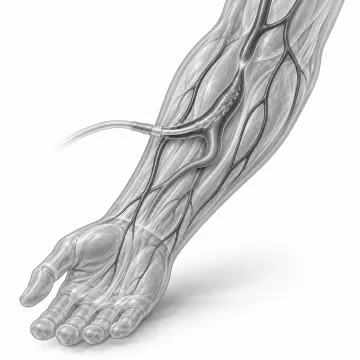
Fistulogram
An X-ray study that finds and opens narrowings in a fistula or graft, in one visit.
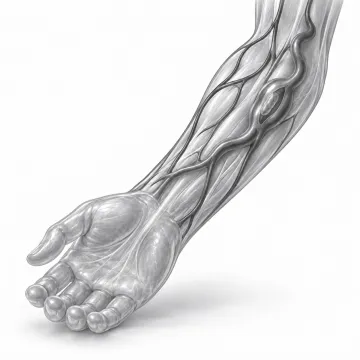
Clotted dialysis access (declot)
Remove a clot from a fistula or graft and get back to dialysis quickly.
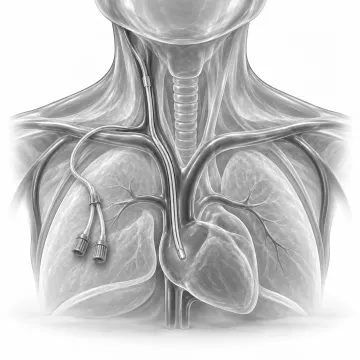
Tunneled dialysis catheters
A soft tube in the chest that allows hemodialysis the same day it is placed.
Peritoneal dialysis catheters
A soft belly tube for home dialysis, placed through a small puncture.
PICC lines
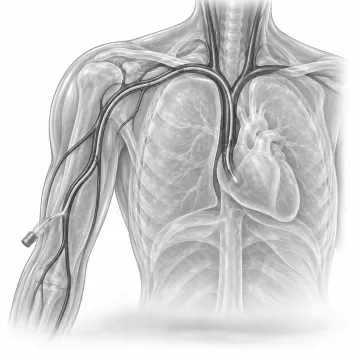
A thin arm line for weeks of IV antibiotics, nutrition or chemotherapy.
Written for patients by the Palo Alto Interventional team. General information only; your own plan depends on your health and imaging.
Talk to us about your options
Request a consultation online, or call 650-404-8445, Monday to Friday, 8 am to 5 pm. You can also ask your doctor to send a referral. We will review your imaging and help you decide whether a procedure makes sense.