
Fistulogram
Find and fix the problem in your dialysis access.
A fistulogram is an X-ray dye study of your fistula or graft. If it shows a narrowing, we open it with a balloon in the same visit. It takes about 30–60 minutes, and most people use their access at the next dialysis.
- Outpatient
- 30–60 minutes
- Moderate sedation
- Home in about 1 hour
 Fabio Komlos, MDInterventional radiologist
 Watch the video explanation4:19 video · Dialysis Access Problems? Heres How We Fix Them!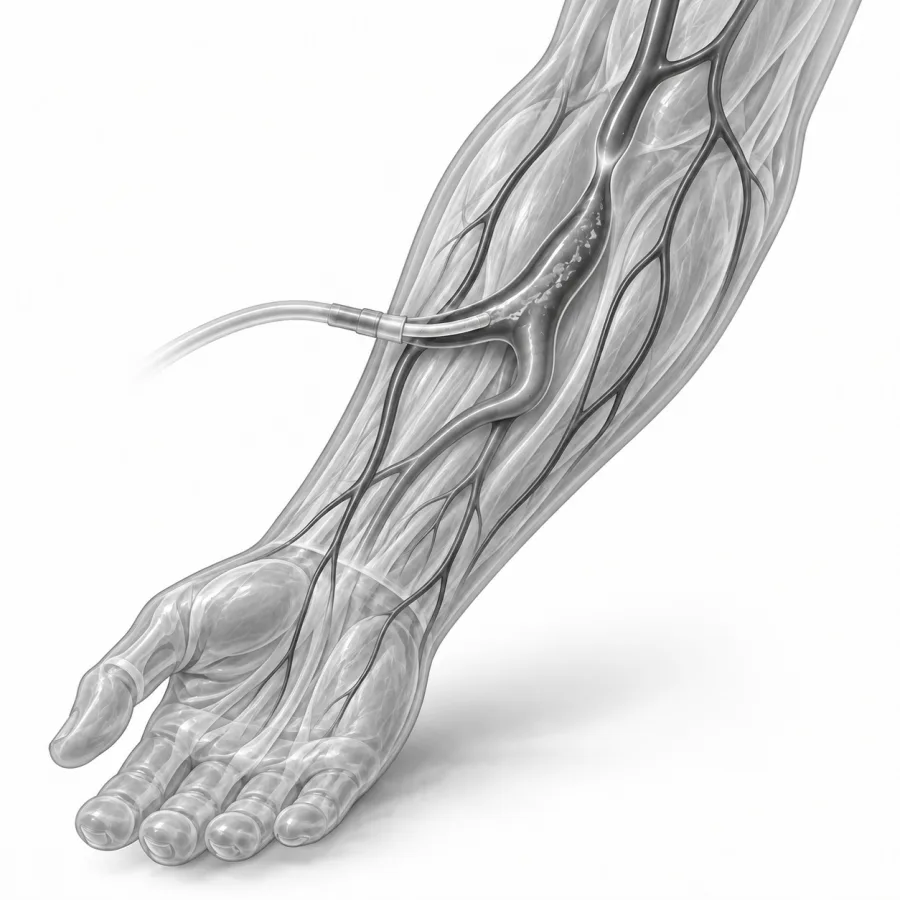
Balloon treatment happens in the same visit, through one small puncture.
Dialysis Access Problems? Heres How We Fix Them!
Dr. Fabio Komlos walks through fistulogram the way he explains it in clinic, using the same images he uses to plan treatment.
Fabio Komlos, MDInterventional radiologist · 4:19Common Dialysis Access Problems Explained: Catheter, Fistula, & Graft
19:56
Cephalic Vein Perforation Near Arterial Anastomosis
3:29
Quick answers
Under a minute eachWhat is a fistulogram?
A fistulogram is an X-ray picture of your dialysis access. We place a tiny tube into your fistula or graft and inject contrast dye, a liquid that shows up on X-ray. The dye lets us see the whole path of blood, from the artery connection in your arm to the large veins in your chest.
The most common finding is a stenosis, a segment where scar tissue has built up inside the vein and made it narrow. If we find one, we treat it in the same visit with balloon angioplasty, which means inflating a small balloon inside the narrowing to stretch it open. So a fistulogram is both a test and a treatment.
On the fistulogram, the access fills with dark contrast like a river. A stenosis looks like a tight waist in the river, and after the balloon the waist is gone and the dye flows quickly to the chest.
Why you might need one
Fistulas and grafts carry very high blood flow. Over months to years, the vein wall reacts by growing scar tissue, most often near the artery connection, where a graft joins the vein, or in the veins near the shoulder and chest. A narrowing slowly reduces flow, makes dialysis less effective, and can lead to a clot.
Common reasons
- Weaker thrill, or a hard pounding pulse instead of a buzz
- Trouble placing needles, or low flow or high pressure on the machine
- Bleeding that lasts longer than usual after dialysis
- Swelling of the arm, face or neck
- Lab tests showing dialysis is less effective than before
- A new fistula that is not growing (not maturing)
Tell us beforehand if
- You have had a reaction to X-ray dye
- You take blood thinners
- The access is red, hot or draining (possible infection)
- You have hand pain or numbness (possible steal)
- You still make urine and want to protect remaining kidney function
If your access has no thrill at all, it has probably clotted. That needs a declot procedure, which includes a fistulogram. See clotted dialysis access.
Balloon, stent or surgery
Balloon angioplasty is the first treatment for most narrowings. Sometimes the vein springs back after the balloon, or the narrowing returns quickly. In that case we may place a stent, a small tube made of metal mesh, or a stent graft, a stent covered with fabric, to hold the vein open. Stent grafts are often used where a graft joins the vein, because they tend to keep that area open longer.
| Balloon angioplasty | Stent or stent graft | Surgical revision | |
|---|---|---|---|
| How it is done | Through a small puncture | Through a small puncture | Through an incision |
| Anesthesia | Moderate sedation | Moderate sedation | Regional or general |
| When it is used | Most narrowings | Recoil, repeat narrowing, some tears | Repeated failure, some aneurysms or steal |
| Access use afterward | Usually right away | Usually right away | Varies |
Narrowings often come back, because the same flow that makes an access work keeps stimulating scar tissue. Many people need a repeat balloon treatment every few months to a year. That is normal and does not mean the first treatment failed. If an area keeps narrowing quickly, we discuss a stent or surgery with your nephrologist and vascular surgeon.
How to prepare
- Do not eat for about 6 hours before your procedure. Clear liquids are usually fine until 2 hours before. We will give you exact times.
- Take your usual medicines with a sip of water unless we tell you otherwise. Ask us about blood thinners and diabetes medicines. See blood thinners.
- Keep your regular dialysis schedule unless your team changes it. Tell us when your next session is.
- Arrange for an adult to drive you home, because you will receive sedation.
- Wear a loose, short-sleeved top so we can reach your access easily.
For more on the day itself, see before your procedure and sedation.
What happens during the procedure
The procedure is done at El Camino Hospital in an interventional radiology suite. A team of nurses, a radiology technologist and your interventional radiologist care for you. You lie on your back with your arm stretched out on an arm board, and we monitor your heart rate, blood pressure and oxygen the whole time.
- 1Relax and numb
A nurse gives you moderate sedation, sometimes called twilight sleep, through an IV. You are relaxed and drowsy but breathing on your own. We clean your arm and numb a small spot over the access with local anesthetic, which stings for a few seconds.
- 2Map the access
Using ultrasound, we place a small needle and then a thin plastic sheath into the access. We inject contrast dye and take X-ray pictures from the artery connection to the veins in your chest.
- 3Open the narrowing
If there is a stenosis, we pass a balloon to that spot and inflate it for a minute or two. You may feel a deep ache while the balloon is inflated, and we give you more medicine if needed. If the vein recoils, we may place a stent.
- 4Check and close
We take more pictures to confirm good flow and check that the thrill is strong. We remove the sheath and close the puncture with a small stitch, a plug or pressure, then apply a small dressing or skin glue.
Most fistulograms take about 30–60 minutes. If we find a small clot, we can often remove it during the same procedure.
Recovery and aftercare
- First hourYou rest in recovery while nurses check your puncture site, pulse and blood pressure. You can eat and drink, and your family can join you.
- Rest of the dayGo home with a driver and take it easy. No driving, alcohol or important decisions until the next day, because of the sedation. You can usually shower the same evening.
- Next dialysisIn most cases your access can be used right away. If you are due for dialysis the same day, your nephrologist may arrange it at the hospital. We will tell you if you need to wait.
- Days 1–3Mild soreness and bruising are normal; the bruise may darken before it fades. Use acetaminophen (Tylenol) if needed and avoid ibuprofen and naproxen.
- First weekAvoid heavy lifting, strenuous exercise and contact sports with that arm. Check your thrill every day.
If the puncture site starts to bleed, stay calm. Press firmly on the spot with one or two fingers for a full 15 minutes without peeking. Almost all bleeding stops this way. Then call us at 650-404-8445. If it does not stop with firm pressure, keep pressing and call 911.
Results and risks
Most narrowings open well with a balloon, and dialysis usually improves right away, with better flow and shorter bleeding times. How long the result lasts varies from person to person; the narrowing often returns within months, which is why daily thrill checks and regular monitoring at dialysis matter.
Possible risks
- Bruising or bleeding at the puncture site, which is common and usually minor
- A small tear in the vein from the balloon, usually treated on the spot with a longer balloon inflation or a stent graft
- A clot forming in the access during or after the procedure, which can usually be removed
- Infection, which is uncommon
- Allergic reaction to contrast dye, which is uncommon and can be prevented with medicine if you have had one before
- A small piece of clot traveling toward the lungs or hand, which is rare
When I read a fistulogram, I do not stop at the spot where the needles go. I follow the dye all the way into the chest, because a narrowing near the heart can cause arm swelling and poor flow even when the arm looks fine. I tell patients that needing a balloon again in six months is not a failure; it is maintenance, like servicing a car, and it keeps a good access going for years.Fabio Komlos, MD, interventional radiologist · About Dr. Fabio Komlos
Common questions
Does a fistulogram hurt?
Can I have dialysis the same day?
Why do I keep needing this procedure?
When can I drive?
Can I take ibuprofen afterward?
Is the X-ray dye bad for my kidneys?
Will insurance cover it?
Understanding your dialysis access
Fistula, graft, catheter or PD: how each works, daily checks and warning signs.
Clotted dialysis access (declot)
Remove a clot from a fistula or graft and get back to dialysis quickly.
Tunneled dialysis catheters
A soft tube in the chest that allows hemodialysis the same day it is placed.
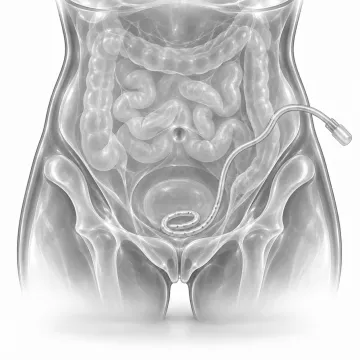
Peritoneal dialysis catheters
A soft belly tube for home dialysis, placed through a small puncture.
Written for patients by the Palo Alto Interventional team. General information only; your own plan depends on your health and imaging.
Talk to us about your options
Request a consultation online, or call 650-404-8445, Monday to Friday, 8 am to 5 pm. You can also ask your doctor to send a referral. We will review your imaging and help you decide whether a procedure makes sense.