
Peritoneal dialysis catheters
Do your dialysis at home, on your schedule.
A peritoneal dialysis (PD) catheter is a soft tube placed through the belly wall so you can do dialysis at home. We place it through a small puncture under sedation, usually in about 30–45 minutes, and you go home the same day.
- Outpatient
- 30–45 minutes
- Moderate sedation
- Heals for 2–4 weeks
 Fabio Komlos, MDInterventional radiologist
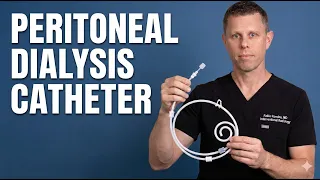 Watch the video explanation3:23 video · Peritoneal Dialysis Explained: Pros, Cons & How It Works | Dr. Fabio Komlos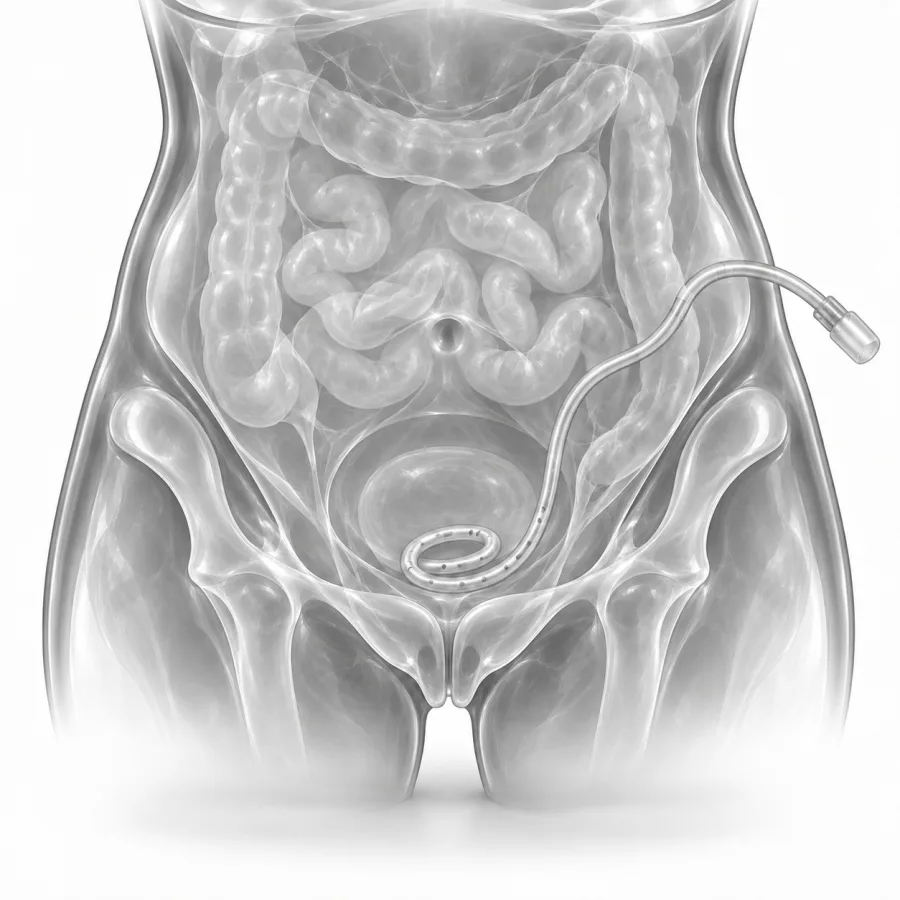
Fewer trips to a center, and no needles.
Peritoneal Dialysis Explained: Pros, Cons & How It Works | Dr. Fabio Komlos
Dr. Fabio Komlos walks through peritoneal dialysis catheters the way he explains it in clinic, using the same images he uses to plan treatment.
Fabio Komlos, MDInterventional radiologist · 3:23Renal Failure Treatment Options Dialysis — Kidney Transplant Explained
3:32
Dialysis Access Explained What Are the Options?
4:18
Quick answers
Under a minute eachWhat is peritoneal dialysis?
Your belly is lined by a thin, smooth membrane called the peritoneum. It has many tiny blood vessels. In peritoneal dialysis (PD), a cleaning fluid called dialysate flows into your belly through a catheter and rests there for a few hours. Waste, salt and extra water pass from your blood into the fluid, and then you drain it out and replace it with fresh fluid. Each cycle is called an exchange.
You can do exchanges by hand several times a day, or use a machine called a cycler that does them while you sleep. Either way, PD is done at home after a few weeks of training with a PD nurse. The catheter is the key: a soft silicone tube, about as wide as a pencil, with one end coiled inside the belly and the other end coming out through the skin, usually below and to the side of the belly button.
On X-ray, the catheter shows as a thin line running down through the belly wall, with its curled tip resting low in the pelvis, the lowest part of the belly where the fluid collects.
PD or hemodialysis?
Both types of dialysis work well. The right choice depends on your health, your home, and how you want to live. Your kidney doctor helps you decide.
| Peritoneal dialysis | In-center hemodialysis | |
|---|---|---|
| Where | At home, or anywhere clean | Dialysis center, usually 3 times a week |
| How often | Every day, often overnight | About 3–4 hours per session |
| Needles | None | Two needles each session (with a fistula or graft) |
| Diet and fluids | Usually more flexible | Stricter limits between sessions |
| Main infection risk | Belly infection (peritonitis) | Access or bloodstream infection |
| Who does it | You or a care partner, after training | Dialysis staff |
PD often suits people who
- Want to work, travel or keep a flexible schedule
- Live far from a dialysis center
- Still make some urine (PD may help protect it)
- Have heart problems that make fast fluid shifts hard
PD may be harder if you have
- Many past belly surgeries or extensive scar tissue
- A large hernia that cannot be repaired
- Active inflammatory bowel disease or frequent diverticulitis
- No space at home for supplies, or no one to help if you cannot do exchanges yourself
How to prepare
Before placement, you meet with your kidney team and PD nurse, who help choose the best exit site, away from your belt line and skin folds. We review your past surgeries and may look at a recent scan. If you have had major belly surgery, a surgeon may place the catheter with a camera (laparoscopy) instead.
- Do not eat for about 6 hours before. Clear liquids are usually fine until 2 hours before.
- Avoid constipation. We may ask you to take a laxative the day before, because a full bowel can push the catheter out of place.
- Shower the night before or the morning of the procedure. Do not shave the belly yourself.
- Empty your bladder right before the procedure.
- Tell us about blood thinners and allergies, and arrange for an adult to drive you home. See before your procedure.
What happens during placement
The procedure is done at El Camino Hospital in the interventional radiology suite, with a nurse, a radiology technologist and your interventional radiologist. We monitor your heart rate, blood pressure and oxygen the whole time. You receive an antibiotic through your IV to lower the chance of infection.
- 1Relax and numb
You receive moderate sedation through your IV. We clean the belly and numb the skin and the deeper layers of the belly wall.
- 2Enter the belly safely
Using ultrasound and X-ray, we pass a small needle through the belly wall into the space inside, then confirm the position with a little contrast dye and place a guidewire.
- 3Place and tunnel the catheter
The catheter is guided into the lowest part of the belly. Its inner fabric cuff sits in the muscle of the belly wall, and the outer end is tunneled a few inches under the skin to the exit site, where a second cuff sits just beneath the skin.
- 4Test and dress
We run fluid in and out to confirm it flows well, close the small incision, and cover the exit site with a sterile dressing.
Placement usually takes about 30–45 minutes. You rest in recovery for about an hour and can eat and drink before going home.
Healing and catheter care
The catheter needs time for the tissue to grow into its cuffs and seal the tunnel. Using it too early for full exchanges can cause leaks. We usually wait at least 2–4 weeks before full-volume PD begins, and your kidney team decides the exact start date. During this break-in period, your PD nurse flushes the catheter about once a week to keep it open.
- First dayRest at home. No driving, alcohol or important decisions until the next day because of the sedation. Mild belly soreness is normal; acetaminophen (Tylenol) helps.
- First weekLeave the dressing on and keep it dry. Take sponge baths or shower with the site fully covered. We see you about a week later to check the site.
- Weeks 1–2Avoid heavy lifting, straining, and contact sports, which strain the healing belly wall. Keep your bowels moving.
- Weeks 2–4PD training usually begins. Once healed, you can shower with the exit site uncovered, then pat it dry and put on a clean dressing.
- Long termClean the exit site daily as your PD nurse teaches. Keep the catheter taped so it does not pull. No baths, hot tubs, or swimming in lakes, rivers or the ocean.
Risks and complications
- Peritonitis, an infection of the belly lining, is the most important risk of PD. Careful hand washing and sterile technique during exchanges greatly lower it.
- Exit site or tunnel infection, usually treated with antibiotics.
- Poor drainage, often caused by constipation or the catheter tip moving out of the pelvis. It may be fixed with laxatives or a simple repositioning procedure.
- Fluid leaks around the catheter, more likely if PD starts before the tunnel heals.
- Hernia, because fluid in the belly adds pressure on weak spots.
- Bleeding or, rarely, injury to the bowel or bladder during placement.
Over years, the peritoneum can become less efficient, and some people switch to hemodialysis. The dialysate contains sugar, which can add calories and raise blood sugar, so your team will watch your weight and diabetes control.
Before a PD catheter, I use ultrasound to look at the belly wall and plan a path that avoids blood vessels and loops of bowel, and I talk with you about where you wear your belt, because the exit site should sit where you can see it and keep it clean. I tell patients that constipation is the enemy of a PD catheter. A lot of catheters that seem broken start working again once the bowels are moving.Fabio Komlos, MD, interventional radiologist · About Dr. Fabio Komlos
Common questions
Does the procedure hurt?
When can I start PD?
Can I shower?
Can I swim?
Will people see the catheter?
What does peritonitis look like?
Can the catheter be removed if I switch to hemodialysis or get a transplant?
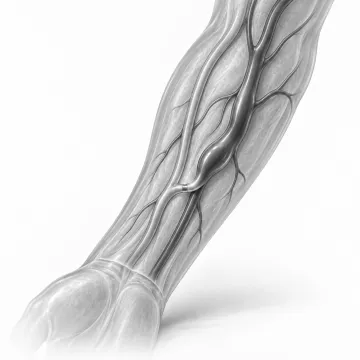
Understanding your dialysis access
Fistula, graft, catheter or PD: how each works, daily checks and warning signs.
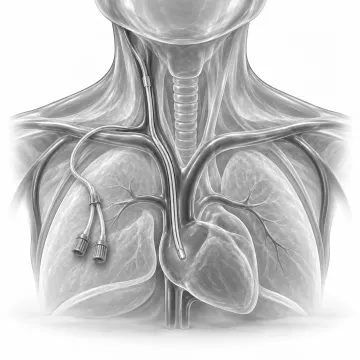
Tunneled dialysis catheters
A soft tube in the chest that allows hemodialysis the same day it is placed.
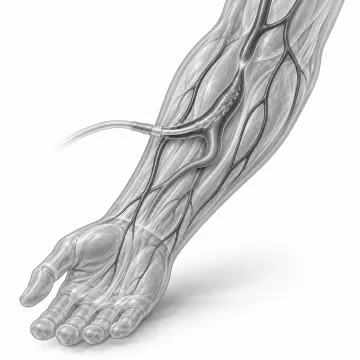
Fistulogram
An X-ray study that finds and opens narrowings in a fistula or graft, in one visit.
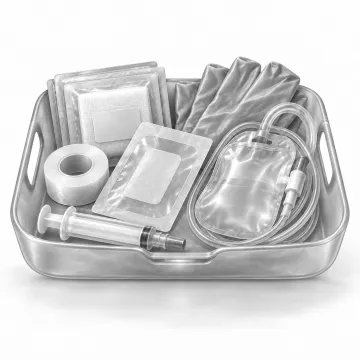
Home supplies for drains and tubes
What supplies you need for drains, kidney and bile tubes, and feeding tubes, and where to get them.
Written for patients by the Palo Alto Interventional team. General information only; your own plan depends on your health and imaging.
Talk to us about your options
Request a consultation online, or call 650-404-8445, Monday to Friday, 8 am to 5 pm. You can also ask your doctor to send a referral. We will review your imaging and help you decide whether a procedure makes sense.