
Clotted dialysis access (declot)
Reopen a clotted fistula or graft, often the same day.
If you can no longer feel the buzz in your fistula or graft, it has probably clotted. A declot procedure removes the clot and opens the narrowing that caused it, through small punctures, usually in 1–2 hours.
- Urgent, same day
- 1–2 hours
- Moderate sedation
- Home in about 1 hour
 Fabio Komlos, MDInterventional radiologist
 Watch the video explanation4:19 video · Dialysis Access Problems? Heres How We Fix Them!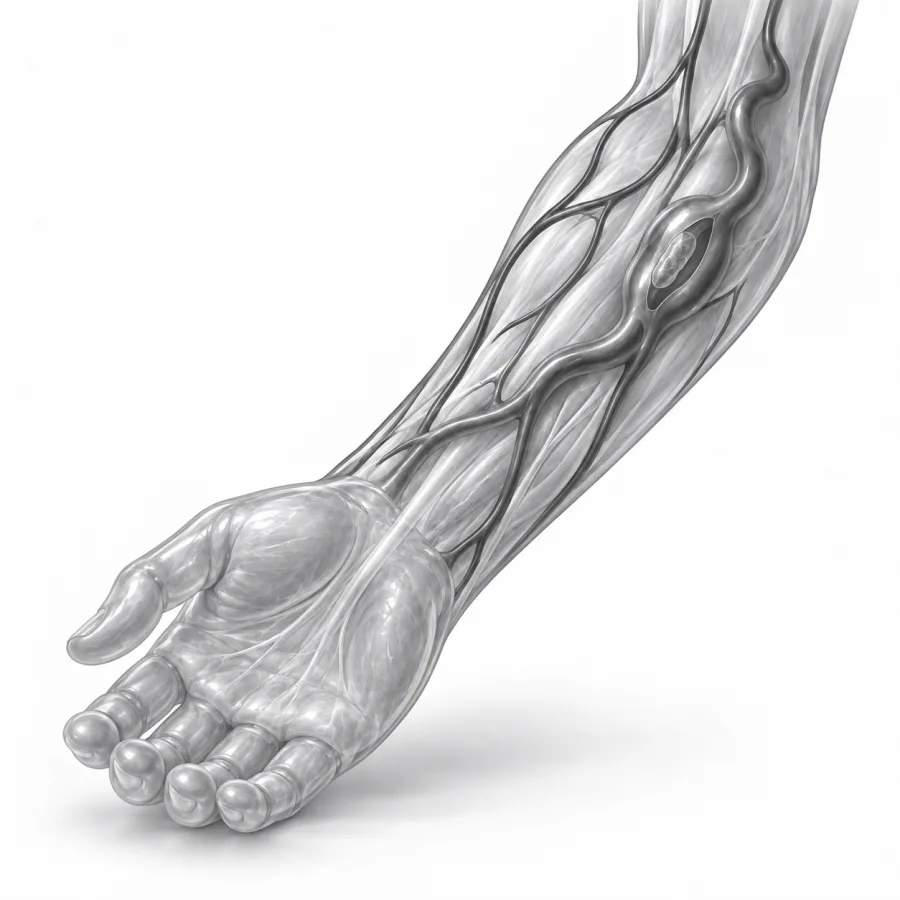
Call the day you notice the thrill is gone.
Dialysis Access Problems? Heres How We Fix Them!
Dr. Fabio Komlos walks through clotted dialysis access (declot) the way he explains it in clinic, using the same images he uses to plan treatment.
Fabio Komlos, MDInterventional radiologist · 4:19Common Dialysis Access Problems Explained: Catheter, Fistula, & Graft
19:56
Dialysis Access Explained What Are the Options?
4:18
Quick answers
Under a minute eachWhat is a clotted access?
A fistula or graft works because blood flows through it quickly all the time. If that flow slows down enough, the blood inside turns into a clot, called thrombosis, and blocks the access completely. When that happens, you cannot have hemodialysis through it.
The most common cause is a stenosis, a narrow segment of scar tissue in the vein that has been building up for weeks or months. Other triggers include low blood pressure, dehydration, pressure on the arm during sleep, a tight bandage after dialysis, or an infection. Grafts clot more often than fistulas.
On the X-ray, a clotted access does not fill with contrast dye, or shows gray, lumpy filling defects where clot sits. After the declot, the channel fills smoothly again from the artery to the chest.
Signs your access has clotted
- You cannot feel the buzz (thrill) over your access
- You cannot hear the whooshing sound (bruit)
- The access feels hard, firm or like a cord, and may be tender
- Your dialysis team cannot get blood out through the needles
Before a clot, there are often warning signs: a weaker thrill, a pounding pulse, longer bleeding after dialysis, or trouble with needles. These point to a narrowing that can be treated with a planned fistulogram before it clots. Checking your access twice a day is the best protection. See understanding your dialysis access.
Why speed matters
A fresh clot is soft and easier to remove. Over days, it hardens and sticks to the vein wall, which makes the declot harder and less likely to work, and it can damage the vein. For most people, the best time to treat is within 24–48 hours, ideally before the next scheduled dialysis.
Speed also protects you. Missing dialysis lets potassium and fluid build up, which can affect your heart and lungs. If the access cannot be reopened in time, you may need a temporary dialysis catheter so you do not miss treatment.
| Declot in interventional radiology | Surgical thrombectomy or revision | New access | |
|---|---|---|---|
| How it is done | Small punctures, X-ray guided | Incision in the arm | Surgery, or a catheter first |
| Anesthesia | Moderate sedation | Regional or general | Varies |
| Treats the cause | Yes, balloon or stent in the same visit | Yes, can revise the connection | Starts over |
| Back to dialysis | Often the same day | Often within a day | Weeks, with a catheter meanwhile |
Who is a candidate
Usually a good candidate
- Graft or fistula that clotted within the last few days
- An access that worked well before
- No signs of infection at the access
May need another approach
- Infected graft (red, hot, draining): needs antibiotics and often surgery
- Clot that has been present for weeks
- Very large aneurysm or skin breakdown over the access
- An access that has clotted many times despite treatment
We review your history and examine the access before deciding. If a declot is unlikely to last, we discuss options with your nephrologist and surgeon, such as a surgical revision, a new access, or peritoneal dialysis.
What happens during a declot
The procedure is done at El Camino Hospital in an interventional radiology suite, with nurses, a radiology technologist and your interventional radiologist. You lie on your back with your arm on an arm board, and we monitor your heart, blood pressure and oxygen. We check your potassium before starting.
- 1Relax and numb
You receive moderate sedation through an IV and local numbing over the access. Sometimes we place two small punctures, one pointing toward the artery and one toward the heart.
- 2Map the clot
Through a thin sheath, we inject contrast dye to see where the clot is and how far it extends. We give a blood thinner called heparin to keep new clot from forming.
- 3Remove the clot
We break up and pull out the clot with a small device, a balloon, or suction, sometimes with a clot-dissolving medicine. The firm plug of clot at the artery connection is pulled free with a small balloon.
- 4Fix the narrowing
Once flow returns, we find the narrowing that caused the clot and open it with balloon angioplasty, and sometimes a stent.
- 5Confirm and close
Final pictures confirm good flow and a strong thrill. We remove the sheaths and close the punctures with a small stitch or pressure.
A declot usually takes about 1–2 hours, depending on how much clot there is.
Recovery and aftercare
- First hourYou rest in recovery while nurses check your access, puncture sites and vital signs. You can eat and drink.
- Same dayIf you are due for dialysis, your nephrologist may arrange it at the hospital. Otherwise the access can usually be used at your next session. Go home with a driver; no driving, alcohol or important decisions until the next day.
- First 24 hoursLeave any small plug or dressing in place until your next dialysis or for 24 hours. After that, you can shower and get the sites wet. A small dissolvable stitch may be present and falls out on its own.
- Days 1–3Soreness and bruising along the arm are normal; the bruise may darken before it fades. Use acetaminophen (Tylenol) and avoid ibuprofen and naproxen.
- Every day afterCheck your thrill morning and evening. Avoid pressure on the arm, and keep your fluid and blood pressure within your team's targets.
If a puncture site bleeds, stay calm. Press firmly on it with one or two fingers for a full 15 minutes without lifting. Almost all bleeding stops this way; then call us. If it does not stop, keep pressing and call 911. Call 650-404-8445 if the thrill goes away again, your arm swells, pain worsens, or you have a fever above 101°F.
Results and risks
Most recently clotted grafts and many fistulas can be reopened. Because the narrowing that caused the clot tends to return, many people need another balloon treatment within months. Regular checks and early treatment of warning signs help the access last longer.
Possible risks
- Bruising or bleeding at the punctures
- A tear in the vein, usually treated with a balloon or stent graft during the procedure
- A small piece of clot moving into the lungs, which usually causes no symptoms, or rarely into the hand artery, which we treat right away
- Clot returning soon after the procedure
- Infection or reaction to contrast dye, both uncommon
When a patient calls with a silent access, I want to see them that day, because a clot that is hours old comes out far more easily than one that is days old. During the declot I always look for the reason it clotted, since removing the clot without fixing the narrowing just sets up the next one. I also ask about blood pressure during dialysis and how they sleep, because small habits can make a big difference.Fabio Komlos, MD, interventional radiologist · About Dr. Fabio Komlos
Common questions
How soon should I call?
Does it hurt?
Can I have dialysis the same day?
Why did my access clot?
What if the declot does not work?
Should I eat before the procedure?
Will this happen again?
Fistulogram
An X-ray study that finds and opens narrowings in a fistula or graft, in one visit.
Understanding your dialysis access
Fistula, graft, catheter or PD: how each works, daily checks and warning signs.
Tunneled dialysis catheters
A soft tube in the chest that allows hemodialysis the same day it is placed.
DVT (deep vein blood clots)
Blood clots in the leg or arm: signs, blood thinners, clot removal and long-term care.
Written for patients by the Palo Alto Interventional team. General information only; your own plan depends on your health and imaging.
Talk to us about your options
Request a consultation online, or call 650-404-8445, Monday to Friday, 8 am to 5 pm. You can also ask your doctor to send a referral. We will review your imaging and help you decide whether a procedure makes sense.