
Tunneled dialysis catheters
Start dialysis today, safely.
A tunneled dialysis catheter is a soft tube placed through a small nick in the lower neck and run under the skin of the chest. It takes about 20–30 minutes and can be used for dialysis the same day.
- Outpatient
- 20–30 minutes
- Moderate sedation
- Usable the same day
 Fabio Komlos, MDInterventional radiologist
 Watch the video explanation19:56 video · Common Dialysis Access Problems Explained: Catheter, Fistula, & Graft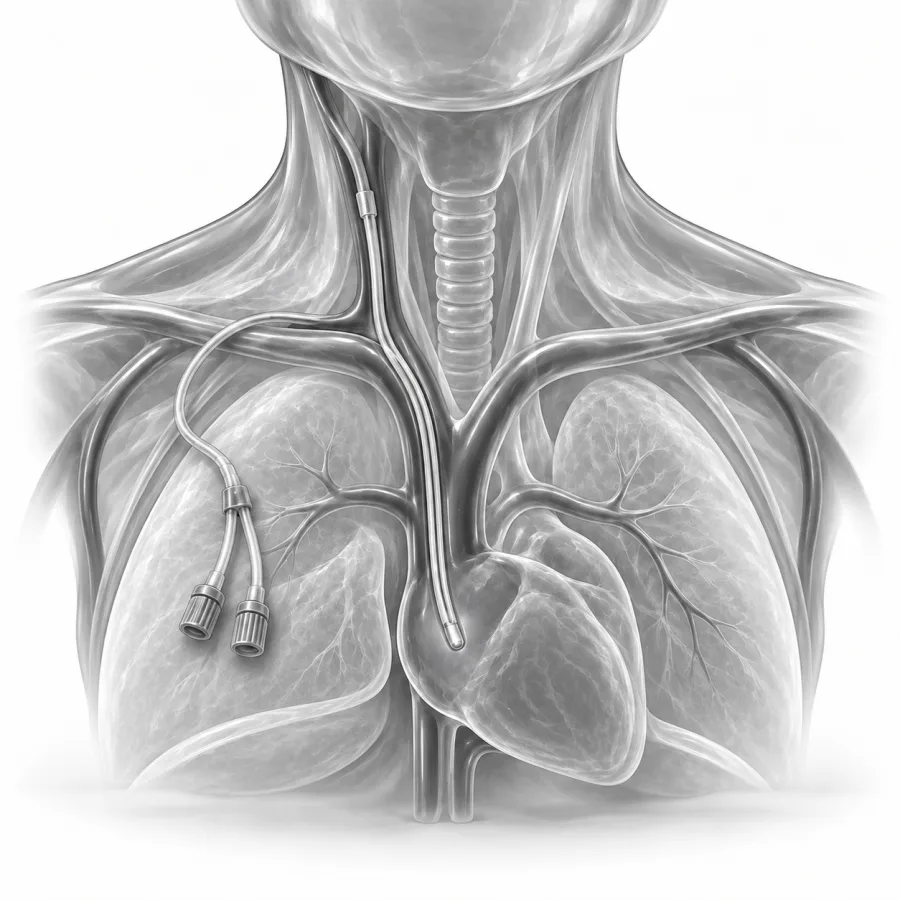
 On imaging
Chest X-ray showing a tunneled dialysis catheter with its tip near the heart.
Common Dialysis Access Problems Explained: Catheter, Fistula, & Graft
Dr. Fabio Komlos walks through tunneled dialysis catheters the way he explains it in clinic, using the same images he uses to plan treatment.
Fabio Komlos, MDInterventional radiologist · 19:56What You Need to Know About Central Lines
23:01
Dialysis Access Explained What Are the Options?
4:18
Risks of Central Lines You Should Know
2:08
Quick answers
Under a minute eachWhat is a tunneled dialysis catheter?
A tunneled dialysis catheter is a soft, flexible tube used for hemodialysis. It enters the large vein at the base of your neck, called the internal jugular vein, and its tip rests where the large vein meets the heart. The outer part travels a few inches under the skin, the tunnel, and comes out on your upper chest below the collarbone.
Outside the skin, the catheter splits into two color-coded ends. One takes blood to the dialysis machine and the other returns clean blood. Under the skin sits a small fabric cuff. Over 2–3 weeks your tissue grows into the cuff, which anchors the catheter and forms a barrier against germs.
What we seeWho needs one
You may need a tunneled catheter if you need to start hemodialysis soon and do not yet have a working fistula or graft, if your fistula or graft has failed and cannot be fixed right away, or if you are waiting to start peritoneal dialysis or receive a kidney transplant. Common causes of kidney failure include diabetes, high blood pressure, kidney inflammation (glomerulonephritis) and polycystic kidney disease.
Benefits
- Works the same day it is placed
- No needles at each dialysis session
- Placed in about 20–30 minutes through a small nick
- Easy to remove in the office when you no longer need it
Trade-offs
- Highest infection risk of any access type
- Can clot or develop poor flow
- Can narrow the large veins in the chest over time
- Must be kept dry; no swimming or baths
For these reasons, guidelines recommend a catheter as a bridge. Ask your kidney team about a plan for a fistula, graft or peritoneal dialysis early, so the catheter can come out as soon as possible. For a side-by-side look at the options, see understanding your dialysis access.
How to prepare
- Do not eat for about 6 hours before. Clear liquids are usually fine until 2 hours before. We will give you exact times.
- Tell us about blood thinners, allergies, and any previous catheters or clots in your neck or chest veins. See blood thinners.
- We may check blood tests, including your potassium and blood clotting.
- Bring a list of your medicines and arrange for an adult to drive you home.
- Wear a top that opens in the front or has a loose neckline.
What happens during placement
The procedure is done at El Camino Hospital in the interventional radiology suite. A nurse, a radiology technologist and your interventional radiologist are with you, and your heart rate, blood pressure and oxygen are monitored throughout. Most catheters go on the right side, because that path to the heart is straightest.
- 1Relax and numb
You receive moderate sedation through your IV, so you are drowsy and comfortable. We clean the neck and chest and numb the skin with local anesthetic.
- 2Enter the vein with ultrasound
Using ultrasound, we place a small needle into the jugular vein in the lower neck and pass a thin guidewire toward the heart, watching on X-ray.
- 3Tunnel and place the catheter
We make a small nick on the upper chest and create a short tunnel under the skin up to the neck. The catheter is pulled through the tunnel and slid into the vein until its tip sits at the entrance to the heart. You may feel pressure, but not sharp pain.
- 4Check and secure
An X-ray confirms the tip position and we test the flow. The neck nick is closed with glue, the catheter is held with a stitch at the chest, and a sterile dressing is applied.
Placement usually takes about 20–30 minutes. The catheter is filled with a small amount of blood-thinning solution, called a lock, to keep it from clotting between sessions.
Living with your catheter
You rest in recovery for about 30–60 minutes and can eat and drink. Take it easy for the rest of the day, and do not drive, drink alcohol or make important decisions until the next day. Mild soreness in the neck and chest is normal for 2–3 days; acetaminophen (Tylenol) is the safest pain reliever. Avoid heavy lifting and strenuous activity for about a week.
The catheter can be used for dialysis right away. It sometimes runs a little slowly in the first one or two sessions and then improves. Only your dialysis team should open, flush or use your dialysis catheter; it is not meant for IV medicines or blood draws outside dialysis.
Daily care
- Keep the dressing clean, dry and in place. Your dialysis nurse changes it at each session. If it gets wet, loose or dirty, call your dialysis unit to have it changed.
- Wash your hands before touching anything near the catheter.
- Keep the clamps closed and caps on at all times. Never open the caps yourself.
- Do not use scissors near the catheter, and pin or tape the ends so they do not pull.
- Do not swim, soak in a bath or use a hot tub. Water from lakes, pools or tubs can carry germs straight into the tunnel.
- For showering, follow your dialysis unit's rule. Most units ask you to keep the site completely dry, for example with a waterproof cover, or to take sponge baths.
Signs of infection
- Fever above 100.4°F or shaking chills, especially during or right after dialysis
- Redness, warmth, tenderness or pus where the catheter leaves the skin or along the tunnel
- Feeling unusually tired, confused or unwell
A catheter infection can spread into the blood quickly, so do not wait for your next session if you have fever or chills. Treatment is antibiotics, and sometimes the catheter needs to be exchanged or removed.
Risks and complications
- Infection of the exit site, the tunnel or the bloodstream. This is the most important long-term risk, and it grows the longer the catheter stays in.
- Poor flow or clotting, often treated with a clot-dissolving medicine in the catheter or by exchanging the catheter over a wire.
- Narrowing or clotting of the chest veins, which can cause arm, neck or face swelling and can limit future access options on that side.
- Bleeding or bruising at the neck or chest, usually minor.
- Air in the vein or a collapsed lung (pneumothorax), both rare with ultrasound guidance.
Before I place a dialysis catheter, I look at both sides of the neck with ultrasound and think about the fistula or graft that will come next, because I want to protect the veins that future access will need. I tell every patient the same thing: this catheter is a bridge. Let's use it well, keep it dry and clean, and get it out as soon as your permanent access is ready.Fabio Komlos, MD, interventional radiologist · About Dr. Fabio Komlos
Removal
When your fistula, graft or peritoneal dialysis is working reliably, call us at 650-404-8445 to schedule removal. Leaving an unused catheter in place only adds infection and vein risk.
Removal is a short procedure, usually done with local numbing only. We free the fabric cuff from the tissue under the skin and slide the catheter out, then press on the neck for several minutes. It takes about 5–15 minutes. Keep the small dressing dry for 24–48 hours, and call if you see bleeding, swelling or signs of infection.
Common questions
Does placement hurt?
Can I shower with a dialysis catheter?
Can I use the catheter right away?
What if the stitch comes out?
How long can the catheter stay in?
Can the nurses use it to draw blood or give IV medicines?
When can I drive?
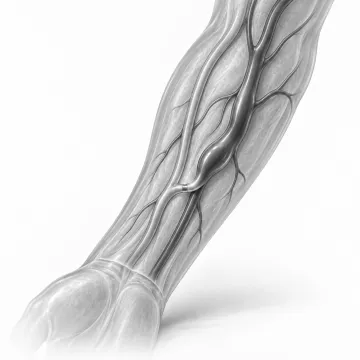
Understanding your dialysis access
Fistula, graft, catheter or PD: how each works, daily checks and warning signs.
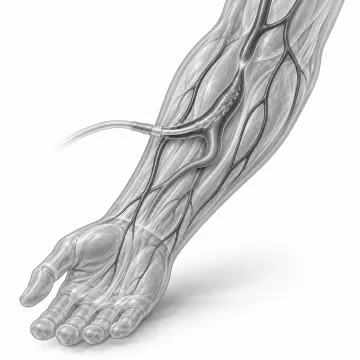
Fistulogram
An X-ray study that finds and opens narrowings in a fistula or graft, in one visit.
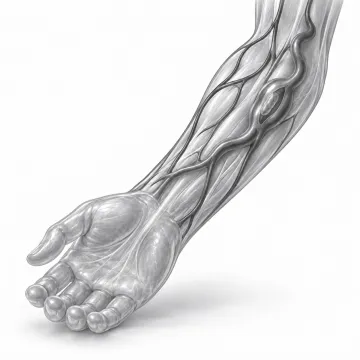
Clotted dialysis access (declot)
Remove a clot from a fistula or graft and get back to dialysis quickly.
Peritoneal dialysis catheters
A soft belly tube for home dialysis, placed through a small puncture.
Central lines
PICC, tunneled line or port: how they differ and how to choose.
Written for patients by the Palo Alto Interventional team. General information only; your own plan depends on your health and imaging.
Talk to us about your options
Request a consultation online, or call 650-404-8445, Monday to Friday, 8 am to 5 pm. You can also ask your doctor to send a referral. We will review your imaging and help you decide whether a procedure makes sense.