
Lymph node biopsy
Find out why a lymph node is swollen.
A needle biopsy of a lymph node takes thin samples through the skin, guided by ultrasound or CT, instead of removing the node with surgery. It takes 20 to 45 minutes, and you go home the same day.
- Outpatient
- 20–45 minutes
- Local or sedation
- Home the same day
 Fabio Komlos, MDInterventional radiologist
 Watch the video explanation10:56 video · Swollen Lymph Node? When a Biopsy Is Necessary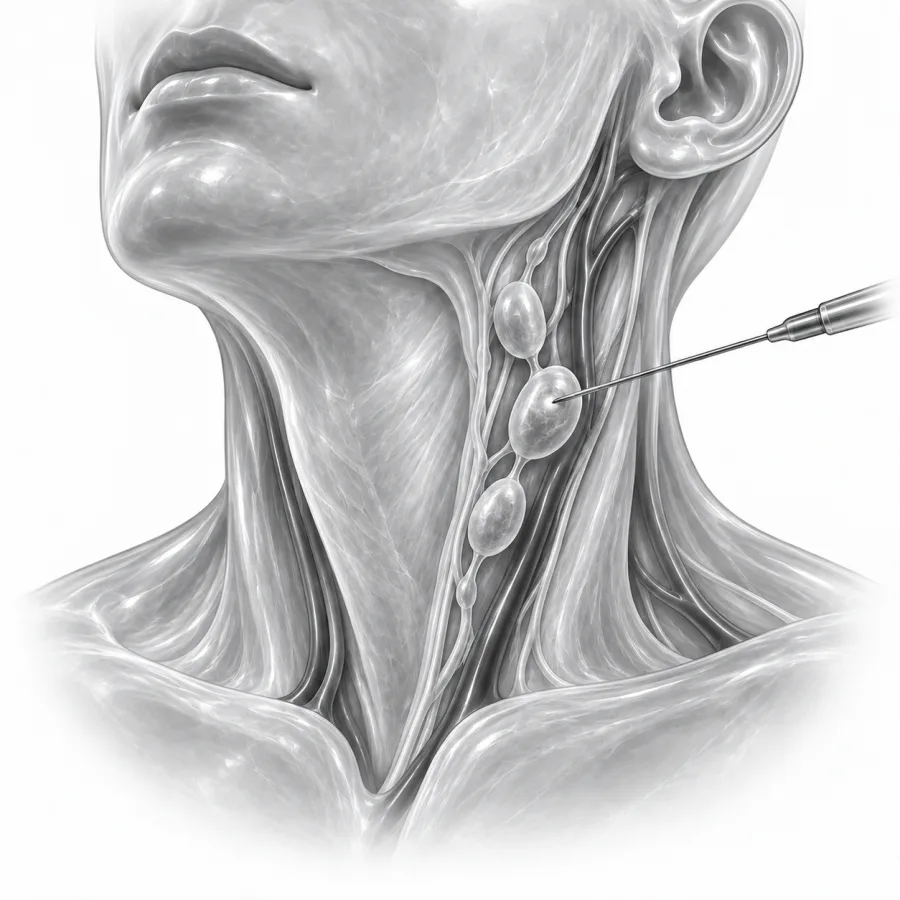
Most nodes can be sampled through a needle.
Swollen Lymph Node? When a Biopsy Is Necessary
Dr. Fabio Komlos walks through lymph node biopsy the way he explains it in clinic, using the same images he uses to plan treatment.
Fabio Komlos, MDInterventional radiologist · 10:56How do you know if you have cancer or not?
12:30
What lymph nodes do, and why they swell
Lymph nodes are small, bean-shaped filters found throughout the body, in the neck, armpits and groin, and deep in the chest, belly and pelvis. They trap germs and hold immune cells that fight infection. When they are busy fighting, they swell. That is why your neck glands get tender with a sore throat.
Most swollen lymph nodes are caused by infection and shrink on their own within a few weeks. Less often, a node swells because of an immune condition such as sarcoidosis, a lymphoma (cancer of the immune cells), or cancer that has spread from another place, such as the skin, breast, lung, head and neck or gut.
On ultrasound, a normal lymph node is oval with a bright center, like a kidney bean. A node that is round, has lost its bright center or has unusual blood flow is more concerning and may need a biopsy.
When does a swollen node need a biopsy?
Your doctor weighs your age, your symptoms, how the node feels and how it looks on a scan. A node that goes away within a few weeks rarely needs more than watching. A biopsy is more likely to be recommended when:
Reasons for concern
- It lasts more than 4 to 6 weeks without a clear cause
- It keeps growing, or is larger than about 1.5 to 2 cm
- It feels hard, rubbery or fixed in place
- It is above the collarbone
- You have fevers, drenching night sweats or unplanned weight loss
- You have had cancer before
Usually reassuring
- It is soft, tender and moves easily
- It appeared with a cold, sore throat or skin infection
- It is shrinking over 2 to 4 weeks
- It is small and looks normal on ultrasound
Enlarged nodes deep inside the chest or belly are usually found on a CT or PET scan. These also often need a sample, since they cannot be felt or watched by hand.
When someone is referred for a swollen node, I first look at it with ultrasound myself. Many times I can reassure them that it looks like a reactive node, one fighting an infection, and suggest a follow-up instead of a needle. When it does look concerning, I aim for the most abnormal part and take enough tissue for lymphoma testing on the first visit.Fabio Komlos, MD, interventional radiologist · About Dr. Fabio Komlos
Needle biopsy or surgery
| Needle biopsy | Surgical removal (excisional biopsy) | |
|---|---|---|
| How | Thin needle through the skin, guided by ultrasound or CT | Incision to remove the whole node |
| Anesthesia | Numbing medicine, sometimes moderate sedation | Often general anesthesia |
| Recovery | Back to normal the next day | Several days, with stitches |
| Tissue | Several thin cores, enough for most tests | The whole node |
A core needle biopsy gives enough tissue for a diagnosis in most people, including for many lymphomas. A fine needle aspiration (FNA), which draws out cells, can be enough to confirm cancer that has spread from a known source. Sometimes the pathologist needs the whole node to classify a lymphoma, and surgery is then recommended.
How to prepare
- 1Tell us about all blood thinners. For nodes near the skin, many people can keep taking them. For deep nodes in the chest or belly, most need a short pause. See blood thinners.
- 2If you will have sedation, do not eat for 8 hours and bring an adult to drive you home.
- 3Take your usual medicines with a small sip of water.
- 4Bring recent scan reports, especially PET or CT scans done elsewhere.
What happens during the biopsy
- 1Getting ready
You lie in the position that gives the safest path to the node. For deep nodes, a nurse starts an IV and gives moderate (twilight) sedation.
- 2Finding the node
We find the node with ultrasound for nodes in the neck, armpit or groin, or with CT for deeper nodes. We clean and numb the skin.
- 3Taking the samples
We guide the needle into the node and take several samples. You feel pressure and may hear a click. Some samples go into a special fluid for lymphoma testing.
- 4Finishing up
We remove the needle, press on the site and apply a small bandage or skin glue.
Recovery and results
- Right afterRest for 30 minutes to 2 hours, depending on how deep the node was and whether you had sedation.
- Rest of the dayTake it easy. No driving if you had sedation. You can shower the next day.
- Days 1–3Mild soreness and a small bruise are common. Most people return to normal activities the next day.
- First weekAvoid heavy lifting after a deep node biopsy.
Results usually take 2 to 5 business days. Lymphoma testing, such as flow cytometry and special stains, and cultures for infections like tuberculosis can take longer, sometimes a few weeks. The results go to the doctor who ordered the biopsy.
Risks
Needle biopsy of a lymph node is very safe. A small bruise is common. Serious bleeding and infection happen in fewer than 1 in 100 people. Depending on where the node is, there is a small risk of injury to nearby structures. For nodes in the chest this includes an air leak around the lung (pneumothorax). Sometimes the sample does not give a firm answer, and a repeat biopsy or surgery is needed.
Common questions
Does a swollen lymph node mean cancer?
Is a needle enough to diagnose lymphoma?
Does it hurt?
How long do I need to wait before a biopsy?
Can I drive home?
Will insurance cover it?
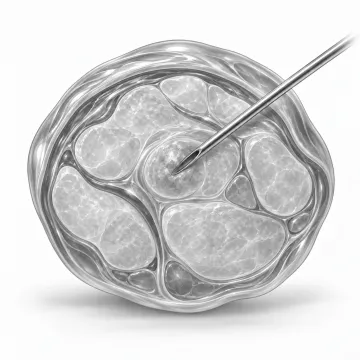
Image-guided biopsies
Get a tissue diagnosis through a needle, guided by ultrasound or CT, usually without an incision.
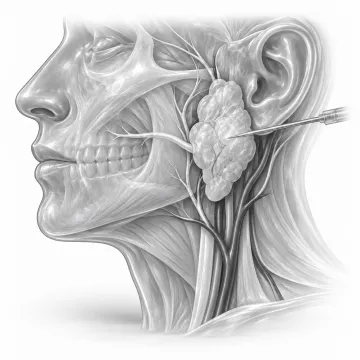
Salivary gland biopsy
Diagnose a parotid or submandibular lump with an ultrasound-guided needle and numbing medicine.
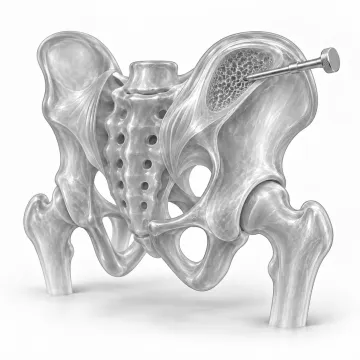
Bone marrow biopsy
Diagnose blood disorders with a sample from the hip bone, using CT guidance and sedation.
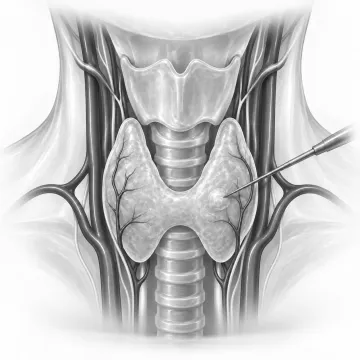
Thyroid biopsy
Check a thyroid nodule with a thin needle guided by ultrasound, usually with numbing medicine only.
Written for patients by the Palo Alto Interventional team. General information only; your own plan depends on your health and imaging.
Talk to us about your options
Request a consultation online, or call 650-404-8445, Monday to Friday, 8 am to 5 pm. You can also ask your doctor to send a referral. We will review your imaging and help you decide whether a procedure makes sense.