
Thyroid biopsy
Find out if a thyroid nodule is harmless.
A thyroid biopsy uses a very thin needle, guided by ultrasound, to draw cells from a thyroid nodule. It takes about 20 minutes with numbing medicine, and you can usually drive yourself home.
- Outpatient
- About 20 minutes
- Numbing medicine
- Drive yourself home
 Fabio Komlos, MDInterventional radiologist
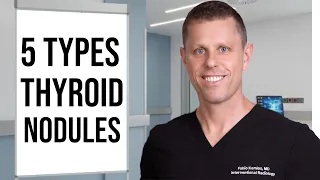 Watch the video explanation13:36 video · Comprehensive Guide to Thyroid Nodules and Their Evaluation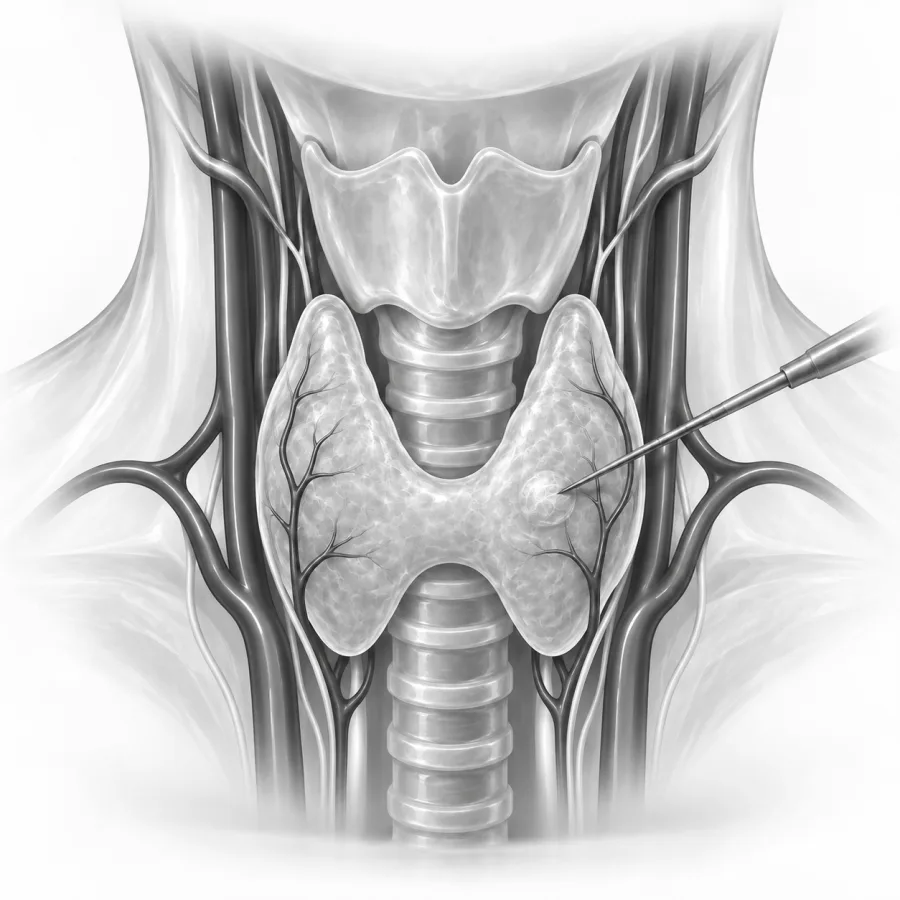
Thinner than a blood-draw needle, guided by ultrasound.
Comprehensive Guide to Thyroid Nodules and Their Evaluation
Dr. Fabio Komlos walks through thyroid biopsy the way he explains it in clinic, using the same images he uses to plan treatment.
Fabio Komlos, MDInterventional radiologist · 13:36How do you know if you have cancer or not?
12:30
The thyroid and thyroid nodules
The thyroid is a butterfly-shaped gland at the lower front of the neck. It makes hormones that set your body's pace, or metabolism. A thyroid nodule is a lump inside the gland. Nodules are very common, and they become more common with age. Many are found by chance on a scan done for another reason.
About 9 in 10 thyroid nodules are not cancer. Most are harmless overgrowths, fluid-filled cysts or part of an enlarged gland (goiter). Even when a thyroid cancer is found, most types grow slowly and are very treatable.
On ultrasound, the thyroid looks like two gray wings on either side of the windpipe. A nodule is a round area that is darker, brighter or mixed. Features like tiny bright specks, irregular edges or a shape taller than wide make us more likely to recommend a biopsy.
Which nodules need a biopsy?
Not every nodule needs a needle. Radiologists score each nodule on ultrasound with a system called TI-RADS, based on what it looks like and its size. Suspicious-looking nodules are biopsied when smaller, while low-risk ones are biopsied only when larger or simply watched with follow-up ultrasounds.
A biopsy is usually recommended for
- Highly suspicious nodules about 1 cm or larger
- Moderately suspicious nodules about 1.5 cm or larger
- Mildly suspicious nodules about 2.5 cm or larger
- Nodules that are growing, or with abnormal lymph nodes nearby
A biopsy is often not needed for
- Simple fluid-filled cysts
- Spongy-looking (spongiform) nodules
- Small nodules with low-risk features
- Hot nodules that make too much hormone on a thyroid scan
Your endocrinologist or primary doctor will usually check your thyroid blood tests (TSH) first. A thyroid scan may show a nodule as cold, meaning it takes up little tracer. Cold nodules are common and are usually benign, but a biopsy is needed to tell for sure.
How to prepare
- 1Tell us about any blood thinners. Many people can keep taking them for a thyroid biopsy, but we will confirm with you. See blood thinners.
- 2You can eat and drink normally unless you are having sedation.
- 3Wear a top with an open neck, and leave necklaces at home.
- 4Bring your previous thyroid ultrasound reports if they were done elsewhere.
What happens during the biopsy
- 1Positioning
You lie on your back with a pillow under your shoulders so your head tips back and your neck is extended.
- 2Ultrasound and numbing
We find the nodule with ultrasound, clean the skin and numb it with a small amount of local anesthetic.
- 3Taking the samples
We pass a very thin needle into the nodule 2 to 5 times, a few seconds each, while watching on ultrasound. We ask you not to talk, cough or swallow during each pass. Sometimes a slightly larger core needle is used.
- 4Finishing up
We press on your neck for a few minutes to prevent bruising, then apply skin glue or a small bandage.
Most people feel pressure and a mild ache, sometimes spreading to the jaw or ear. Sedation is rarely needed, but it is available if you are very anxious.
Before a thyroid biopsy, I scan the whole neck myself, not just the nodule on the request, because I want to be sure we sample the one that matters most and check the nearby lymph nodes. I tell patients that swallowing is fine between passes, just not during them. The whole thing is usually over before people expect.Fabio Komlos, MD, interventional radiologist · About Dr. Fabio Komlos
Understanding your results
Results usually take 2 to 3 business days and go to the doctor who ordered the biopsy. Thyroid biopsy results are reported using the Bethesda system, which has six categories.
| Bethesda category | What it means | Usual next step |
|---|---|---|
| I. Nondiagnostic | Not enough cells to tell | Repeat the biopsy in a few weeks |
| II. Benign | Not cancer; the most common result | Follow-up ultrasound |
| III–IV. Indeterminate | Unclear; most turn out benign | Molecular testing, repeat biopsy or surgery |
| V. Suspicious for malignancy | Likely cancer | Usually surgery |
| VI. Malignant | Cancer | Surgery or other treatment planning |
About 1 in 5 results fall in the indeterminate range. In that case, the lab can run a molecular test on the sample, looking for gene changes linked to cancer. Tests such as Afirma or ThyroSeq help many people with a low-risk result avoid surgery they do not need. We often collect an extra sample during the biopsy so this test can be done without a second visit.
Recovery and risks
- Right afterRest for 15 to 30 minutes. An ice pack helps with soreness. You can eat, drink and drive yourself home if you had no sedation.
- First dayMild neck soreness and a slight sore throat are common. You can shower the same day.
- Days 1–2Avoid heavy lifting and hard exercise. Baths and swimming are fine from the next day.
- Up to 2 weeksA bruise may appear and fade. Skin glue falls off on its own.
A thyroid biopsy is very safe. The main risk is bleeding, which usually causes only a bruise or small swelling that fades over 1 to 3 weeks. Large bleeding in the neck is rare but can press on the windpipe, which is an emergency. Infection and injury to the voice nerve are very rare.
Common questions
Does a thyroid biopsy hurt?
Can I drive myself home?
What if my result is indeterminate?
Will I need surgery if my nodule is benign?
Can I take my thyroid medicine as usual?
Will the biopsy leave a scar?
Will insurance cover it?
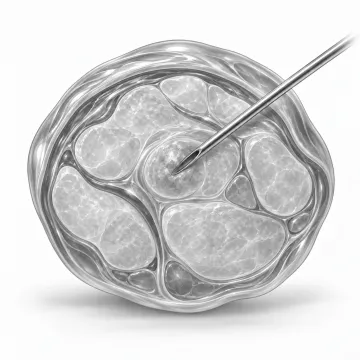
Image-guided biopsies
Get a tissue diagnosis through a needle, guided by ultrasound or CT, usually without an incision.
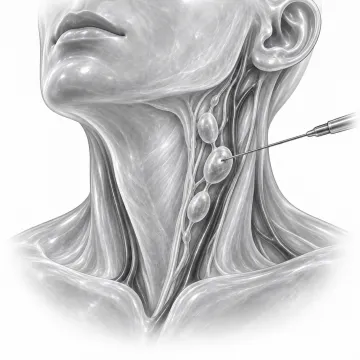
Lymph node biopsy
Diagnose a swollen lymph node with a needle guided by ultrasound or CT, usually without surgery.
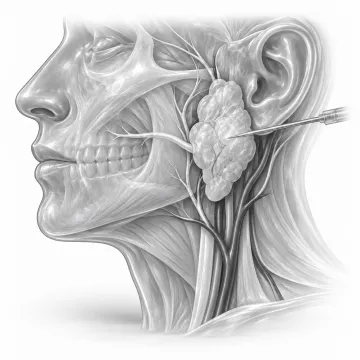
Salivary gland biopsy
Diagnose a parotid or submandibular lump with an ultrasound-guided needle and numbing medicine.
Written for patients by the Palo Alto Interventional team. General information only; your own plan depends on your health and imaging.
Talk to us about your options
Request a consultation online, or call 650-404-8445, Monday to Friday, 8 am to 5 pm. You can also ask your doctor to send a referral. We will review your imaging and help you decide whether a procedure makes sense.