
Biliary drain
Drain blocked bile and ease jaundice and itching.
A biliary drain is a thin tube placed through the skin and liver into a blocked bile duct, so bile can flow out to a bag or past the blockage into the intestine. The procedure usually takes 30 to 60 minutes.
- 30–60 minutes
- Sedation or anesthesia
- Often 1 night stay
- Changed every 2–3 mo
 Fabio Komlos, MDInterventional radiologist
 Watch the video explanation17:26 video · How interventional radiologist can fix blocked bile ducts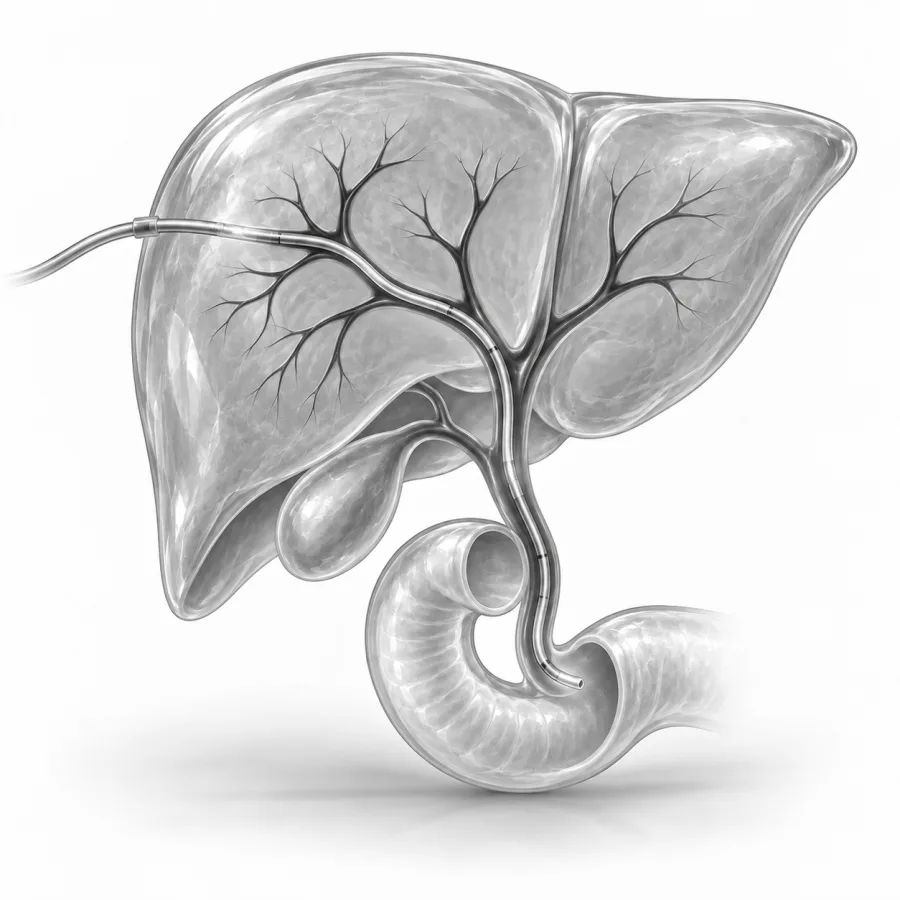
 On imaging
Cholangiogram: contrast fills the bile ducts so we can see where they are blocked.
How interventional radiologist can fix blocked bile ducts
Dr. Fabio Komlos walks through biliary drain the way he explains it in clinic, using the same images he uses to plan treatment.
Fabio Komlos, MDInterventional radiologist · 17:26Before your procedure
3:29
If you are having a procedure and you are on blood thinners you need to watch this
0:43
What is a biliary drain?
Bile is a yellow-green fluid made by the liver that helps digest fat. It flows through the bile ducts into the small intestine. When a duct is blocked by a tumor, stone or scar, bile backs up. This causes jaundice (yellow skin and eyes), itching, dark urine and pale stools. If the trapped bile gets infected, it can spread to the blood.
A biliary drain is a thin, soft plastic tube that we place through the skin, through the liver and into a bile duct. Doctors call this percutaneous transhepatic biliary drainage, or PTBD. Percutaneous means through the skin, and transhepatic means through the liver. The tube gives bile a way out. See biliary interventions for more on blocked bile ducts.
What we seeTypes of biliary drain
- External drain: the tip sits in the bile duct above the blockage. All bile flows out to a bag. This is used when the blockage cannot be crossed, often as a first step.
- Internal-external drain: the tube crosses the blockage and its tip rests in the small intestine. Side holes let bile flow both into the intestine and out to a bag. This is the most common type. It can often be capped so bile flows only inside.
- Internal stent: a metal or plastic tube left fully inside the duct to hold it open. It is often placed through the drain track a week or more later. If it works well, the outside tube can be removed.
A drain is a good choice when
- ERCP could not reach or open the duct
- The blockage is high up in the liver
- Surgery has changed your anatomy
- Infected bile needs urgent drainage
- Jaundice must fall before chemotherapy or surgery
Extra care is needed if
- You have a lot of fluid in the belly (ascites)
- Your blood does not clot well
- You take blood thinners that cannot be paused
- The ducts are not widened, which makes them harder to reach
How it compares with ERCP
| Biliary drain (PTBD) | ERCP | |
|---|---|---|
| Route | Skin and liver | Camera through the mouth |
| Anesthesia | Moderate sedation or general | Deep sedation or general |
| Tube outside the body | Usually, at least at first | No |
| Best for | High blockages, altered anatomy | Low blockages, most stones |
| Main risks | Bleeding, bile leak, tube problems | Pancreatitis, bleeding, perforation |
For many blockages near the pancreas, ERCP is tried first. A drain through the liver is the standard option when ERCP is not possible or does not work, and for many blockages high in the liver.
How to prepare
- Tell us about blood thinners. We will tell you whether and when to pause them. See blood thinners.
- Do not eat for about 6 hours before. Clear liquids are usually fine until 2 hours before. We will confirm your exact times.
- You will usually get antibiotics through your IV before the procedure, because blocked bile is often infected.
- We check blood tests, including clotting, kidney function and bilirubin.
- Tell us about contrast allergies. Plan for an overnight stay and bring your medicines list.
See before your procedure and sedation for general steps.
What happens during the procedure
- 1Getting ready
You lie on your back on the X-ray table. You receive moderate sedation or general anesthesia, antibiotics, and monitors for heart, blood pressure and oxygen.
- 2Mapping the ducts
We numb the skin on your right side or upper belly. Using ultrasound and X-ray, a very thin needle enters a bile duct, and contrast dye maps the ducts and shows the blockage. This is the cholangiogram.
- 3Placing the drain
A guidewire is steered through the duct and, when possible, across the blockage into the intestine. The drain slides over the wire and its tip curls to hold it in place.
- 4Securing it
The tube is fixed to the skin with a stitch or holder, covered with a dressing and connected to a bag.
The procedure usually takes 30 to 60 minutes but can take longer if the blockage is hard to cross. Sometimes we place an external drain first and cross the blockage a few days later, once the ducts have calmed down. Most people stay in the hospital at least one night.
Recovery and living with the drain
- First 24 hoursRest in the hospital. The site is sore, and it may hurt to take a deep breath. Pain medicine helps. Bile in the bag may look bloody at first.
- First few daysSoreness eases over 2 to 3 days, sometimes up to a week. Itching usually starts to improve.
- First few weeksYellow skin fades slowly as bilirubin falls. Appetite usually returns.
- Every dayFlush the drain if we have told you to, change the dressing, and write down how much drains into the bag.
- Every 8 to 12 weeksShort visit to change the tube over a wire, or sooner if it clogs or leaks.
How to flush your drain
- 1Wash your hands. Fill a syringe with 10 mL of sterile saline, or use a prefilled syringe.
- 2Turn the three-way valve (stopcock) so it is closed to the bag and open to the side port.
- 3Attach the syringe to the side port and push the saline gently toward the liver. Do not pull back on the syringe.
- 4Turn the valve back so bile drains to the bag, or cap it if we have told you to.
- 5If you feel strong resistance or pain, stop and call us.
Most people with a biliary drain flush it once a day to keep it from clogging. Change the dressing daily, or sooner if it is wet. Clean the skin with soap and water and dry it well. Empty the bag through the valve at the bottom and change the bag about every 2 weeks, or sooner if it smells or leaks. You can shower from the first day home. Afterward, dry the area and put on a fresh dressing. Do not soak in a bath or pool.
An external drain can remove a lot of fluid, sometimes more than a quart a day. Drink plenty of fluids, and tell us if you feel dizzy, weak or very thirsty. See managing your drain and home supplies for bags, holders and dressings.
How long the drain stays
It depends on the cause. After stones are cleared or a scar is stretched open, the drain can often come out in weeks to months. If a tumor causes the blockage, we may place a permanent metal stent so the outside tube can be removed. Some people keep a drain long-term, changed on a schedule.
I am honest with patients that a biliary drain is often more sore than they expect, because it passes near the ribs and moves as you breathe. That usually settles within a few days. My goal from day one is to get you to the smallest, simplest setup, ideally a capped tube or an internal stent with nothing outside at all.Fabio Komlos, MD, interventional radiologist · About Dr. Fabio Komlos
Risks
Biliary drainage is effective, but it carries more risk than many other drains because the liver has a rich blood supply and the bile is often infected. Serious problems happen in roughly 2 to 5 in 100 people.
- Fever and chills in the hours after the procedure, as infected bile is stirred up. Rarely this becomes sepsis, which is treated in the hospital.
- Bleeding, including blood in the bile. Most settles on its own. Rarely a blood vessel needs to be treated with a procedure called embolization.
- Bile leak around the tube or into the belly.
- Pain, especially with deep breaths, for several days.
- Tube problems: clogging, leaking or slipping out, which need a tube change.
- Injury to nearby organs or the lining of the lung, which is rare.
Common questions
Does it hurt?
How often do I flush the drain?
Can I cap the drain?
Can I shower?
What color should the bile be?
Can I have chemotherapy with a drain?
Will insurance cover it?
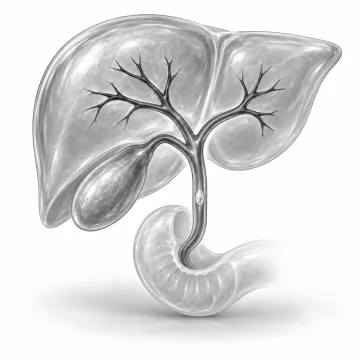
Biliary interventions
Image-guided drains, stents and stone removal for blocked bile ducts and jaundice.
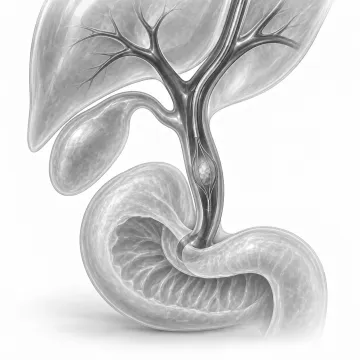
Percutaneous biliary stone removal
Remove bile duct or gallbladder stones through an existing drain track, without surgery.
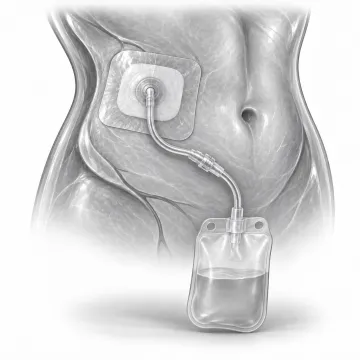
How do I manage my drain?
Emptying, flushing, dressing changes and daily records for a drainage catheter at home.
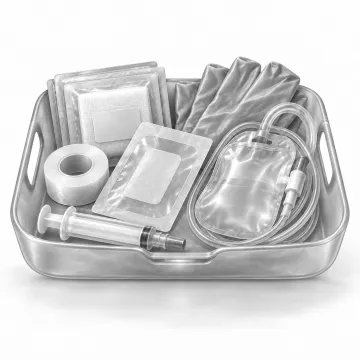
Home supplies for drains and tubes
What supplies you need for drains, kidney and bile tubes, and feeding tubes, and where to get them.
Liver tumors
Primary liver cancer and liver metastases: what they are and every way to treat them.
Written for patients by the Palo Alto Interventional team. General information only; your own plan depends on your health and imaging.
Talk to us about your options
Request a consultation online, or call 650-404-8445, Monday to Friday, 8 am to 5 pm. You can also ask your doctor to send a referral. We will review your imaging and help you decide whether a procedure makes sense.