
Percutaneous biliary stone removal
Clear gallstones when surgery or ERCP is not an option.
Stones in the bile ducts or gallbladder can be pushed, grabbed or broken up through a drain track you already have, without open surgery. Most people need one to three sessions of about 1 to 2 hours.
- 1–2 hours
- Sedation or anesthesia
- Uses existing track
- 1–3 sessions
 Fabio Komlos, MDInterventional radiologist
 Watch the video explanation17:26 video · How interventional radiologist can fix blocked bile ducts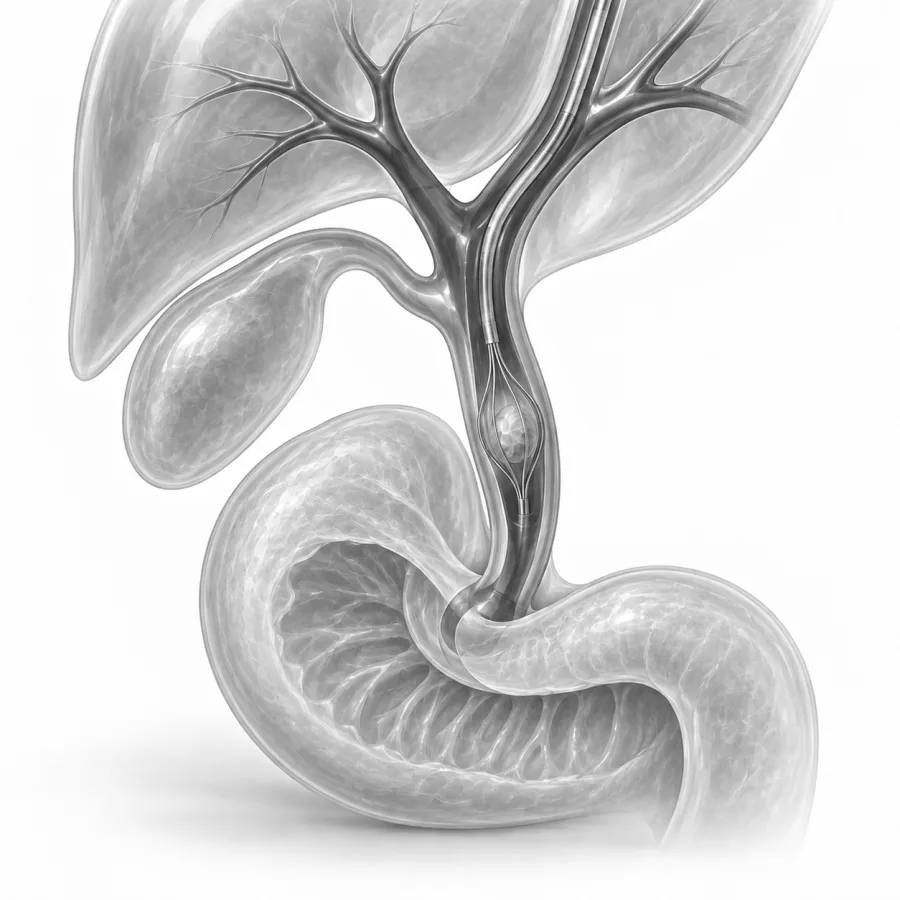
 On imaging
Cholangiogram: contrast fills the bile ducts so we can see where they are blocked.
How interventional radiologist can fix blocked bile ducts
Dr. Fabio Komlos walks through percutaneous biliary stone removal the way he explains it in clinic, using the same images he uses to plan treatment.
Fabio Komlos, MDInterventional radiologist · 17:26Before your procedure
3:29
What problem does this treat?
Gallstones are hard lumps that form from bile. They can sit in the gallbladder, a small pouch under the liver, or slip into the bile ducts, the tubes that carry bile to the intestine. A stone in a duct can block bile and cause jaundice (yellow skin), pain and infection. A stone blocking the gallbladder can cause cholecystitis, a painful, infected gallbladder.
Most stones are treated with ERCP (a camera through the mouth to the bile duct) or surgery to remove the gallbladder. But some people cannot have these, because of surgery that changed their anatomy, other serious illnesses, or failed earlier attempts. For them, we can remove stones from the outside, through a drain track.
Who it helps
- People with a biliary drain who have stones in the bile ducts that ERCP could not clear
- People whose stomach or intestine was rerouted by surgery, such as gastric bypass, which makes ERCP hard
- People who had a cholecystostomy tube (a drain into the gallbladder) for an infected gallbladder and are too high-risk for gallbladder surgery
- People who prefer to avoid surgery after a careful discussion of the trade-offs
Good candidates
- An existing drain with a mature track
- Stones seen on a dye study or scan
- Surgery or ERCP not possible or too risky
- Well enough for sedation
May not be right if
- Surgery is safe and preferred
- Very large or many stones that fill the ducts
- Active infection that is not yet controlled
- Bleeding problems that cannot be corrected
How it compares with other options
| Through a drain track | ERCP | Surgery | |
|---|---|---|---|
| Route | Existing tube in the side | Camera through the mouth | Keyhole or open incisions |
| Anesthesia | Moderate sedation or general | Deep sedation or general | General |
| Removes the gallbladder | No | No | Yes |
| Sessions | Often 1–3 | Often 1 | Usually 1 |
| Best for | When other routes fail or are too risky | Most bile duct stones | Most gallbladder stones |
Surgery to remove the gallbladder is the standard long-term fix for gallbladder stones, because new stones can form in a gallbladder that stays in place. Removing stones through a cholecystostomy track can let you have your tube removed and avoid surgery, but stones can come back. We discuss this openly so you can choose.
How to prepare
- The drain track needs time to heal into a firm tunnel. For bile ducts this may be days to a few weeks. For a gallbladder tube it is usually 4 to 6 weeks.
- We may do a dye study through your tube first to see the number and size of the stones.
- Tell us about blood thinners and follow our instructions. See blood thinners.
- Do not eat for about 6 hours before. Clear liquids are usually fine until 2 hours before.
- You will usually get antibiotics through your IV. Plan for an adult to drive you home, or an overnight stay.
What happens during the procedure
- 1Getting ready
You lie on the X-ray table and receive moderate sedation or general anesthesia, antibiotics and heart and oxygen monitors.
- 2Mapping the stones
We remove your drain over a guidewire and inject contrast dye to show the stones. If needed, we gently widen the track with a small balloon to make room for our tools.
- 3Clearing the stones
Small stones can be pushed into the intestine after we gently stretch the duct opening with a balloon. Others are caught with a tiny wire basket, or broken up with a thin camera and a laser or shock-wave probe.
- 4Checking and finishing
A final dye study checks for leftover stones. We usually leave a drain in place so we can check again, and remove it at a later visit once the ducts are clear.
Each session usually takes 1 to 2 hours. Larger or many stones may need more than one session, a few days to weeks apart.
What we seeRecovery
- Same dayRest for a few hours, or overnight in the hospital. Soreness at the tube site is common.
- First 2–3 daysMild pain, sometimes a low fever for a few hours. Care for your drain as before.
- 1–2 weeksFollow-up dye study. If clear, we cap the tube and then remove it.
- After removalThe small hole closes in a few days. Keep a dry dressing on it until it stops leaking.
Keep caring for your drain while it is in, as described on the biliary drain page and in managing your drain.
Results
In published series, stones are fully cleared through the drain track in about 9 out of 10 people, though some need more than one session. Clearing the stones usually lets the outside tube come out. When the gallbladder stays in place, new stones can form over the years, so we will talk about what to watch for.
Many of the people I see for this had a gallbladder tube placed when they were very sick, and they are tired of living with it. If surgery is still too risky, I explain that we can often clear the stones through the tube they already have and get it out. I am upfront that it may take more than one session and that stones can come back, so we decide together.Fabio Komlos, MD, interventional radiologist · About Dr. Fabio Komlos
Risks
- Fever or infection after the procedure, usually short-lived with antibiotics.
- Bleeding, which is usually minor.
- Pancreatitis, an inflamed pancreas, when stones are pushed through the duct opening. It is uncommon and usually mild.
- Bile leak from the track or duct.
- Leftover stones that need another session.
- Injury to the duct or gallbladder, which is rare.
Common questions
Does it hurt?
Will I need more than one session?
Why do I have to wait before stones can be removed?
Will the stones come back?
Will my tube finally come out?
Is this done instead of ERCP?
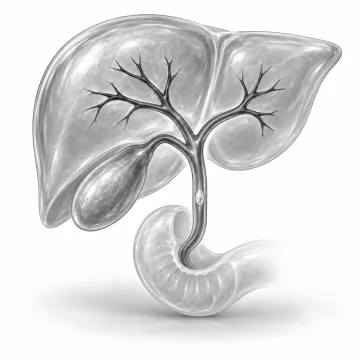
Biliary interventions
Image-guided drains, stents and stone removal for blocked bile ducts and jaundice.
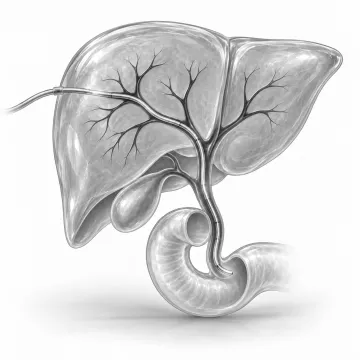
Biliary drain
A thin tube through the liver that drains blocked bile, easing jaundice, itching and infection.
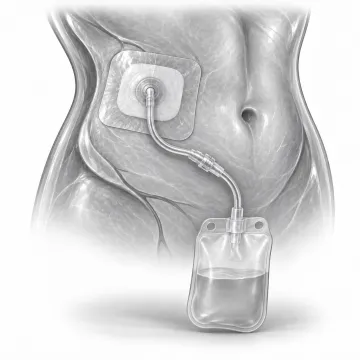
How do I manage my drain?
Emptying, flushing, dressing changes and daily records for a drainage catheter at home.
Drainage of fluid collections
Image-guided drainage of abscesses, seromas and lymphoceles through a small tube.
Written for patients by the Palo Alto Interventional team. General information only; your own plan depends on your health and imaging.
Talk to us about your options
Request a consultation online, or call 650-404-8445, Monday to Friday, 8 am to 5 pm. You can also ask your doctor to send a referral. We will review your imaging and help you decide whether a procedure makes sense.