
Genicular artery embolization
Ease knee arthritis pain without surgery.
Genicular artery embolization (GAE) calms knee arthritis pain by blocking small, inflamed blood vessels around the joint, through a pinhole in the upper thigh. You go home the same day and walk out on your own.
- Outpatient
- 1–2 hours
- Moderate sedation
- Walk the same day
 Fabio Komlos, MDInterventional radiologist
 Watch the video explanation5:06 video · What is Genicular Artery Embolization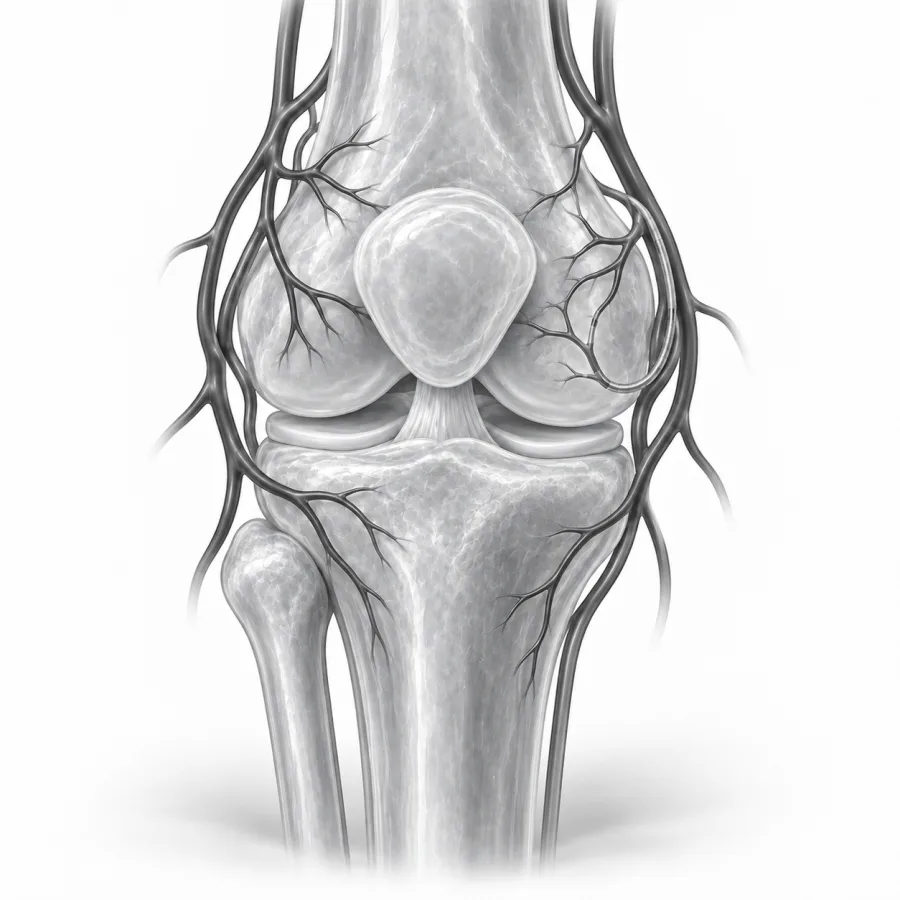
Nothing is removed or replaced, and surgery stays an option.
What is Genicular Artery Embolization
Dr. Fabio Komlos walks through genicular artery embolization the way he explains it in clinic, using the same images he uses to plan treatment.
Fabio Komlos, MDInterventional radiologist · 5:06Genicular Artery Embolization vs Nerve Ablation | Which Works Better?
6:46
Genicular Artery Embolization (GAE): Relief for Chronic Knee Pain Without Surgery
2:37
Minimally invasive options for knee pain due to arthritis
5:01
Quick answers
Under a minute eachWhy arthritis makes the knee hurt
Osteoarthritis is the wear-and-tear type of arthritis. The smooth cartilage that cushions the ends of the bones thins out, and the knee becomes stiff, swollen and painful, especially with walking, stairs and standing up. It is one of the most common causes of pain and disability after age 50.
Cartilage has no nerves, so the pain comes from the tissues around it. In arthritic knees, the lining of the joint, called the synovium, becomes inflamed. The body responds by growing extra tiny blood vessels, and nerve fibers grow alongside them. These new vessels feed the inflammation, and the nerves send pain signals.
The knee is supplied by several small arteries called the genicular arteries. In genicular artery embolization (GAE), an interventional radiologist, a doctor who uses X-ray to guide thin tubes through the blood vessels, finds the branches feeding the inflamed areas and places tiny particles in them. This reduces the abnormal blood flow and the inflammation, which can ease pain for many months or longer. The normal blood supply to the knee is kept.
Who GAE helps, and who it may not
Often a good candidate
- Knee pain from mild to moderate osteoarthritis
- Pain for 3 months or more despite exercise, physical therapy, weight loss or medicines
- Injections no longer help, or help only briefly
- Not ready for, not wanting, or not healthy enough for knee replacement
- Pain in a specific area of the knee, often at the front or sides
May not be right if you have
- Very advanced bone-on-bone arthritis, which responds less well
- Pain coming mainly from the back, hip or nerves
- An active infection in the knee or a knee replacement already in place
- Rheumatoid arthritis or another inflammatory arthritis, which is treated differently
- Severe blockages in the leg arteries
- Severe kidney disease or a serious allergy to contrast dye
Before GAE we examine your knee and review recent X-rays. An MRI can help rule out other causes such as a torn meniscus that needs its own treatment. We also ask about your goals: walking farther, sleeping through the night, or delaying surgery.
When someone comes to me with a painful arthritic knee, I first want to know exactly where it hurts and what they want to get back to. On the X-ray I look at how much joint space is left, because GAE works best when there is still some cushion. During the procedure, the inflamed areas show up as a bright blush of tiny vessels, and those are the spots I treat. I am honest that GAE is a newer treatment, and I explain how it fits with therapy, injections and surgery.Fabio Komlos, MD, interventional radiologist · About Dr. Fabio Komlos
How GAE compares with other treatments
Most people start with exercise, physical therapy, weight loss if needed, and pain relievers. When that is not enough, there are several options between pills and surgery. Genicular nerve ablation uses heat to quiet the small nerves that carry pain from the knee. GAE targets the inflamed tissue that creates the pain. Some people benefit from one, the other, or both at different times.
| GAE | Genicular nerve ablation | Injections | Knee replacement | |
|---|---|---|---|---|
| What it targets | Inflamed blood vessels | Pain nerves | Inflammation in the joint | Replaces the joint surfaces |
| How it is done | Catheter through a thigh artery | Needles beside the knee | Needle into the knee | Open surgery |
| Anesthesia | Moderate sedation | Local, sometimes sedation | Local | General or spinal |
| Recovery | A few days | A few days | Same day | Months of rehab |
| Typical relief | Months to years in studies | About 6–12 months, can repeat | Weeks to months | Long lasting |
GAE does not stop arthritis from progressing or rebuild cartilage. It does not prevent a future knee replacement, and a replacement can still be done later if needed.
What happens on the day
GAE is done at El Camino Hospital as an outpatient procedure. Do not eat for about 8 hours before, and bring an adult to drive you home. We usually ask that you avoid a steroid injection in that knee for several weeks before GAE. See before your procedure and blood thinners.
- 1Getting ready
A nurse places an IV and you are connected to heart, blood pressure and oxygen monitors. You receive moderate sedation so you are relaxed but can still talk with us.
- 2A pinhole and a map
The skin over the artery at the top of your thigh is numbed and a thin tube is placed with ultrasound guidance. A catheter is guided down to the knee, and contrast dye shows the genicular arteries on X-ray. We may ask you to point to the most painful spots.
- 3Embolization
A microcatheter, thinner than a strand of spaghetti, is placed in each artery feeding an inflamed area. Tiny particles are slowly released until the abnormal blush fades. You may feel a brief ache or coolness in the knee.
- 4Closing and going home
The catheter is removed and the puncture is closed with pressure or a small plug, with no stitches. After resting for a few hours, you walk out and go home.
On the angiogram, the inflamed parts of the knee lining look like a bright, cloudy blush of tiny vessels around the joint, fed by the thin genicular arteries. After embolization, the blush fades while the main arteries remain open.
Recovery and results
- Day of the procedureRest with your leg straight for a few hours. No driving, alcohol or important decisions for the rest of the day.
- Days 1 to 3Walk normally around the house. Avoid heavy lifting and hard exercise. Mild knee ache and bruising at the puncture site are common.
- First 2 weeksSome people notice pink or purple patches of skin around the knee. These are expected and usually fade within days to a few weeks.
- 1 to 3 monthsPain relief builds gradually. Keep up physical therapy and exercise, which helps the result last.
- Follow-upWe check in with you to see how your pain and activity have changed and plan next steps if needed.
In published studies, about 2 in 3 people have a meaningful drop in knee pain that lasts at least a year, and many can walk and exercise more. GAE is still a newer treatment. Early randomized trials, including ones comparing GAE with a sham (placebo) procedure, have shown encouraging but mixed results, and larger studies are ongoing. Results are less reliable in very advanced arthritis.
Risks
GAE is generally safe, and serious complications are uncommon.
- Bruising or a small collection of blood at the puncture site
- Temporary pink, purple or mottled skin over the knee, seen in a fair number of people, which usually fades on its own
- Rarely, a small skin sore, or tingling or numbness around the knee
- Short-term increase in knee pain
- Rarely, particles reaching skin, bone or muscle where they are not wanted
- Reaction to contrast dye or effects on the kidneys
Common questions
Does GAE hurt?
How soon will my knee feel better?
How long does the relief last?
Should I choose GAE or genicular nerve ablation?
Can I still have a knee replacement later?
When can I walk and drive?
Is GAE covered by insurance?
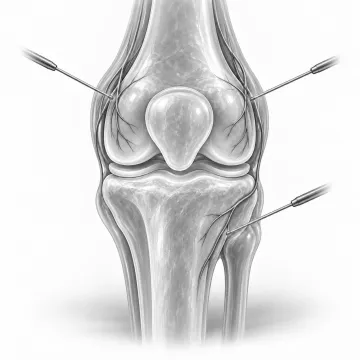
Genicular nerve ablation
Quiet the nerves that carry knee arthritis pain with a short needle procedure.
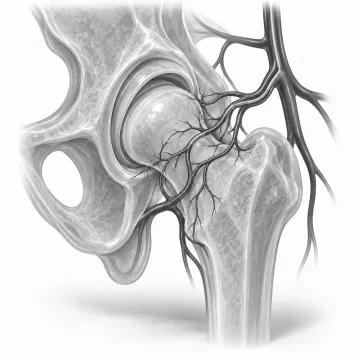
Hip embolization
An emerging, pinhole treatment that targets inflamed vessels behind stubborn hip pain.
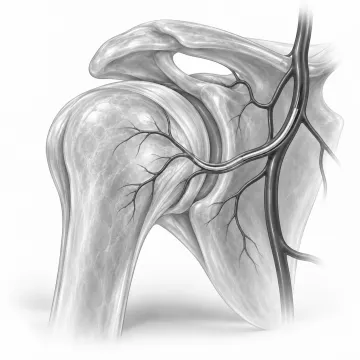
Shoulder embolization
An emerging pinhole treatment for frozen shoulder and tendon pain that has not settled.
Nerve blocks
Pinpoint and calm the nerve carrying your pain with a precise, image-guided injection.
Embolization
Block selected blood vessels from the inside to stop bleeding, shrink growths or ease pain.
Written for patients by the Palo Alto Interventional team. General information only; your own plan depends on your health and imaging.
Talk to us about your options
Request a consultation online, or call 650-404-8445, Monday to Friday, 8 am to 5 pm. You can also ask your doctor to send a referral. We will review your imaging and help you decide whether a procedure makes sense.