
Hip embolization
A newer, non-surgical option for hip pain.
Hip embolization calms long-lasting hip pain from arthritis or tendon problems by blocking small, inflamed blood vessels, through a pinhole in the wrist or thigh. It is still an emerging treatment, and we explain the evidence plainly.
- Outpatient
- 1–2 hours
- Moderate sedation
- Emerging treatment
 Fabio Komlos, MDInterventional radiologist
 Watch the video explanation5:06 video · What is Genicular Artery Embolization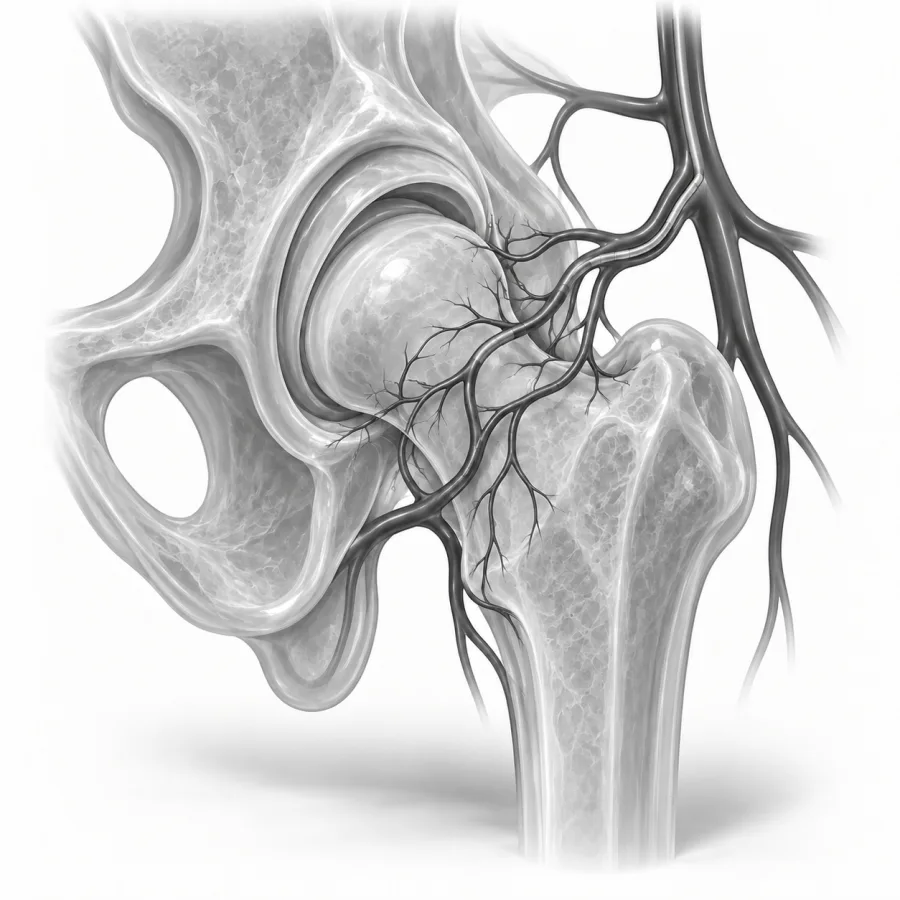
Promising early studies, but still small and short-term.
What is Genicular Artery Embolization
Dr. Fabio Komlos walks through hip embolization the way he explains it in clinic, using the same images he uses to plan treatment.
Fabio Komlos, MDInterventional radiologist · 5:06After Embolization? Don't Make These 5 Mistakes
5:32
What causes long-lasting hip pain?
Two common causes of hip pain in adults are osteoarthritis, the wear-and-tear arthritis that thins the cartilage in the hip joint, and tendinopathy, long-term irritation of the tendons on the outside of the hip. Tendon pain on the side of the hip is often called greater trochanteric pain syndrome, and it used to be called hip bursitis.
In both conditions, the painful tissue is often inflamed. The body grows extra tiny blood vessels into the irritated area, and small pain nerves grow alongside them. These vessels keep the inflammation going and are thought to be one source of the pain.
Transarterial embolization for hip pain uses the same idea as genicular artery embolization for the knee. An interventional radiologist, a doctor who uses X-ray to guide thin tubes through the blood vessels, finds the small arteries feeding the inflamed areas around the hip and places tiny particles in them. The goal is to calm the inflammation and reduce pain, while the normal blood supply to the hip is kept.
What the evidence shows so far
Hip embolization is newer than knee embolization. So far, it has been studied in small groups of patients, often without a comparison group, and usually followed for a year or less. In these early studies, many people reported less pain and better function, and serious complications were rare.
What we do not yet know is how well it works compared with a placebo procedure, exactly who benefits most, and how long relief lasts. Larger, controlled trials are needed. For these reasons, we offer hip embolization only after a careful discussion, usually when standard treatments have not helped and surgery is not a good fit or not wanted yet.
I tell patients plainly that hip embolization is promising but still early. When I review the MRI, I look for signs of active inflammation around the joint or the tendons, because that is what embolization targets. If the pain is really coming from the spine or from a hip that needs replacing, I would rather say so and point them to the treatment that is most likely to help.Fabio Komlos, MD, interventional radiologist · About Dr. Fabio Komlos
Who may benefit, and who may not
May be a candidate
- Hip pain for 3 months or more from mild to moderate arthritis or tendon problems
- Pain not helped enough by exercise, physical therapy, medicines or injections
- Not ready for, not wanting, or not healthy enough for hip replacement
- Imaging that shows inflammation around the joint or tendons
- Comfortable choosing a treatment with limited long-term data
May not be right if you have
- Severe, bone-on-bone arthritis or collapse of the hip bone
- Pain coming mainly from the lower back or nerves
- A hip replacement already in place, or an infection
- Inflammatory arthritis such as rheumatoid arthritis
- Severe blockages in the pelvic or leg arteries
- Severe kidney disease or a serious allergy to contrast dye
How it compares with other treatments
Physical therapy and strengthening, weight loss if needed, and anti-inflammatory medicines are the first steps for most hip pain. Steroid injections into the joint or around the tendons can give relief for weeks to months. For advanced arthritis, hip replacement is a very effective and well-proven operation.
| Hip embolization | Injections | Hip replacement | |
|---|---|---|---|
| How it is done | Catheter through an artery | Needle into or near the hip | Open surgery |
| Anesthesia | Moderate sedation | Local | General or spinal |
| Recovery | A few days | Same day | Weeks to months |
| Strength of evidence | Early, small studies | Well studied, short-term relief | Well proven, long lasting |
Embolization does not rebuild cartilage or stop arthritis from progressing. It does not prevent a future hip replacement.
What happens on the day
The procedure is done at El Camino Hospital as an outpatient. Do not eat for about 8 hours before, and bring an adult to drive you home. See before your procedure and sedation.
- 1Getting ready
A nurse places an IV and you are connected to heart, blood pressure and oxygen monitors. You receive moderate sedation so you are relaxed and comfortable.
- 2A pinhole and a map
The skin over an artery in your wrist or thigh is numbed and a thin tube is placed with ultrasound guidance. A catheter is guided to the arteries around the hip, and contrast dye shows them on X-ray.
- 3Embolization
A microcatheter is placed in each small artery feeding an inflamed area, and tiny particles are slowly released until the abnormal blush fades.
- 4Closing and going home
The catheter is removed and the puncture is closed with pressure, a wrist band or a small plug, with no stitches. After a few hours of rest you go home.
On the angiogram, inflamed tissue around the hip shows up as a cloudy blush of tiny vessels. After embolization, the blush fades while the main arteries stay open.
Recovery, results and risks
- Day of the procedureRest. No driving, alcohol or important decisions for the rest of the day.
- Days 1 to 3Walk normally. Avoid heavy lifting and hard exercise. Mild soreness in the hip or buttock is common.
- Weeks 1 to 4Some people notice temporary skin discoloration over the hip or buttock. Continue your exercises or physical therapy.
- 1 to 3 monthsIf the treatment works for you, pain relief usually builds over this time. We follow up to see how you are doing.
Possible risks
- Bruising or bleeding at the puncture site
- Temporary skin discoloration or tenderness over the hip or buttock
- Short-term increase in pain
- Rarely, particles reaching nearby skin, muscle, nerves or bone where they are not wanted
- Reaction to contrast dye or effects on the kidneys
- The treatment may not relieve your pain
Common questions
Is hip embolization proven?
Does it hurt?
How soon might I feel better?
Can I still have a hip replacement later?
When can I drive?
Will insurance cover it?
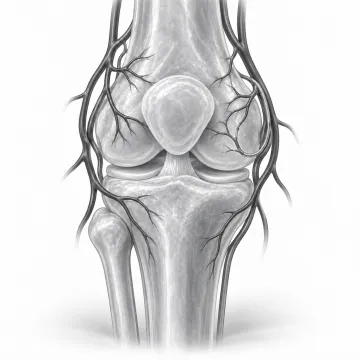
Genicular artery embolization
Calm knee arthritis pain by treating inflamed vessels, through a pinhole and without surgery.
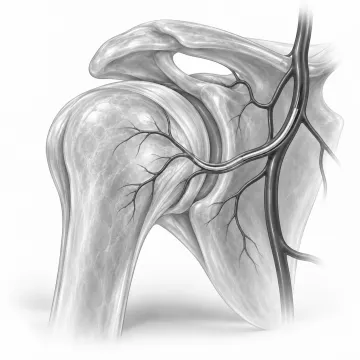
Shoulder embolization
An emerging pinhole treatment for frozen shoulder and tendon pain that has not settled.
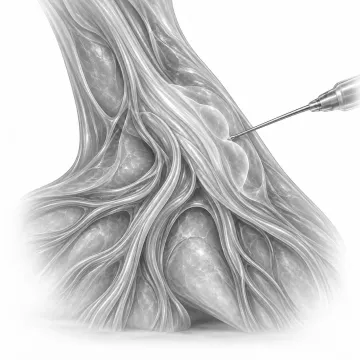
Nerve blocks
Pinpoint and calm the nerve carrying your pain with a precise, image-guided injection.
Embolization
Block selected blood vessels from the inside to stop bleeding, shrink growths or ease pain.
Written for patients by the Palo Alto Interventional team. General information only; your own plan depends on your health and imaging.
Talk to us about your options
Request a consultation online, or call 650-404-8445, Monday to Friday, 8 am to 5 pm. You can also ask your doctor to send a referral. We will review your imaging and help you decide whether a procedure makes sense.