
Varicocele embolization
Treat a varicocele without surgery or a scrotal cut.
Varicocele embolization closes the faulty vein that causes a varicocele, through a pinhole in the neck, arm or groin. It takes about an hour, and most men are back to desk work in 1 to 2 days.
- Outpatient
- About 1 hour
- Moderate sedation
- Desk work in 1–2 days
 Fabio Komlos, MDInterventional radiologist
 Watch the video explanation11:04 video · Varicocele Embolization Explained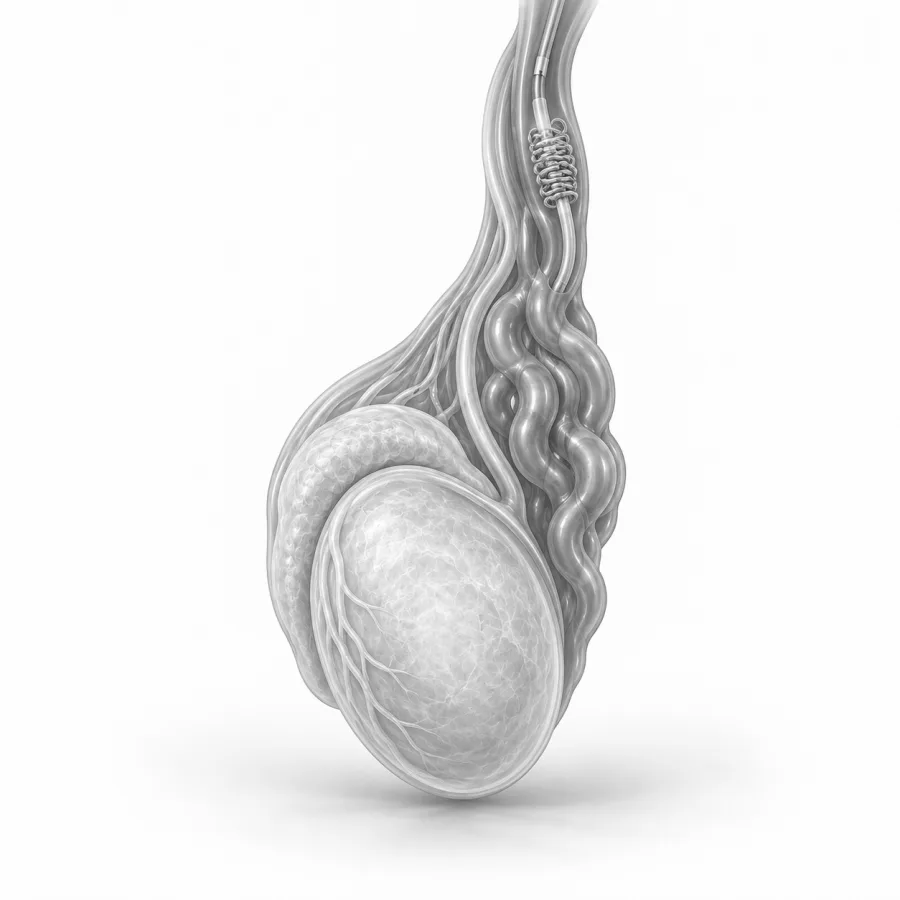
A pinhole in the neck, arm or groin.
Varicocele Embolization Explained
Dr. Fabio Komlos walks through varicocele embolization the way he explains it in clinic, using the same images he uses to plan treatment.
Fabio Komlos, MDInterventional radiologist · 11:04After Embolization? Don't Make These 5 Mistakes
5:32
Quick answers
Under a minute eachWhat is a varicocele?
A varicocele is a group of swollen veins in the scrotum, like a varicose vein in the leg. Blood normally drains from the testicle up through a long vein in the belly called the gonadal vein (or testicular vein). This vein has one-way valves. When the valves do not close well, blood pools and flows backward, and the small veins around the testicle stretch.
Varicoceles affect about 15 in 100 men and are much more common on the left side, because of the way the left vein drains. They often appear in the teen years. Many cause no problems at all. Some cause a dull ache or heaviness, a smaller testicle, or lower sperm quality. For more on the condition itself, see varicocele.
Varicocele embolization treats the cause: it closes the leaking gonadal vein from the inside so blood reroutes through healthy veins. Embolization means blocking a blood vessel on purpose.
Who it helps and who it may not
Good candidates
- Aching, heaviness or pain in the scrotum, worse after standing or exercise
- Couples trying to conceive when the man has a varicocele that can be felt and abnormal semen tests
- Teens or young men whose testicle on the varicocele side is noticeably smaller
- Men whose varicocele came back after surgery
- Men who want to avoid surgery or return to work quickly
May not be right if
- The varicocele causes no symptoms and fertility is not a concern
- It can only be seen on ultrasound, not felt, and you have fertility problems (treatment usually does not help)
- Scrotal pain comes from another cause, such as a nerve or epididymis problem
- Severe allergy to contrast dye or kidney problems (can sometimes be managed)
- A new varicocele on the right side only, which we first check with a scan of the belly
A varicocele that appears suddenly in an adult, especially on the right side or one that does not go down when you lie flat, can rarely be a sign of something pressing on the vein in the belly. We check for this with imaging before treating.
Embolization compared with surgery
The main alternative is surgical varicocelectomy, where a urologist ties off the veins through a small cut in the groin or lower belly, often using a microscope (microsurgical varicocelectomy). Both approaches work well. The best choice depends on your anatomy, your goals and your preference.
| Embolization | Microsurgical varicocelectomy | |
|---|---|---|
| Incision | Pinhole in a vein, no cut on the groin or scrotum | 2–3 cm cut in the groin |
| Anesthesia | Local numbing and moderate sedation | Usually general anesthesia |
| Return to desk work | 1–2 days | About 3–7 days |
| Improvement in pain or semen quality | Similar | Similar |
| Recurrence | About 5–10 in 100 | About 1–5 in 100 |
| Specific risks | Rarely, a coil moves or the vein cannot be reached | Fluid around the testicle (hydrocele), rarely artery injury |
Embolization also treats veins that are hard to see at surgery and is a good option when a varicocele comes back after an operation. In a small number of men, usually fewer than 1 in 10, the vein cannot be safely closed during embolization, and surgery is then the next step. Medicines do not fix a varicocele, though anti-inflammatories and supportive underwear can ease mild aching.
How to prepare
- We usually confirm the varicocele with a scrotal ultrasound, and may ask for a semen analysis if fertility is a concern.
- Do not eat for about 6 hours before the procedure. Clear liquids are usually fine until 2 hours before. We will give you exact instructions.
- Tell us about blood thinners, allergies to contrast dye or iodine, and kidney problems. See blood thinners.
- Arrange for an adult to drive you home.
- Bring snug, supportive underwear to wear home.
- Read before your procedure.
What happens, step by step
- 1Getting comfortable
An IV is placed and you receive moderate sedation, so you are relaxed and drowsy but breathing on your own. The skin over a vein in the neck, arm or groin is numbed.
- 2Reaching the vein
Using ultrasound, we place a small tube in the vein. A thin catheter is guided down to the kidney vein and into the gonadal vein, watching on X-ray.
- 3Closing the leaking vein
Contrast dye shows the backward flow. We close the vein and its side branches with tiny soft metal coils, a foam sclerosant (a medicine that seals the vein lining), or both.
- 4Finishing
A final picture confirms the backward flow has stopped. The tube is removed and a small bandage is placed. No stitches are needed.
The whole procedure takes about an hour, sometimes longer when both sides are treated. You may feel a brief warm sensation when dye is injected, and some men feel a mild ache in the lower belly or back when the vein is closed.
On the venogram, the healthy gonadal vein does not fill when dye is injected into the kidney vein. With a varicocele, dye runs backward down a wide vein into a tangle of veins in the scrotum. After embolization, the coils appear as small white springs and the dye stops above them.
What I look for on the venogram is every path the blood can take back down to the scrotum, not just the main vein. Missing a small side channel is the most common reason a varicocele comes back, so I take the time to find and close them. I tell men to expect a bit of aching for a few days and to be patient with fertility results, because new sperm take about three months to develop.Fabio Komlos, MD, interventional radiologist · About Dr. Fabio Komlos
Recovery and aftercare
- First 1–2 hoursYou rest in recovery while nurses check the puncture site. Then you go home with an adult driver.
- First dayRest. No driving, alcohol or important decisions for 24 hours after sedation. You may shower the next day.
- Days 1–3A dull ache in the groin, lower belly or back is common. Ibuprofen or acetaminophen usually helps. Most men return to desk work within 1 to 2 days.
- About 1 weekAvoid heavy lifting, intense exercise and sexual activity for about 5 to 7 days, or as advised. Then resume normal activity.
- 3–6 monthsIf fertility was the reason for treatment, a repeat semen analysis is usually done about 3 months later, and sometimes again at 6 months.
Sometimes the veins in the scrotum feel tender or firm for a couple of weeks as they clot and shrink. This is called phlebitis and settles with anti-inflammatory medicine. The visible swelling usually shrinks slowly over several weeks.
Call us at 650-404-8445 if you have
- Fever above 101°F or chills
- Severe or worsening scrotal pain or swelling
- Swelling, bleeding or redness at the puncture site
- Sudden shortness of breath or chest pain (call 911)
Results, fertility and testosterone
About 9 in 10 men who have embolization for pain notice their pain improve. For men with abnormal semen tests, sperm count and movement improve in many men, and studies of embolization and surgery show similar gains. Treatment raises the chance of natural pregnancy in couples where the man has a varicocele that can be felt and abnormal semen tests, but no treatment can promise a pregnancy.
Embolization does not affect your erections, your ability to ejaculate, or sensation. The testicle keeps its artery and its normal blood supply, because only the faulty vein is closed. Some studies show testosterone levels rise modestly after varicocele treatment, especially in men who started with low levels, but it should not be done for testosterone alone without a careful discussion.
Risks
- Mild aching or scrotal tenderness for a few days, which is common
- Bruising at the puncture site
- The varicocele coming back, in about 5 to 10 in 100 men
- Being unable to reach or close the vein, so surgery is needed instead (uncommon)
- A coil moving out of place, which is rare and usually retrieved during the same procedure
- Reaction to the contrast dye
- Radiation exposure, kept as low as possible; the testicles are shielded from the direct X-ray beam where possible
Unlike surgery, embolization almost never causes a hydrocele, a collection of fluid around the testicle, and there is no risk of injuring the testicle's artery.
Common questions
Does varicocele embolization hurt?
Will it affect my testosterone or sex life?
Will it make me fertile?
When can I go back to work and exercise?
Is embolization better than surgery?
Can both sides be treated at once?
Will insurance cover it?
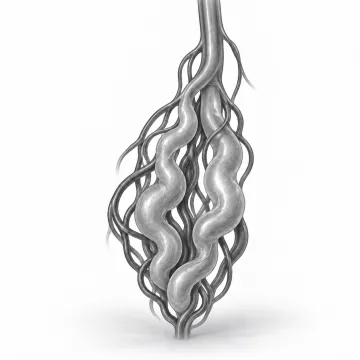
Varicocele
Swollen veins in the scrotum: symptoms, fertility effects, and surgery vs embolization.
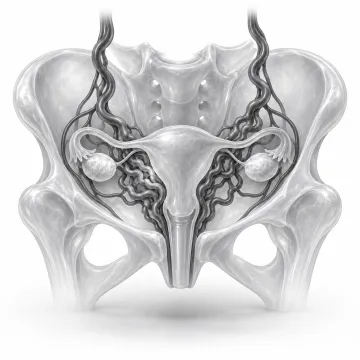
Pelvic congestion syndrome
Chronic pelvic pain from varicose veins in the pelvis, and how embolization treats it.
Prostate artery embolization
Shrink an enlarged prostate through a pinhole, without surgery or a hospital stay.

Before your procedure
Fasting, medicines, blood thinners, diabetes, a driver and what to bring: your checklist.
Sedation and anesthesia
Local numbing, twilight sedation and anesthesia: what you feel and why you need a ride.
Written for patients by the Palo Alto Interventional team. General information only; your own plan depends on your health and imaging.
Talk to us about your options
Request a consultation online, or call 650-404-8445, Monday to Friday, 8 am to 5 pm. You can also ask your doctor to send a referral. We will review your imaging and help you decide whether a procedure makes sense.