
Uterine fibroid embolization
Treat fibroids and keep your uterus.
Uterine fibroid embolization (UFE) shrinks fibroids by cutting off their blood supply, through a pinhole in the wrist or upper thigh. Most women go home the same day and return to work in 1 to 2 weeks.
- Outpatient
- About 1 hour
- Moderate sedation
- Back to work 1–2 wk
 Fabio Komlos, MDInterventional radiologist
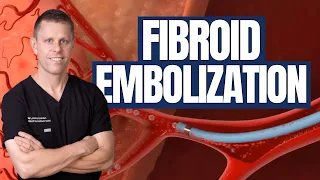 Watch the video explanation5:52 video · Fibroid Embolization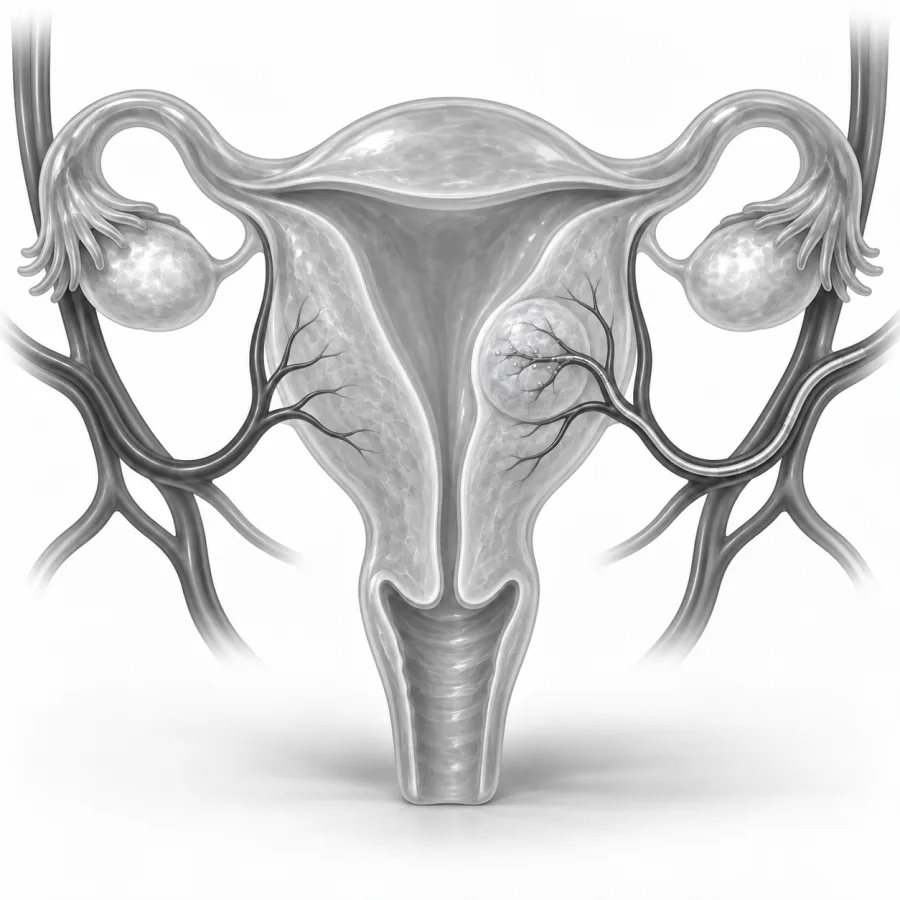
No abdominal incision and no removal of the uterus.
Fibroid Embolization
Dr. Fabio Komlos walks through uterine fibroid embolization the way he explains it in clinic, using the same images he uses to plan treatment.
Fabio Komlos, MDInterventional radiologist · 5:52Do Fibroids Always Require Surgery? What Women Should Know
4:07
Brain Bleeds to Fibroids: Same Results, Tiny Incision
2:25
Quick answers
Under a minute eachWhat are fibroids?
Fibroids are growths made of muscle that form in the wall of the uterus, the womb. Doctors also call them uterine leiomyomas or myomas. They are not cancer. Fibroids are very common: most women have at least one by age 50, but many never know it because they cause no symptoms.
Fibroids feed on the hormone estrogen, so they can grow during the years you have periods and usually shrink after menopause. They come in three main types. Some grow inside the muscle wall (intramural), some bulge from the outer surface and may hang on a stalk (subserosal), and some push into the inner lining and the cavity of the uterus (submucosal). You can have more than one type at the same time.
Symptoms fibroids can cause
- Heavy or long periods, sometimes with clots, which can lead to anemia (low blood count) and tiredness
- Bleeding or spotting between periods
- Painful cramps or pelvic pain
- Pressure, fullness or a swollen belly
- Needing to urinate often, or constipation, from fibroids pressing on the bladder or bowel
- Pain during sex or low back pain
- In some women, difficulty getting pregnant or miscarriage
Uterine fibroid embolization (UFE), also called uterine artery embolization (UAE), is done by an interventional radiologist, a doctor who uses X-ray and ultrasound to guide thin tubes through the blood vessels. Tiny particles are placed in the arteries that feed the fibroids. Without their blood supply, the fibroids soften and shrink over the following months, while the healthy uterus keeps its own blood supply and recovers.
Who UFE helps, and who it may not
UFE works best for heavy bleeding, and it also helps pressure and bulk symptoms. It can treat many fibroids at once, including large ones, which is harder to do with surgery. It is also used for adenomyosis, a related condition in which the lining of the uterus grows into its muscle wall.
Often a good candidate
- Fibroids causing heavy bleeding, pain or pressure
- Several fibroids, or large fibroids
- Wish to keep the uterus and avoid surgery
- Higher surgical risk or prior abdominal surgeries
- Not planning a future pregnancy, or understands the trade-offs
May not be right if you
- Are pregnant
- Have a suspected cancer of the uterus, ovaries or cervix
- Have an active pelvic infection
- Have a single fibroid on a thin stalk, which may be better removed
- Have gone through menopause, when fibroids usually shrink on their own
- Have severe kidney disease or a serious allergy to contrast dye
Before UFE you will usually have a pelvic MRI to show the size, number and location of the fibroids and their blood supply. We also ask that you are up to date on your Pap smear and, when there is irregular bleeding, that your gynecologist has checked the lining of the uterus to rule out other causes.
When I look at a fibroid MRI, I want to know how many fibroids there are, where they sit, and whether they light up with contrast, which tells me they have a blood supply I can reach. Then I ask each woman what bothers her most and what she hopes for in the future, including pregnancy. I want her to leave the visit understanding all her options, not just mine, and I am happy to work with her gynecologist.Fabio Komlos, MD, interventional radiologist · About Dr. Fabio Komlos
How UFE compares with surgery and medicines
There are many good treatments for fibroids. Medicines such as tranexamic acid, birth control pills, a hormone-releasing IUD, or newer hormone-lowering pills can reduce bleeding, though they do not remove the fibroids and usually work only while you take them. Myomectomy is surgery that removes the fibroids and keeps the uterus. Hysterectomy removes the uterus and ends fibroid symptoms and periods for good.
| UFE | Myomectomy | Hysterectomy | |
|---|---|---|---|
| What it does | Shrinks all fibroids | Removes fibroids | Removes the uterus |
| Incision | 2 mm puncture | Small cuts or open incision | Small cuts, vaginal or open |
| Anesthesia | Moderate sedation | General | General |
| Hospital stay | Same day or 1 night | 0–3 nights | 0–3 nights |
| Back to normal | 1–2 weeks | 2–6 weeks | 2–6 weeks |
| Fibroids can return | Yes, in some women | Yes, in some women | No |
Large studies comparing UFE with surgery show similar improvement in quality of life, with a shorter recovery after UFE. Over the following years, more women need a second treatment after UFE than after hysterectomy. UFE does not limit your options: a myomectomy or hysterectomy can still be done later if needed.
Fibroid embolization and pregnancy
Many women have had healthy pregnancies after UFE. Still, the evidence about fertility is not as strong as it is for myomectomy, and some studies show a slightly higher rate of miscarriage and problems with how the placenta attaches after UFE. For this reason, if you are planning a pregnancy, myomectomy is usually the first choice when it is possible.
UFE may still be the best option when surgery would be very difficult or risky, for example with many fibroids, or when you have already had a myomectomy. We will talk this through with you and your gynecologist so you can decide together.
UFE can also bring on early menopause in a small number of women, about 1 to 2 in 100 overall. This is more likely in women over 45, who are already close to menopause.
What happens on the day
UFE is done at El Camino Hospital. Do not eat for about 8 hours before, and plan for an adult to drive you home. See before your procedure, blood thinners and sedation for general preparation.
- 1Getting ready
A nurse starts an IV and gives you medicine for pain and nausea ahead of time. In the procedure room you are connected to heart, blood pressure and oxygen monitors and receive moderate sedation, so you are relaxed and drowsy.
- 2A pinhole and a map
The skin over an artery in your wrist or upper thigh is numbed, and a thin tube is placed using ultrasound. Under X-ray, a catheter is guided into the uterine arteries and contrast dye shows the vessels that feed the fibroids.
- 3Embolization
Tiny particles, smaller than grains of sand, are slowly released into the artery on one side until the fibroid vessels are blocked, then the same is done on the other side. You may feel cramping, and the nurse gives more pain medicine as needed.
- 4Closing and recovery
The catheter is removed and the puncture is closed with pressure, a small plug or skin glue, with no stitches. Cramping peaks in the first 6 to 12 hours. Most women go home after a few hours with pain medicine; some stay one night for pain control.
On the angiogram, fibroids look like round tangles of small vessels fed by the uterine arteries. After embolization, those tangles no longer fill with contrast while the main artery remains visible.
Recovery and aftercare
The first days after UFE are the hardest part. Most women have cramping, tiredness, mild fever and sometimes nausea, known as post-embolization syndrome. It is a sign that the fibroids are responding, and it fades over about a week.
- First 24 hoursCramping is strongest in the first 6 to 12 hours. Take pain medicine on schedule. No driving, alcohol or important decisions for the rest of the day.
- Days 2 to 7Cramping slowly eases. A low fever under 101°F is common for 3 to 5 days. Rest, drink plenty of fluids and walk around the house. Many women take this week off work.
- Weeks 1 to 2Most women return to work and normal activity. Brown or reddish discharge or spotting is normal and may last until your next period.
- First few monthsYour next period may come early or late, or you may skip one or two. The first period or two can be crampy. Bleeding usually improves within 2 to 3 cycles.
- About 6 monthsFibroids keep shrinking for months. We may repeat the pelvic MRI to check the result.
Tips for a smoother recovery
- Ibuprofen (Advil, Motrin) works well for cramps. You may also receive a stronger pain medicine for the first few days.
- Prescription pain medicines cause constipation. We recommend a stool softener such as docusate (Colace) 100 mg twice a day during the first week or while you take them.
- Do not drive while taking prescription pain medicine.
- Use pads, not tampons, for at least 1 week to lower the risk of infection.
- You may shower, but do not soak the puncture site in a bath or pool for 1 week.
- A small bruise or a pea-sized lump at the puncture site is normal and fades over weeks.
- Some women have hot flashes or mood changes for a short time. These usually pass without treatment.
Results and risks
In published studies, about 8 to 9 in 10 women have much lighter periods and less pain or pressure after UFE. Fibroids typically shrink by about half over 6 to 12 months. Symptoms can return over the years, and some women, roughly 1 in 5 to 1 in 4 within 5 to 10 years, choose a second procedure such as repeat embolization or surgery.
Possible risks
- Post-embolization syndrome: cramping, fever, nausea and tiredness for several days
- Bruising or bleeding at the puncture site
- Passing a piece of fibroid through the vagina, mostly with fibroids in the cavity of the uterus; this can cause cramping and discharge and sometimes needs removal by a gynecologist
- Long-lasting clear vaginal discharge, which is usually harmless
- Infection of the uterus, which is uncommon; it is treated with antibiotics and very rarely needs a hysterectomy
- Early menopause in a small number of women, more often over age 45
- Rarely, particles reaching nearby organs
- Reaction to contrast dye or effects on the kidneys
Common questions
Does fibroid embolization hurt?
Can I get pregnant after UFE?
Can large fibroids be treated?
Will my fibroids come back?
Will UFE limit my future options?
How much time off work will I need?
Will UFE bring on menopause?
Is UFE covered by insurance?
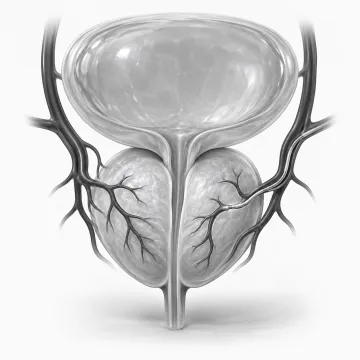
Embolization
Block selected blood vessels from the inside to stop bleeding, shrink growths or ease pain.
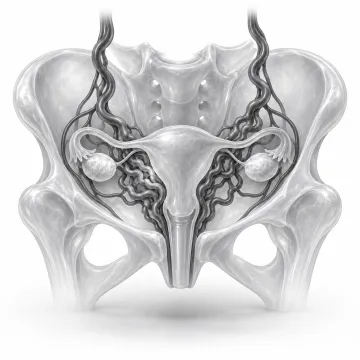
Pelvic congestion syndrome
Chronic pelvic pain from varicose veins in the pelvis, and how embolization treats it.
Prostate artery embolization
Shrink an enlarged prostate through a pinhole, without surgery or a hospital stay.
After your procedure
Puncture site care, activity, showering, driving, pain and when to call after an IR procedure.
Written for patients by the Palo Alto Interventional team. General information only; your own plan depends on your health and imaging.
Talk to us about your options
Request a consultation online, or call 650-404-8445, Monday to Friday, 8 am to 5 pm. You can also ask your doctor to send a referral. We will review your imaging and help you decide whether a procedure makes sense.