
IVC filter placement and removal
Catch dangerous clots now, remove the filter later.
An IVC filter is a small metal device placed in the body's largest vein to stop leg clots from reaching the lungs. Placing or removing one takes 15 to 30 minutes through a pinhole in the neck.
- Outpatient
- 15–30 minutes
- Moderate sedation
- Home the same day
 Fabio Komlos, MDInterventional radiologist
 Watch the video explanation8:36 video · IVC Filter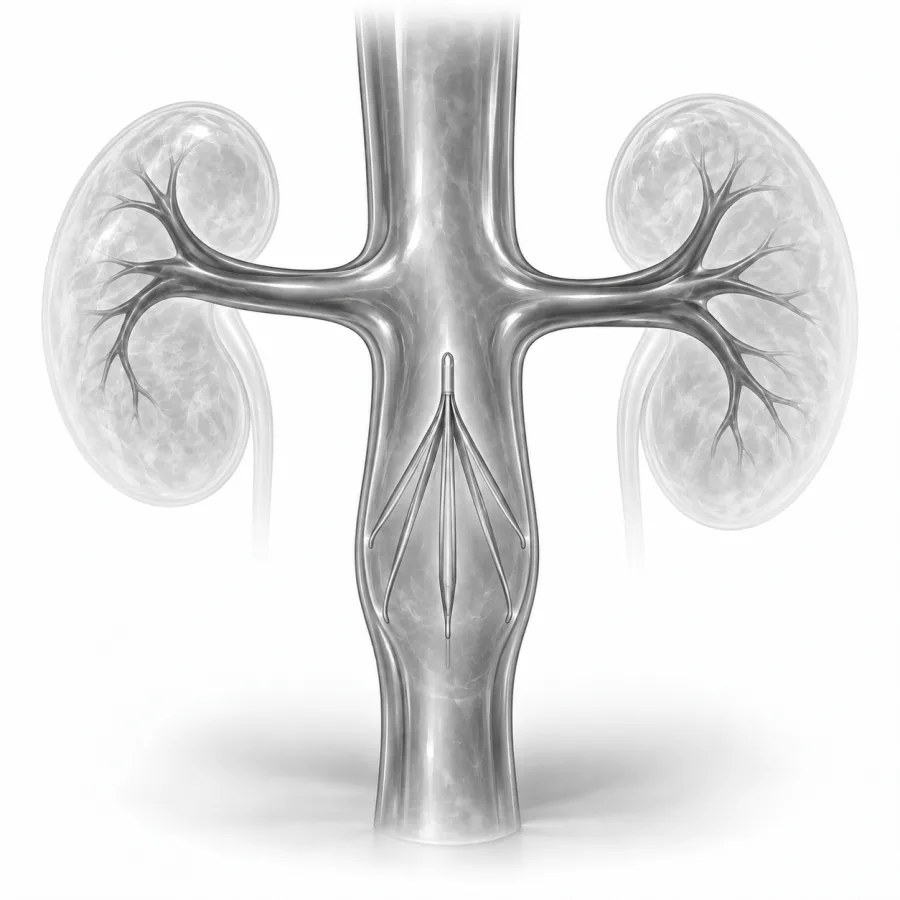
Live fluoroscopy from an IVC filter removal. We watch every move of the catheter on this screen.
IVC Filter
Dr. Fabio Komlos walks through ivc filter placement and removal the way he explains it in clinic, using the same images he uses to plan treatment.
Fabio Komlos, MDInterventional radiologist · 8:36IVC filters sound super intense but the idea is actually pretty simple.
4:03
Quick answers
Under a minute eachWhat is an IVC filter?
The inferior vena cava (IVC) is the large vein that runs up the back of your abdomen, carrying blood from your legs and pelvis to your heart. An IVC filter is a small device made of thin metal wires, shaped like an umbrella without its cloth. It sits inside the IVC and lets blood flow freely while trapping large clots.
Clots that form in the deep veins of the legs or pelvis, called deep vein thrombosis (DVT), can break off and travel to the lungs. That is a pulmonary embolism (PE), which can be life-threatening. A filter catches those pieces before they get there.
Most filters placed today are retrievable, meaning they are designed to be taken out once you no longer need them.
Who needs a filter, and who doesn't
Blood thinners are the main treatment for clots. A filter does not treat a clot, does not stop new clots from forming and does not replace blood thinners. It is a temporary safety net for people who cannot be protected with medicine.
A filter may help if you
- Have a DVT or PE and cannot take blood thinners, for example because of recent bleeding or upcoming major surgery
- Had serious bleeding on blood thinners
- Kept forming clots despite taking blood thinners correctly
- Are having clot removal, in some cases, to catch pieces that break loose
A filter usually isn't needed if you
- Can safely take blood thinners
- Have a small clot limited to the calf
- Want a filter only as a precaution with no clot, which is rarely recommended
- Are no longer at high risk, in which case an existing filter should come out
Why removing the filter matters
Filters work well in the short term, but the longer a filter stays in, the more problems it can cause. For this reason, the US Food and Drug Administration (FDA) advises doctors to remove retrievable filters as soon as the risk of a clot reaching the lungs has passed. Many experts aim for removal within the first few months, once you are safely on blood thinners.
Problems that become more likely over time
- The filter becomes stuck in the vein wall, making it harder to remove
- Its legs poke through the vein wall, which occasionally causes pain
- A piece of metal breaks off, rarely traveling elsewhere
- The filter tilts or moves
- Clot builds up in the filter and blocks the IVC, causing swelling of both legs
- A higher chance of new leg clots over the years
Unfortunately, many filters are never removed because patients lose track of them. If you have a filter, ask when it should come out. If you have an older filter and were told it is permanent, it is worth asking again. Filters that have been in place for years can often still be removed with advanced techniques.
When I place a filter, I talk with the patient about removing it before they even leave the room. It is meant to be a bridge, not a permanent fixture. I also see people with filters that have been in place for five or ten years, sometimes with no one following them. Many of those can still be taken out safely, and I always look carefully at the CT and X-ray before telling someone it cannot be done.Fabio Komlos, MD, interventional radiologist · About Dr. Fabio Komlos
How to prepare
- Do not eat for about 6 hours before, if you are having sedation. Clear liquids are usually fine until 2 hours before. We will confirm the exact instructions.
- Tell us about all your medicines. Most people can keep taking blood thinners for filter removal; we will tell you if anything needs to change.
- Tell us about allergies, especially to contrast dye, and about kidney problems.
- Arrange for an adult to drive you home, since you should not drive after sedation.
- Plan for about 4 hours at the hospital from arrival to going home.
See before your procedure and sedation for more detail.
What happens, step by step
Placement and removal are very similar. Both are done at El Camino Hospital with a team of nurses, a radiology technologist and your interventional radiologist.
- 1Get comfortable
An IV is placed and you are connected to heart, blood pressure and oxygen monitors. You receive moderate sedation, which makes you relaxed and drowsy while you keep breathing on your own.
- 2Access the vein
We numb a small spot on the side of your neck, or sometimes the groin. Using ultrasound, we place a thin tube into the vein. You may feel pressure but should not feel sharp pain.
- 3Place or remove the filter
Using X-ray guidance, we guide the tube down to the IVC. For placement, the filter is pushed out and springs open against the vein wall. For removal, a small snare grabs the filter's hook, and a sheath slides over it so it folds like an umbrella and comes out.
- 4Finish
The tube is removed, gentle pressure is applied, and the pinhole is sealed with skin glue. There are no stitches.
The procedure itself takes about 15 to 30 minutes. Filters that have been in place for a long time can take longer and may need special tools.
Recovery and aftercare
- First 30 minutesYou rest in the recovery area while we check your neck, heart rate, blood pressure and oxygen. Family can join you, and you can eat and drink.
- Rest of the dayGo home with an adult. Do not drive, drink alcohol, use machinery or make important decisions. Eat light meals if you feel queasy from sedation. You may shower the same day.
- After 24 hoursReturn to your usual activities, including driving, exercise and lifting, unless we told you otherwise.
- Filter follow-upIf a filter was placed, we plan when to check whether it can be removed, usually within a few months.
A little bruising or tenderness at the neck is normal. Acetaminophen (Tylenol) or ibuprofen (Advil, Motrin) usually helps, if they are safe for you.
Living with a filter
- Airport security is not a problem. Filters do not usually set off metal detectors.
- Most filters are safe in MRI scanners under standard conditions. Tell the MRI team you have one.
- Keep a note of the filter type and the date it was placed, and bring it to all doctor visits.
Risks
Placement and removal are low-risk procedures. Serious problems are uncommon.
- Bruising at the neck is common. Serious bleeding is very rare.
- Clot blocking the filter, which can cause swelling of both legs. It can often be treated by removing the clot.
- The filter tilting, moving or its legs poking through the vein wall, usually found on imaging and often causing no symptoms
- A filter that cannot be removed in one session. This is more likely the longer it has been in place. A second attempt with advanced tools is often successful.
- Rarely, injury to the vein during removal of a long-embedded filter
- A small dose of X-ray radiation and contrast dye
Common questions
Does it hurt?
Do I still need blood thinners if I have a filter?
How long can a filter stay in?
Can an old filter still be removed?
Will I feel the filter?
Can I have an MRI?
When can I drive?
DVT (deep vein blood clots)
Blood clots in the leg or arm: signs, blood thinners, clot removal and long-term care.
Pulmonary embolism (blood clots in the lungs)
Blood clots in the lungs: warning signs, blood thinners and catheter clot removal.
Blood thinners and your procedure
Which blood thinners may be paused before a procedure, typical hold times, and how bridging works.
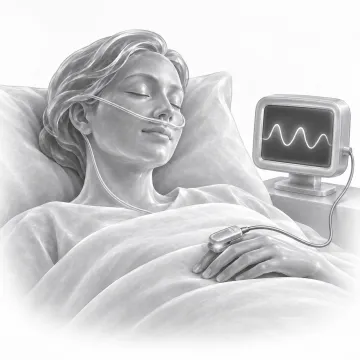
Sedation and anesthesia
Local numbing, twilight sedation and anesthesia: what you feel and why you need a ride.
After your procedure
Puncture site care, activity, showering, driving, pain and when to call after an IR procedure.
Written for patients by the Palo Alto Interventional team. General information only; your own plan depends on your health and imaging.
Talk to us about your options
Request a consultation online, or call 650-404-8445, Monday to Friday, 8 am to 5 pm. You can also ask your doctor to send a referral. We will review your imaging and help you decide whether a procedure makes sense.